Trending Productivity Gadgets Students Buy Now
As an Amazon Associate, I earn from qualifying purchases. This article may contain affiliate links, which means we may receive a commission at no extra cost to you.
As a student, balancing classes, study sessions, part-time work and social life can feel overwhelming. Smart, targeted tools — not a desk full of gadgets — make the biggest difference. This guide looks at five trending productivity items students are buying right now to focus better, take cleaner notes, and plan their weeks with less friction. The picks include tactile analog helpers (timers and tear-off planners), a reusable smart notebook for digitizing work, and a pocket AI recorder that turns spoken ideas into searchable summaries.
I’ve compiled these selections from product specs, customer feedback trends, and how these items fit into common student workflows. Whether you’re trying to beat procrastination, keep digital backups of handwritten notes, or organize weekly tasks into manageable chunks, one or more of these tools can help. Each product section explains practical use cases, who benefits most, key features to consider, and realistic pros and cons so you can choose what suits your study style.
Buying Guide
What to consider when shopping for student productivity gear
Purpose and workflow match — Start by deciding whether you want analog, digital, or a hybrid solution. Analog tools (timers, paper planners) are low-friction and distraction-free for deep work. Digital tools (AI recorders, reusable smart notebooks) add search, cloud backup, and sharing but come with setup and privacy considerations.
Portability and battery life — Students move between classrooms, libraries and coffee shops. Choose compact devices with long battery life (or replaceable batteries) and easy charging. For paper notebooks and planners, check sizes (letter vs. pocket) and whether tear-off pads are easy to stash.
Noise and focus modes — If you study in public, quiet modes, vibration alerts and non-intrusive sounds are essential. Many timers and recorders offer adjustable volumes or silent vibration to avoid drawing attention.
Compatibility and cloud workflows — If you expect to digitize notes, look for notebooks with well-supported scanning apps or recorders that integrate with cloud services. Reusable notebooks that pair with apps (or have OCR-friendly paper) save time when organizing study materials.
Privacy and transcription accuracy — For audio recorders, understand where transcription happens (on-device vs. cloud). Cloud transcription improves accuracy but raises privacy questions. Check whether summaries or action items are stored and how accessible they are.
Durability and materials — College life can be rough: pick durable covers, sturdy timer housings, and planners with quality paper if you depend on them daily.
Budget and long-term value — Some items are cheap one-off buys (tear-off planners), while others are investments (reusable notebooks, AI recorders) that reduce ongoing costs. Factor in replacement pens or subscription fees for advanced transcription features.
Who should prioritize which features
– Procrastinators and ADHD learners: timers with tactile controls and vibration modes help anchor sessions.
– Note-centric students: reusable smart notebooks plus cloud integration are ideal for frequent scanning and organizing.
– Course planners: undated weekly pads with habit trackers suit students who prefer analog planning and want to rinse and repeat each semester.
– Group project leads and interviewers: AI recorders that summarize meetings can save hours converting spoken discussion into action items.
Use these considerations to match a tool to your daily routine instead of buying the latest trending gadget for its novelty alone.
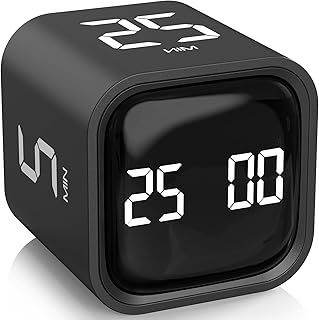
Rotating Pomodoro Timer 5, 25, 10 50 Minutes Preset, Desk Productivity Flip Timer, ADHD Tool Cube Countdown Stopwatch, Vibration/High/Low Volume/Custom Modes, for Work, Study, Back to School, Kitchen
Best For:
Students who need tactile, distraction-free timers — great for fans of the Pomodoro Technique and learners with ADHD who respond to physical prompts.
If you struggle with starting and staying in a study session, a physical Pomodoro timer can make focus immediate and repeatable. This rotating Pomodoro Timer is a compact cube that offers preset intervals such as 5, 10, 25 and 50 minutes, plus custom modes and adjustable sound and vibration settings. Because it’s tactile — you rotate the cube to choose a mode and press start — it reduces digital temptation compared with phone-based timers.
Practical benefits include a dedicated on-desk presence that reminds you to begin a focused block and to take intentional breaks, which is the essence of the Pomodoro Technique. The device’s vibration and low-volume options are particularly useful in shared study spaces or dorm rooms where loud beeps would be disruptive. For students with ADHD or anyone easily distracted, the cube’s physicality helps translate intention into action: the simple motion of rotating the timer often acts as a micro-decision that triggers a commitment to work.
Real-life use cases: Schedule a 25-minute focused session before a 5-minute stretch break, repeat four times and reward yourself with a longer break as a study ritual. Use the 50-minute setting for longer reading blocks or lab work with fewer interruptions. The custom mode is handy for irregular tasks like timed practice tests or speech rehearsals. In group study, the timer helps keep everyone on the same rhythm for timed problem sets or mock exams.
Compared with phone apps, this cube removes notifications and the temptation to check social media while timing. Compared with large digital timers, it’s pocket-friendly and simple to operate. Downsides observed in user reports include a learning curve for the volume/vibration settings and occasional desire for a backlight for low-light study sessions.
Who should buy: Students who value tactile cues and distraction-free timing, those with ADHD who respond to physical prompts, and anyone who wants a clear boundary between focus time and break time. Who might skip it: students who prefer integrated digital ecosystems (timers that sync with calendars) or those who need visual countdown displays.
Check the latest price on Amazon.
Pros
- Tactile, distraction-free operation encourages consistent focus
- Multiple preset and custom time options for flexible use
- Vibration and adjustable volume for quiet shared spaces
Cons
- No bright display for late-night low-light use
- Lacks integration with digital calendars and apps
Check the latest price on Amazon.
Rocketbook Core Reusable Smart Notebook, Lined Pages For School, Work and Creative Projects, Letter Size 8.5×11, Gray – Premium

Best For:
Note-heavy students who value handwriting but want quick digital archiving and reduced paper clutter.
For students who write a lot and still need digital backups, the Rocketbook Core is a hybrid notebook designed to bridge handwriting and the cloud. The letter-size, lined pages are reusable with the right pen (typically a frixion-style erasable pen), and scans easily with the Rocketbook app so notes can be sent to cloud destinations like Google Drive, Dropbox or email. This makes it ideal for class notes, brainstorms and drafts that you want to iterate on without accumulating paper piles.
The Rocketbook’s main practical benefit is reducing textbook-level clutter while keeping the tactile benefits of handwriting. Research shows many students retain information better when they write by hand; Rocketbook preserves that learning style while adding the convenience of searchable, organized digital files. The scanning process is fast — within seconds you can capture a page, name it and send it to a predetermined folder — which fits into a busy student schedule.
Real-life use cases: Use the Rocketbook as your primary lecture notebook, scanning daily notes into a course folder after class so you can review on the go. Create a workbook for problem sets and send scans to a study group or TA. Use the planner pages to draft weekly to-dos and then erase and reuse pages across a semester for sustainability.
Compared with standard paper notebooks, Rocketbook reduces waste and keeps notes centralized digitally. Versus dedicated tablets with styluses, it’s more economical and requires no charging, but it doesn’t offer instant handwriting-to-text conversion on-device — OCR happens through the app scans. Users report the paper texture is different from standard notebooks and that frequent erasing requires a bit of technique to avoid ghosting.
Who should buy: Students who prefer hand-writing their notes but want cloud organization and fewer stacks of paper. Also useful for creatives who sketch and want an easy way to archive iterations. Who might skip it: those who prefer fully digital note-taking on tablets or need native on-device handwriting-to-text conversion.
Check the latest price on Amazon.
Pros
- Reusable pages reduce paper waste and recurring purchases
- Fast app scanning to common cloud services for organized backups
- Tactile handwriting experience retained while enabling digital workflows
Cons
- Requires compatible erasable pens; ghosting can occur with heavy ink
- No native on-device handwriting-to-text conversion
Check the latest price on Amazon.
Ymumuda Weekly To Do List Notepad – Daily To Do List Undated 52 – Week Sheets, 8.5×11" Weekly Goal Notebook, Habit Tracker Journal, Excellent for Student School Work Personal Productivity Organizer

Best For:
Students who prefer visible, tear-off weekly planning with habit tracking and flexible use across semesters.
For students who prefer analog planning, this weekly to-do list notepad delivers structure with flexibility. The pad contains 52 undated weekly sheets sized at 8.5 x 11, so it can serve as a semester planner or a year of weekly checklists depending on usage. Each sheet typically includes day-by-day slots, a habit tracker, top priorities, and space for notes — a layout that turns vague intentions into concrete, tick-offable tasks.
The value of an undated pad is that it doesn’t force continuity — skip a week without wasting pages — and the tear-off format keeps your current week visible on your desk or in a study space. Students juggling assignments, deadlines, labs and extracurriculars benefit from the habit tracker feature for routines like daily review, reading, or exercise. The simple act of listing tasks each week clarifies what needs attention and reduces the cognitive load of remembering everything.
Real-life scenarios: A busy sophomore can map out weekly readings, assignment due dates and club meetings on one sheet, checking items off as they’re completed. Exam prep becomes less chaotic when the planner breaks study topics into daily blocks and tracks habits like sleep or timed practice tests. Group-project leads can use the priority section to assign responsibilities and follow up on progress during meetings.
Compared with digital calendar apps, the notepad avoids screen time and gives visible, high-priority cues on a desk. Compared with bound weekly planners, its undated pad format is forgiving and ideal for semester-based use. Buyers often mention the paper weight and pen bleed-through as considerations — heavier pens can show through sheets — and while the design is simple and effective, those who prefer long-term archiving must manually store finished sheets.
Who should buy: Students who like paper planning, need flexible weekly structure, and prefer a visible desk planner to keep priorities in sight. Who might skip it: students who rely entirely on digital calendars that sync across devices or who need bound planners for long-term archival.
Check the latest price on Amazon.
Pros
- Undated weekly sheets reduce wasted pages and allow flexible starts
- Habit tracker helps build consistent study routines
- Large 8.5×11 size offers ample space for priorities and notes
Cons
- Tear-off format needs manual archiving to keep records
- Thin paper may show bleed-through with heavy pens
Check the latest price on Amazon.
Weekly To Do List Notepad, 8.5”x11” Weekly Desk Planner with 52 Tear Off Sheets Undated Weekly Planner Habit Tracker & Productivity Organizer for Home and Work, Pink

Best For:
Students who prefer a colorful, desk-visible weekly planner and want a flexible undated format for semester use.
This pink weekly desk planner is another solid analog option for students who want a single-sheet view of their week. With 52 undated tear-off sheets at 8.5 x 11 inches, it’s built for semester rhythms and repeated weekly planning without the pressure of dates. The layout prioritizes day-specific slots, an area for top goals, and a habit tracker that nudges consistency across studying, exercise and sleep.
The aesthetic value — a pleasant color and clean layout — makes this pad attractive for dorm desks, library carrels, or study corners where visibility matters. Making the week visible on your desk reduces the mental checklist and helps you prioritize work across multiple classes. The tear-off design is convenient for handing a week’s plan to a study partner or sticking a sheet inside a binder for quick reference.
Real-life scenarios include splitting study topics across weekdays for sustained exam preparation, coordinating group project deadlines on a single visible page, or using the habit tracker to ensure daily code practice or language review. Compared to app-based reminders, a desk planner is always visible and requires no setup, which is useful for students who get distracted by notifications.
Some students note that the pad’s paper weight determines pen choice; gel pens or markers can bleed. The undated format is liberating but also means there’s no built-in archive—if you want records, plan to file or photograph completed sheets. Compared with bound weekly planners, this pad is more flexible but less neat for long-term reference.
Who should buy: Students who want a colorful, visible weekly planner without commitment to dates, especially those who appreciate a tactile, desk-centered planning system. Who might skip it: those who prefer digital reminders, synced calendars, or bound planners with yearly layouts.
Check the latest price on Amazon.
Pros
- Attractive, visible layout that encourages weekly planning
- Undated sheets allow for flexible use across semesters
- Large format provides space for detailed daily tasks and goals
Cons
- Paper quality may not suit heavy ink pens without bleed-through
- No built-in archiving—completed sheets must be saved manually
Check the latest price on Amazon.
Pocket AI Voice Recorder & Smart Assistant – Auto Transcription, Summaries & Action Items – AI Note Taker for Meetings, Calls & Productivity – Space Grey

Best For:
Students who attend many seminars, conduct interviews, or need accurate meeting notes and quick summaries.
Audio-first students — whether in seminars, interviews or study groups — will find a pocket AI recorder a compelling upgrade from simple voice memos. This pocket AI recorder promises auto transcription, condensed summaries and extracted action items, turning recorded conversations into searchable, digestible notes. Its compact size and smart assistant features make it easy to carry between classes and quickly capture spoken information without interrupting the flow of discussion.
Practical advantages include the time saved converting long audio into actionable summaries. For group projects, the device can capture meeting minutes and surface responsibilities without manual note-taking. For seminar-heavy courses, it helps students review arguments and quotes more accurately than memory alone. The on-device recording and cloud-assisted transcription offers a balance between convenience and accuracy, though it’s worth checking whether advanced processing happens in the cloud (improving accuracy) or on-device (improving privacy).
Real-life use cases: Record a guest lecture and get a concise summary to study later; capture an interview for a research project and extract key quotes and action items; record office-hour conversations with a professor (with permission) to ensure you don’t miss specifics about feedback or deadlines.
Compared with basic voice recorders, this model elevates raw audio into directly usable study assets through transcription and summaries. Compared with smartphone recording apps, the dedicated device often has better mic arrays for clarity and less background interruption from notifications. However, transcription accuracy can vary by accent, background noise and recording environment; some users may still prefer manual review for critical quotes.
Who should buy: Students attending many recorded lectures, conducting interviews, or managing group projects where meeting notes and action items matter. Who might skip it: students worried about cloud privacy, those who prefer manual note-taking, or those satisfied with phone-based voice memos.
Check the latest price on Amazon.
Pros
- Auto transcription and summaries save time converting audio into notes
- Compact and portable for on-the-go capture
- Extracts action items to streamline follow-ups
Cons
- Transcription accuracy depends on noise levels and speaker clarity
- Some features may rely on cloud processing, raising privacy considerations
Check the latest price on Amazon.
Final Verdict
Choosing the right productivity gadget comes down to your study habits, environment and how you like to organize information. If you’re easily distracted, a tactile Pomodoro cube can help you start and sustain focus blocks. If you prefer handwriting but want searchable backups, a reusable smart notebook bridges paper and cloud. For students who like visible planning, undated weekly pads keep priorities in sight without forcing calendar commitments. And if you want to convert spoken conversation into study-ready notes, a pocket AI recorder can save hours of manual transcription.
None of these tools is a magic bullet — they’re most effective when paired with consistent routines. Combine a Pomodoro timer with a weekly desk planner to structure your days, use the Rocketbook for lecture notes that live in organized cloud folders, and bring the AI recorder to meetings you’ll need to revisit. Budget-wise, start with the tool that solves your biggest pain point: beating procrastination, reducing paper clutter, tracking weekly tasks, or recovering spoken details. Over time, the time saved and stress reduced can justify investing in one or two of these gadgets.
If you’re still undecided, think about what breaks your flow right now. Is it unstable focus, lost notes, missed deadlines, or too many half-done tasks? Choose the tool that addresses that problem first. Check the product pages to compare features and pick the combination that best fits your campus life. Check the latest price on Amazon.
Conclusion
These Trending productivity gadgets students are buying now picks are trending now and offer great value and variety. Check the links above for latest prices and reviews.
As an Amazon Associate, I earn from qualifying purchases.
Tags:
student productivity gadgets, Pomodoro timer, reusable notebook, weekly planner, AI voice recorder, study tools, back to school
