Top Puzzle Games for Seniors: Brain-Boosting & Dementia-Friendly
As an Amazon Associate, I earn from qualifying purchases. This article may contain affiliate links, which means we may receive a commission at no extra cost to you.
Keeping the mind active is one of the most effective ways to support mental health and quality of life as we age. Puzzles and brain games offer a gentle, purposeful activity that can sharpen attention, preserve memory pathways, and reduce boredom. In this guide I’ve researched a range of educational puzzle games that work well for older adults—including seniors with mild cognitive impairment or early-stage dementia. Each recommendation focuses on thoughtful design: larger pieces, clear visuals, steady difficulty, and tactile satisfaction. Whether you’re shopping for a parent, a grandparent, a care home activity cart, or simply looking for enriching leisure time for yourself, these selections aim to match different needs and abilities. Below you’ll find a practical buying guide, in-depth product write-ups, realistic use cases, and pros/cons to help you choose the right puzzle game.
Buying Guide
Why puzzles matter for seniors: Cognitive stimulation protects neural pathways and slows decline by engaging attention, problem solving, pattern recognition, and visual-spatial skills. Beyond the brain, puzzles reduce stress, promote social interaction, and give a tangible sense of accomplishment. When choosing puzzle games for older adults, consider the following factors.
Piece size and grip: Select large, chunky pieces for arthritic hands or limited dexterity. Many dementia-specific puzzles use oversized pieces that are easier to pick up, place, and recognize from a distance.
Contrast and imagery: High-contrast, familiar images (animals, landscapes, everyday objects) are easier to identify than abstract or highly detailed scenes. Clear outlines help users match shapes and reduce frustration.
Difficulty and progression: Look for games that offer graduated challenge—easy versions for bad days and slightly harder ones to encourage growth. Multi-pack jigsaw sets or games with removable guides let caregivers adjust difficulty.
Durability and storage: Magnetic boards, laminated pieces, or pouches for organized storage extend longevity and make set-up simpler. Portable tins or storage bags are helpful for trips or when space is limited.
Cognitive focus: Some products target specific skills—memory cards, crossword-style boards, shape-matching tactile puzzles, or geography-focused jigsaws that teach while they entertain. Think about whether the goal is reminiscence therapy, memory drills, or calming, repetitive activity.
Social vs solo play: If you want an activity for group sessions in a daycare or memory care setting, pick puzzles that invite collaboration—large floor puzzles or multi-piece group projects. For quiet solo stimulation, choose compact, easier puzzles with clear solutions.
Alternatives and supplements: Digital apps and tablet games can be convenient, but they require tech familiarity, screen time, and fine motor control. Physical puzzles provide hands-on engagement and sensory feedback that many seniors prefer.
Buying considerations: Read product images carefully, check piece count and recommended age range, and consider whether replacement parts or extra storage come with the set. If you’re buying for someone with dementia, favor gentle, low-frustration designs and always supervise during early use to confirm the challenge level is appropriate.
Keeping Busy Match Shapes Large Dementia Activities for Seniors | Alzheimer Products for Elderly Patients | Fun Memory Game Toy & Cognitive Brain Puzzle for Senior Citizens w/Memory Loss or Alzheimers

Best For:
Seniors with mild cognitive impairment or early-stage dementia, caregivers seeking low-frustration activities, memory care programs.
This Keeping Busy Match Shapes set is designed specifically with seniors and memory care needs in mind. The core concept is simple and effective: large, familiar shapes and bold outlines that encourage matching without overwhelming detail. Unlike standard children’s puzzles that can be too fiddly or intricate for older hands, this product emphasizes grip-friendly pieces and clear, contrasting colors so users can focus on recognition and successful placement. Pieces are often sized to reduce frustration—easier to reach, pick up, and manipulate for people with limited dexterity or early-stage Alzheimer’s. The activity addresses a range of cognitive objectives: visual-perceptual skills, attention span, and short-term memory recall by prompting users to remember shape locations and match accordingly.
Practical benefits include quick setup and straightforward cleanup, which makes this suitable for caregivers seeking low-prep activities during a busy day. It’s also portable—pieces can be used on a lap tray, dining table, or communal activity table. Compared to high-piece jigsaws, the match shapes format reduces the time commitment required; a session can last five minutes for a quick brain boost or longer for sustained engagement.
Real-life usage scenarios are plentiful. In an assisted living common room, staff can pair residents for collaborative matching games that promote social interaction. Family members can use the set during a weekend visit to encourage conversation centered around shapes and colors. Caregivers working on memory routines can integrate the game into daily cognitive exercise blocks, tracking whether users improve in speed and accuracy over weeks.
Who should buy this: Families and caregivers of seniors with mild to moderate cognitive decline, memory care facilities seeking low-frustration activities, and anyone looking for a tactile, non-digital exercise to include in a care plan. Who may not need it: Seniors who prefer complex jigsaws or puzzle veterans seeking high-challenge, high-piece-count tasks may find this too simple.
Practical observations and buying considerations: Check the piece material—sturdy plastic or thick board lasts longer. If multiple residents will use the set, consider labeling or storing sets separately to avoid mix-ups. For a mixed-ability group, pair this product with slightly more complex puzzles so each participant has an appropriate challenge.
Check the latest price on Amazon.
Pros
- Large, easy-to-handle pieces reduce dexterity strain
- High-contrast shapes minimize visual confusion
- Quick to set up and suitable for short attention spans
Cons
- May be too simple for seniors who prefer challenging puzzles
- Limited variety in long-term engagement unless combined with other activities
Check the latest price on Amazon.
Geotoys Oregon Mini State Puzzle – 100 Piece Puzzles for Kids and Adults in Portable Can, 13" x 10" Educational Travel Puzzle for Ages 7 and Up – Mini Puzzles to Learn & Explore Geography

Best For:
Seniors who enjoy mid-level jigsaw challenges, learners interested in geography, families wanting an intergenerational puzzle.
The Geotoys Oregon Mini State Puzzle is an educational 100-piece jigsaw that brings geography into a compact, travel-friendly format. Although marketed for ages 7 and up, this puzzle can be a delightful, appropriately challenging option for seniors who enjoy learning-based puzzles rather than abstract art or photos. The pieces are small compared with dementia-focused products, but the clear state outline and labeled landmarks provide cognitive anchors—familiar symbols, city names, and regional features make the assembly process more like a gentle learning session than a visual endurance test.
This puzzle is particularly useful for seniors who enjoy reminiscence or who have an interest in local history and geography. A family member might use the puzzle as a conversational prompt: while assembling the coastline, you can discuss favorite travel memories, road trips, or changes in local landscapes. For seniors with steady fine motor control and those who enjoy a mid-level challenge, a 100-piece set hits a sweet spot—it’s substantial enough to be rewarding but not so complex as to cause fatigue in a single sitting.
Compared with large-piece dementia puzzles, this set demands more attention to detail and sharper fine motor skills, so it suits those without significant arthritis or severe vision issues. The canister storage is practical: pieces are easy to contain, transport, and store between sessions. This makes it ideal for visiting family, day trips, or keeping in a care facility’s activities closet without requiring large table space.
Who should buy this: Active seniors who enjoy learning, geography enthusiasts, and mixed-age households where grandparents can do the puzzle with grandchildren. Who may not need it: Seniors with limited dexterity, moderate to severe visual impairment, or those who become easily frustrated with small pieces.
Practical observations and buying considerations: Expect smaller pieces; consider using a sorting tray or mat to keep parts organized. For group settings, one set may not be sufficient—plan multiple copies or choose bigger-piece options for mixed-ability groups.
Check the latest price on Amazon.
Pros
- Educational theme encourages reminiscence and conversation
- Compact storage canister is travel-friendly
- 100 pieces offer a rewarding challenge without being overwhelming
Cons
- Smaller pieces may be hard to handle for those with limited dexterity
- Not specially designed for dementia care or low-vision users
Check the latest price on Amazon.
6 Packs 20 Large Piece Puzzles for Seniors with Dementia│Alzheimer’s Puzzles Memory Cognitive Games Easy Jigsaw Puzzles for Elderly Seniors with 6 Storage Bags(Animal)

Best For:
Group activities in care homes, seniors who need short, achievable tasks, and caregivers seeking varied, dementia-friendly options.
This multi-pack of six easy jigsaw puzzles is tailored for seniors and people living with dementia who benefit from bright images and fewer, large pieces. Each puzzle typically has roughly 20 large pieces with bold animal imagery, making the visual cues easy to match and reducing the risk of frustration. The set format is especially helpful for group activities—care homes can rotate puzzles during weekly sessions so residents experience variety without constant replacement.
Because the pieces are large, they’re easier to grasp and less likely to be misplaced. The animal themes are universally appealing and often trigger positive reminiscence—talking about pets, farms, or nature scenes as the picture comes together can spark memories and social interaction. Compared to a single, high-piece-count puzzle, having several small puzzles increases the number of success experiences: completing a full image in 10–20 minutes offers immediate satisfaction and boosts confidence.
Use cases include one-on-one cognitive exercise sessions, tableside activities in assisted living common rooms, and family visits where quick collaborative tasks are preferred. For seniors who tire quickly, these short puzzles are ideal: they provide clear goals and frequent completion rewards. Caregivers appreciate that each set usually comes with storage bags, which simplify organization and reduce clutter—important in busy care settings.
Who should buy this: Memory care facilities, caregivers of seniors with limited attention spans, and families who want a variety pack of dementia-friendly puzzles. Who may not need it: Puzzle hobbyists seeking complex, long-term projects or seniors who prefer photographic jigsaws with many pieces.
Practical observations and buying considerations: Look for sturdy, thick pieces that resist bending and peeling. If buying for group activities, consider purchasing multiples to avoid waiting times. Also check whether replacement pieces are available if you anticipate heavy rotation.
Check the latest price on Amazon.
Pros
- Multiple puzzles increase variety and chances of success
- Large animal images encourage reminiscence and engagement
- Storage bags help keep sets organized in care settings
Cons
- Lower piece count may feel too easy for experienced puzzlers
- Piece durability varies by manufacturer—check thickness
Check the latest price on Amazon.
Keeping Busy Crossword Dementia Activities for Seniors | Alzheimer Products for Elderly Patients | Fun Memory Game Toy & Cognitive Brain Puzzle for Senior Citizens w/Memory Loss or Alzheimers

Best For:
Seniors who enjoy wordplay, caregivers focused on language retention, and group programs that want collaborative word activities.
Crossword-style activities are a classic cognitive exercise, and this Keeping Busy Crossword set adapts that idea into a dementia-friendly format. Instead of tiny print and dense grids, the product focuses on large letter tiles or simplified prompts that reduce strain on the eyes and minimize confusion. Crossword puzzles stimulate language regions of the brain—word retrieval, vocabulary, and memory linkage—making them a complementary activity to visual-spatial jigsaws.
This product is particularly effective for seniors who still enjoy wordplay and have adequate reading ability. For those in early stages of cognitive decline, crossword-style puzzles can help maintain verbal fluency and naming skills. Caregivers can scaffold the experience by offering hints, using picture cues, or converting the puzzle into a guided group activity where residents call out answers and collaborate.
Practical scenarios include morning group sessions in adult day programs, quiet solo work with a lap tray, or family visits where relatives turn the puzzle into a conversation starter. Compared with electronic word games, physical crossword sets remove the barrier of screen navigation and make it possible to work tactilely, which many seniors find more satisfying.
Who should buy this: Seniors who enjoy word games, literacy-focused caregivers, and programs aiming to support language retention. Who may not need it: Individuals with advanced aphasia, severe vision impairment, or those who find word puzzles stressful.
Practical observations and buying considerations: Look for high-contrast letters, large tiles, and clear instructions. If the set supports multiple difficulty levels or includes picture cues, it’s more versatile across changing abilities. For intergenerational use, choose sets that can be adapted for children to join in.
Check the latest price on Amazon.
Pros
- Targets language and memory skills
- Large tiles and clear print reduce visual strain
- Easily adaptable for guided group sessions
Cons
- Not suitable for people with severe reading or language impairments
- May require caregiver support for hints and scaffolding
Check the latest price on Amazon.
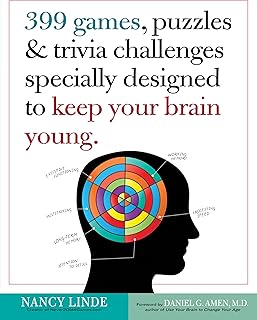
399 Games, Puzzles & Trivia Challenges Specially Designed to Keep Your Brain Young.
Best For:
Seniors who enjoy varied mental exercises, caregivers seeking a broad toolkit of activities, and travel-friendly brain stimulation.
This book of 399 games, puzzles, and trivia is a portable, no-frills resource for mental fitness. Unlike physical jigsaws or tactile dementia aids, a book of varied challenges offers a menu of activities—crosswords, word searches, logic puzzles, trivia questions—that can be adapted to different energy levels and cognitive goals. For caregivers and families, it’s a flexible toolkit: switch from a five-minute trivia warm-up to a longer logic puzzle depending on mood and capability.
The diversity of content is its biggest strength. One session could be a quick 5-minute quiz to spark conversation, while another could be a 30-minute focused word search to practice sustained attention. This variety is especially beneficial for seniors who have fluctuating energy or attention; caregivers can always pick an activity that suits the day. Compared to single-format products, the book gives far more options and can be used in group settings—different players can choose tasks that match their strengths.
Use cases include bedside engagement, travel-friendly stimulation, and easy transitions between solo and group play. Because it’s a low-tech option, there’s no learning curve—just a pen or pencil and space to write. That also means it’s less tactilely engaging than large-piece puzzles, so it pairs well with hands-on activities for a balanced program.
Who should buy this: Caregivers and families wanting a wide selection of brain exercises, seniors comfortable with reading and writing, and programs that need a low-cost, varied activity source. Who may not need it: Individuals with severe visual impairment or those who prefer hands-on, tactile puzzles.
Practical observations and buying considerations: Check font size and layout to ensure legibility. Consider pairing the book with an erasable clipboard or large-print versions for improved usability. Because the activities are varied, some pages will be more suitable than others—previewing pages can help pick the best fit.
Check the latest price on Amazon.
Pros
- Huge variety keeps routines fresh
- Low-tech and easy to use anywhere
- Good for both quick and extended sessions
Cons
- Requires reading and writing ability
- Less tactile engagement than physical puzzles
Check the latest price on Amazon.
Final Verdict
Puzzles and brain games are powerful tools for preserving mental agility and improving daily quality of life for seniors. The right choice depends on ability level, dexterity, vision, and whether the activity should be calming or challenging. For those needing low-frustration, tactile stimulation, dementia-focused sets like Keeping Busy’s Match Shapes or the 6-pack large-piece animal jigsaws are excellent starting points. Seniors who enjoy learning or have steadier fine motor control may prefer themed jigsaws such as the Geotoys Oregon puzzle. If language maintenance is the goal, the Keeping Busy Crossword-style set provides targeted verbal exercise. For maximum variety and portability, the 399-games puzzle book offers a flexible selection of challenges that can be used anywhere.
When buying, prioritize large pieces, high contrast, and themes that resonate with the user. Combine different types of puzzles across the week—short, achievable tasks on low-energy days and longer, more engaging puzzles when mood and stamina permit. If you’re buying for a care setting, get multiple copies and storage solutions to support group activities.
Ultimately, choose puzzles that encourage smiles and conversation as much as cognition. Small, frequent wins build confidence and a habit of engagement. Try one of the recommended products above to add gentle, purposeful stimulation to your care routine or leisure time.
Check the latest price on Amazon.
Conclusion
These Best Educational Puzzle Games for Seniors picks are trending now and offer great value and variety. Check the links above for latest prices and reviews.
As an Amazon Associate, I earn from qualifying purchases.
Tags:
puzzles for seniors, dementia activities, Alzheimer puzzles, brain games elderly, large piece puzzles, educational puzzles seniors, memory care activities
