Top Primers & Serums Creators Use Before Makeup
As an Amazon Associate, I earn from qualifying purchases. This article may contain affiliate links, which means we may receive a commission at no extra cost to you.
As an Amazon Associate, I earn from qualifying purchases. This article may contain affiliate links, which means we may receive a commission at no extra cost to you. If you want your foundation to sit smoothly, last through long days, and still let healthy skin show through, the products you use before makeup matter more than you might think. Professional makeup artists and skincare-savvy creators often treat the minutes before foundation like a ritual: hydrate, correct, prime, and protect. That combination creates a canvas that both looks and feels better. This guide walks through five widely recommended pre-makeup skincare picks—from multi-tasking SPF primers and French cult creams to gripping gels and glass-skin serums—so you can choose what matches your skin type and routine. I’ll explain practical benefits, real use cases, and buying considerations so you can pick the best primer or serum for your needs.
Buying Guide
Why pre-makeup skincare matters: primers and lightweight serums bridge your skincare and makeup. They smooth texture, control oil or boost hydration, correct undertone, and in some cases add SPF. When choosing a pre-makeup product consider skin type (oily, dry, combination, sensitive), desired finish (radiant, matte, natural), and whether you need extra wear time for long events.
Key features to look for:
– Hydration vs. oil control: Hyaluronic acid, glycerin, and mucin-type serums hydrate. Silicones and mattifying powders help control shine.
– Grip and longevity: Gel “grip” primers create a tacky base that helps foundation adhere without sliding.
– Multi-taskers: Some primers include SPF, light color correction, or radiance particles—useful for minimal routines but consider layering with sunscreen if you need full protection.
– Texture and layering: Lightweight gels and serums sit well under liquid foundations; thicker creams (or rich moisturizers) may pill under certain formulas—patch test with your foundation.
– Ingredients for sensitive skin: Look for fragrance-free, non-comedogenic formulas and soothing ingredients like aloe vera or shea butter.
Practical routine tips:
1. Apply lightweight hydrator or serum to damp skin for best absorption. Wait a minute.
2. Use a pea-sized amount of primer focused where you need smoothing or longevity (T-zone, cheeks, under-eye area).
3. If a product contains SPF, remember it supplements—but doesn’t replace—broad-spectrum sunscreen if you’ll be in strong sun for long periods.
4. Keep a mini primer for touch-ups with midday oil control or to revive foundation texture.
This guide covers who each product is best for, realistic scenarios, pros and cons, and how each stacks up against standard alternatives like straight moisturizers or silicone-only primers. Read on to find the match for your makeup setup.
3 In 1Primer for Face Before Makeup,Sunscreen Isolation Cream, SPF 50, One Step Color Corrector Face Primer, Blurs Imperfections Oil Control & Moisturizing Skin Tone Correcting,Radiance Skin

Best For:
People who want a streamlined morning routine, light coverage users, travelers, and those who prefer built-in SPF and subtle color correction in one step.
If you prefer a streamlined, time-saving pre-makeup step, a multi-tasking 3-in-1 primer that combines SPF, color correction, and blurring properties can be a compelling choice. This 3-in-1 primer is designed to do the work of multiple products at once: a sunscreen layer to help protect against UV exposure, a color-correcting base to even out redness or sallowness, and a skin-smoothing primer to minimize the look of pores and fine lines. For creators who are often balancing skincare and makeup on a tight schedule, these all-in-one formulas cut steps without sacrificing effect.
What it does for skin: the lightweight cream texture usually deposits a subtle sheer tint that neutralizes minor discoloration while imparting a radiance or soft-matte finish depending on the formula. SPF 50 inclusion makes it convenient for daytime routines—especially when you want fewer layers under makeup. Many users report the blurring effect helps lightweight foundations or tinted moisturizers appear smoother and more even from the first swipe.
Real-life use cases: this primer is great for quick morning routines, times when you want sun protection with minimal fuss (walks, errands, short outdoor meetings), and for days you’re using lighter coverage products like BB creams or serum foundations. It’s also handy for travel or gym-bag use when carrying multiple tubes isn’t practical.
How it compares to separate steps: using a dedicated high-SPF sunscreen plus a targeted color corrector and a separate silicone primer can offer more precise control—especially for very oily or very dry skin. The trade-off with an all-in-one is convenience versus the ability to mix-and-match. If your skin reacts to a specific ingredient, using separate products allows you to swap out components; an all-in-one blends everything into one formula.
Who should buy this: pick this if you want fuss-free mornings and moderate sun protection built into your primer. It’s a solid pick for combination skin types that need mild oil control and a bit of evening-out without heavy mattifying agents. Who might skip it: if you need powerful oil control for very oily skin, or if you require medical-grade sunscreen protection for extended sun exposure, a dedicated sunscreen plus specialized primer might be a better fit. Check compatibility with your foundation by testing a small area first to ensure it doesn’t pill.
Pros: combines SPF and color correction with primer benefits; simplifies routine; blurs minor imperfections. Cons: less customizable than separate products; may not replace a full sunscreen for prolonged sun exposure. Check the latest price on Amazon.
Pros
- Combines sun protection, color correction, and priming
- Saves time and reduces product layering
- Lightweight texture that works with tinted or light foundations
Cons
- Less flexible than using separate sunscreen and primer
- May not be sufficient for prolonged intense sun exposure
Check the latest price on Amazon.
e.l.f. Hydrating Face Primer, Moisturizing Makeup Base, Smooths Pores & Fine Lines, Long-Lasting Wear, Preps Skin for Foundation Application, Small

Best For:
Dry to normal skin types, beginners, those who want a dewy base under foundation.
The e.l.f. Hydrating Face Primer is one of the most accessible primers for people who want a dewy, flexible base without a lot of fuss or expense. Its water-based, lightweight formula focuses on adding moisture and smoothing the surface of the skin, making it a reliable pick for dry to normal skin types and for cooler months when makeup can cling to dry patches.
What it does: the primer helps fill fine lines and creates a soft canvas for foundation application. Instead of a heavy silicone feel, this primer leans on hydrating ingredients that help foundation glide on more evenly and avoid patchiness. For anyone who’s struggled with foundation settling into texture or emphasizing dry zones, this kind of hydrating primer can make a noticeable difference.
Real-life situations: this primer is ideal on mornings after using a drying treatment (like retinol) when the skin needs a moisture boost before foundation. It’s also a good match for long workdays when you want foundation to remain comfortable rather than clingy. Content creators who film under lights often choose hydrating primers to maintain skin luminosity on camera without adding oil.
Comparison with alternatives: compared to silicone-heavy primers, e.l.f.’s hydrating primer won’t grip makeup as tenaciously or blur pores to the same level, but it excels when the main problem is dryness or texture from flakiness. For oily skin or those who prioritize maximum longevity in hot weather, a mattifying or “grip” primer may be preferable.
Buying considerations: look at ingredient lists if you are sensitive to fragrance (some e.l.f. products include a mild scent) and remember that hydrating primers pair best with foundations that have medium to dewy finishes. For very oily skin, use this sparingly in the T-zone or combine it with a mattifying product where needed.
Who should buy it: dryness-prone users, makeup beginners, and anyone seeking an affordable hydrating base that plays nicely under most foundations. Who may skip it: people needing heavy oil control or the longest possible wear in humid conditions.
Pros: budget-friendly, hydrating, smooths fine lines. Cons: less effective at oil control and grip than silicone-based primers. Check the latest price on Amazon.
Pros
- Affordable and easy to find
- Hydrating texture that smooths fine lines
- Pairs well with dewy or medium-coverage foundations
Cons
- Not ideal for heavy oil control
- May contain light fragrance
Check the latest price on Amazon.
Embryolisse Lait-Crème Concentré Face Moisturizer and Makeup Primer, French Face Cream With Shea Butter & Aloe Vera

Best For:
Dry, sensitive, or mature skin users who want a nourishing primer that doubles as moisturizer.
Embryolisse Lait-Crème Concentré is a long-standing French pharmacy favorite often cited by makeup artists and creators as a multi-use moisturizer and primer. It’s a nourishing cream that doubles as a smoothing base under foundation—many professionals use it backstage because it calms skin, delivers dependable hydration, and creates a supple surface for makeup application.
What it brings to a routine: the formula typically contains shea butter, aloe vera, and nourishing emollients that absorb to leave skin soft without feeling greasy. Unlike thin, water-based primers, this cream has a richer texture that soothes and fills superficial lines, which helps foundation sit more evenly and look radiant rather than flat. Creators and artists often describe it as a ‘moisturizer that primes’ rather than a traditional silicone primer.
Real-life use cases: it’s an ideal pick for dry, sensitive, or mature skin that benefits from extra moisture. Use it as the last step of your skincare routine on no-makeup days to enjoy a dewy finish, or apply a thin layer before foundation on shooting days to create a luminous, healthy-looking base that’s flattering on camera. For travel and minimalist routines, it replaces both a separate moisturizer and light primer.
Comparison with standard alternatives: compared to gel or silicone primers, Embryolisse won’t provide the same matte blur or extreme “grip” that locks foundation in place in hot, humid conditions. Instead, it excels at skin conditioning, which can prevent patchy foundation on flaky or compromised skin. If you rely on heavy-matte foundations or need extended wear on oily skin, pair Embryolisse with a mattifying product at the T-zone.
Buying considerations: the richer consistency means a little goes a long way—start with a pea-sized amount and adjust. Patch test if you have very acne-prone skin since richer formulas can feel heavy. Many users praise its versatility and calming properties, but those who prefer a weightless primer feel might prefer a gel-based option.
Who should buy it: those with dry, sensitive, or mature skin looking for a nourishing primer moisturizer. Who may not need it: people with very oily skin who prefer a lightweight, matte primer for long wear.
Pros: deeply hydrating, versatile as moisturizer and primer, beloved by pros. Cons: richer texture may be heavy for oily skin. Check the latest price on Amazon.
Pros
- Multi-use moisturizer and primer
- Soothes and hydrates with shea butter and aloe vera
- Creates a radiant base favored by professionals
Cons
- Richer texture may feel heavy on oily skin
- Not focused on extreme oil control or grip
Check the latest price on Amazon.
e.l.f. Power Grip Primer, Gel-Based & Hydrating Face Primer For Smoothing Skin & Gripping Makeup, Moisturizes & Primes, 0.811 Fl Oz (24 ml.)

Best For:
Those needing long-lasting makeup, creators, people in humid climates, and users wanting improved foundation adherence.
The e.l.f. Power Grip Primer has gained a large following among creators for one primary reason: it helps makeup stick. This gel-based primer provides a slightly tacky, velvety layer that grips foundation and prevents slippage, which is especially useful for long shoots, humid conditions, and full-coverage makeup looks.
How it performs: the texture is lightweight and gel-like rather than oily or heavy, which allows it to play nicely under both liquid and stick foundations. Users often report that foundation appears smoother and lasts longer—less movement, fewer touch-ups. It also contains moisturizing elements so the skin doesn’t feel stripped while still delivering performance.
Real-life applications: power grip primers are frequently used for special events, long workdays, and times when you need camera-ready wear that won’t fade under lights or sweat. Makeup artists often apply it to foundation zones that need longevity—the center of the face, under-eye areas, and along the jawline. It’s also great for layering: a thin coat under foundation and a touch-up for concealer areas can be transformative.
Comparison with other primers: compared with purely hydrating primers, Power Grip offers superior adhesion. Compared with silicone-heavy primers, it achieves similar “grip” without feeling siliconey for those who dislike that cushiony finish. For dry skin types, pairing it with a moisturizing serum (applied first) can give both hydration and hold.
Buying considerations: because of its tacky finish, use sparingly—too much can affect how foundation blends. If you have very textured or flaky areas, prep with a hydrating serum to avoid emphasizing rough patches. The smaller size is travel-friendly and often sold at an approachable price point.
Who should buy it: anyone who needs extended wear or improved foundation adherence—creators, performers, people in humid climates, or those with oily-combination skin seeking better longevity. Who might skip it: people who want a purely invisible, non-tacky primer or those with very dry skin who don’t want to add any additional grip element.
Pros: excellent grip and longevity, lightweight gel texture, improves foundation wear. Cons: tacky feel requires minimal application; can emphasize dry patches if skin isn’t prepped. Check the latest price on Amazon.
Pros
- Strong grip for longer foundation wear
- Lightweight gel texture
- Good value and travel-friendly size
Cons
- Tacky finish can be noticeable if over-applied
- May emphasize dry texture without prior hydration
Check the latest price on Amazon.
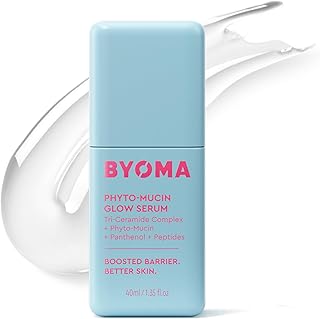
BYOMA Phyto-Mucin Glow Serum – Mucin Face Serum for Glass Skin – Plumps, Primes + Hydrates – Flawless Primer and Makeup Base – Strengthens Skin Barrier – 1.35 fl.oz
Best For:
Those chasing glass-skin, dehydrated skin needing plumping hydration, and creators who want a luminous base for camera work.
Mucin-style serums have become a favorite among beauty creators chasing a glass-skin look, and the BYOMA Phyto-Mucin Glow Serum positions itself as a hydrating, plumping primer-serum hybrid. Mucin-like ingredients (often derived from botanical polysaccharides) help lock in moisture, smooth texture, and produce a soft, reflective finish that reads well under makeup and on camera.
Performance and texture: this serum typically feels lightweight, sinks in quickly, and leaves a hydrated but non-greasy surface. It’s meant to be used as the last step of skincare or the first step of makeup to create dewy, bouncy skin. Because it boosts hydration and plumps superficial lines, foundation can apply more evenly and look less patchy.
Real-life scenarios: creators who film close-up content often appreciate mucin serums for how they translate under high-definition cameras—skin looks fresh and luminous rather than flat. It’s also useful in winter months when air is dry or after exfoliation when the skin may need an instant moisture boost before makeup. For daily office wear, a thin layer under a light foundation or tinted sunscreen can produce a healthy glow.
Comparison with alternatives: compared to traditional hyaluronic serums, mucin-style products can feel slightly more film-forming and smoothing. Unlike heavy creams, a mucin serum provides hydration without weight, so it is a good middle ground between lightweight primers and richer moisturizers.
Buying considerations: check the ingredient list if you have sensitivities; patch testing is wise when trying new bioactive serums. Also consider your foundation finish—if you prefer matte coverage, you may need a mattifying product at the T-zone. Many users pair mucin serums with a light grip primer in oily zones for best results.
Who should buy it: people seeking plumping hydration and a dewy, glass-skin finish that enhances foundation application. Who may skip it: those who strictly need matte control or who prefer a fully matte makeup base.
Pros: plumps and hydrates, creates a smooth, dewy base, lightweight. Cons: may be too dewy for very oily skin; some active ingredients can irritate sensitive users. Check the latest price on Amazon.
Pros
- Plumps and hydrates without heaviness
- Creates a glass-skin, dewy finish
- Works well under foundation for smoother application
Cons
- Too dewy for very oily skin without additional mattifying steps
- Active ingredients may irritate very sensitive skin
Check the latest price on Amazon.
Final Verdict
Choosing the right pre-makeup product comes down to your skin’s needs and the type of day ahead. If you want simplicity and built-in protection, an all-in-one SPF primer is a convenient choice. For those with dry or mature skin, Embryolisse offers nourishing hydration that doubles as a primer and favors a radiant finish. Creators and people who need extended wear should consider e.l.f. Power Grip for its superior adhesion, while e.l.f.’s Hydrating Primer is a budget-friendly, moisture-forward base for everyday use. If your goal is glassy, plump skin that photographs well, a mucin-style serum like BYOMA adds that dewy, bouncy texture.
Think about the finish you want (matte vs. dewy), any sensitivity concerns, and whether you value convenience over modular control. Many users find the best results by mixing two approaches—hydrating serums in dry zones and grip or mattifying primers where longevity and oil control are needed. None of these picks requires complex layering, and each offers a practical, creator-approved way to improve how makeup sits on the skin.
If you’re new to primers, start simple: try a hydrating primer and test it under your foundation to see how the finish changes. If you need durability, add a tiny amount of a grip primer to the center of the face before foundation. And if you’re trying to cut steps in the morning, the all-in-one SPF primer may be the convenience win you’re after. Whatever path you choose, a small change in your pre-makeup routine can have an outsized effect on your finished look and comfort through the day.
Check the latest price on Amazon.
Conclusion
These Skincare products creators use before makeup application picks are trending now and offer great value and variety. Check the links above for latest prices and reviews.
As an Amazon Associate, I earn from qualifying purchases.
Tags:
makeup primer, hydrating primer, makeup prep, glass skin serum, power grip primer, Embryolisse primer, SPF primer
