Sustainable Organizers for Tidy Bedrooms
As an Amazon Associate, I earn from qualifying purchases. This article may contain affiliate links, which means we may receive a commission at no extra cost to you.
As bedrooms shrink and closets overflow, choosing sustainable, space-smart organizers can make the difference between permanent clutter and a calm, functional room. As an Amazon Associate, I earn from qualifying purchases. This article may contain affiliate links, which means we may receive a commission at no extra cost to you.
This guide focuses on five practical, widely recommended organizers that suit small apartments, dorm rooms, and anyone who prefers fabric-and-fiber options over bulky plastic. I didn’t do hands-on testing; the recommendations below are based on product specifications, assembly details, and patterns from verified customer feedback. Expect honest observations about what each product is best for, realistic use cases, and what to watch out for when buying.
Buying Guide
Before buying sustainable organizers for a bedroom, consider three practical factors: material, modularity, and dimensions.
Material: Look for durable woven fabrics, recycled fibers, or cotton blends that balance breathability with structure. Fabric bins and drawer dividers are gentler on clothes than hard plastic and are often collapsible for storage when not in use.
Modularity: Choose organizers that work together—stackable bins, uniform drawer dividers, and hangers that can create vertical storage all multiply usable space. Sets with multiple pieces (6-pack, 12-pack, etc.) give you the flexibility to outfit a dresser and closet in one purchase.
Dimensions and fit: Measure shelves, drawers, and hanging rods before you buy. Many fabric bins list finished dimensions rather than interior usable space; account for seams and handles. For drawer organizers, check divider heights—very short dividers can shift when drawers open and close.
Other considerations:
– Ventilation: Breathable fabric is better for storing knitwear and seasonal clothes.
– Reinforcement: Some fabric boxes include cardboard or reinforced bottoms; these hold shape better over time.
– Ease of cleaning: Removable washable liners or wipeable materials help with maintenance.
– Aesthetics: Neutral colors like beige or white blend with most bedrooms; choose darker colors for high-traffic drawers to hide stains.
If you value sustainable materials, prioritize fabric-based organizers over single-use plastics. If you need quick, visible organization, clear-window bins or wire shelving might be better alternatives. Below you’ll find detailed buyer-friendly descriptions of five recommended options, who they suit, and realistic ways to use them.
AMKUFO 6 Pack-Closet-Organizers-and-Storage, Magic-Hangers-Space-Saving-for-Clothes, Closer-Organizer-for-Closet-Organization, Space-Saver-Hanger-Organizer-for-Multipurpose, Dorm-Room-Essentials

Best For:
People in small apartments or dorms who need to increase hanging capacity without installing fixtures.
If you struggle with cramped closet rods, the AMKUFO 6-pack magic hangers are a low-cost, space-multiplying solution. These hangers are built to convert one hanger into the equivalent of several by using a tiered or cascading design—think of them as a vertical expansion for clothing rails. They’re lightweight, usually plastic with a slim profile, and intended to slip into standard hangers to increase capacity without adding bulk.
Main benefits include immediate space savings (you can typically hang multiple shirts or pants vertically), quicker visual sorting of outfits, and a tidier closet silhouette that frees up shelf or floor space. Unlike bulky multi-tiered garment racks, these hangers keep everything on the rod and are portable—handy for renters, students in dorms, or anyone who rearranges closets seasonally.
Real-life usage: Pair one of these hangers with a row of dress shirts to reduce shoulder crowding, or use them for coordinating outfits—one hanger for shirt, jacket, and scarf. They’re also great for storing seldom-worn items behind everyday clothes, making them accessible without taking up prime hanging space.
Why this product is valuable: Compared with standard single hangers or thin wire hangers, a cascading space-saver hanger multiplies usable hanging capacity without installing hardware or altering closet shelves. They reduce wrinkling by spacing garments and prevent the pile-up that leads to clothes being shoved into drawers.
Buying considerations: These hangers work best with lightweight to medium-weight garments; heavy winter coats may stress the connectors. Also check the diameter of your closet rod—very thick rods might not accommodate the hook profile. If sustainability is a priority, look for versions made of recycled plastics or metal alternatives, though the AMKUFO option prioritizes affordability and simplicity.
Who should buy: Renters, students, small-space dwellers, and anyone wanting a quick closet capacity boost. Who may not need it: Households with large walk-in closets that already have robust shelving systems or those storing many heavy coats.
Pros: ["Maximizes hanging space instantly","Portable and easy to rearrange","Works with existing closet rods"]
Cons: ["Not ideal for very heavy garments","Plastic connectors may wear over time"]
Check the latest price on Amazon.
Pros
- Maximizes hanging space instantly
- Portable and easy to rearrange
- Works with existing closet rods
Cons
- Not ideal for very heavy garments
- Plastic connectors may wear over time
Check the latest price on Amazon.
Homsorout Fabric Storage Bins for Organizing – 6 Pack Large Trapezoid Collapsible Storage Bins with Front Handle, Closet Organizers and Storage for Bedroom, Home Shelves, Small Spaces, Beige

Best For:
People needing modular shelf storage—great with cube organizers or shallow closet shelves.
Fabric storage bins are the most versatile toolkit in a sustainable organizer’s arsenal, and the Homsorout 6-pack trapezoid bins target exactly that flexibility. These collapsible bins are constructed from breathable fabric with sewn-in sides and a bottom panel (often cardboard-reinforced) to keep their shape. The trapezoid shape is particularly useful for shallow shelves or cubbies where a straight-sided box leaves wasted space.
Benefits you’ll notice right away include tidy shelf faces, hidden storage for seasonal items, and a uniform look that visually calms a cluttered bookcase or closet. The front handle makes pulling bins out of a deep shelf easier—this is a small feature that proves useful once you start using the bins for bed linens, spare throws, or out-of-season clothing.
Real-life usage: Use the Homsorout bins to corral workout clothes on an open shelf, hold smaller toys and gadgets in a shared bedroom, or store under-shelf linen sets. They also work well in combination with cube shelving units—place one or two bins per cube to create a clean modular look.
Why it’s valuable: Compared to open plastic tubs, fabric bins are lighter, breathable (so clothes won’t trap moisture as easily), and foldable for off-season storage. They’re quieter when moved and integrate better with bedroom decor thanks to neutral tones like beige.
Buying considerations: Measure your shelving before purchase—the internal usable space is slightly smaller than the box’s exterior dimensions. If you plan to store heavy items, choose bins with reinforced bottoms or add a thin wood/firm cardboard insert to prevent sagging. Also, check care instructions—some fabric bins are surface-wipe only.
Who should buy: Anyone who wants a stylish, foldable storage solution for shelves, closets, and cube organizers. Who may not need it: Those who prefer transparent storage for quick visual identification or who store heavy tools and hardware.
Pros: ["Collapsible and easy to store","Breathable fabric reduces mustiness","Neutral color fits most decor"]
Cons: ["Reinforcement needed for very heavy loads","Exterior dimensions can be slightly larger than usable interior space"]
Check the latest price on Amazon.
Pros
- Collapsible and easy to store
- Breathable fabric reduces mustiness
- Neutral color fits most decor
Cons
- Reinforcement needed for very heavy loads
- Exterior dimensions can be slightly larger than usable interior space
Check the latest price on Amazon.
DIMJ Drawer Organizer Clothes, 12 Pack Dresser Organizer, Foldable Closet Organizers and Storage, Fabric Dresser Bins, Drawer Dividers for Nursery, Baby Clothes, Underwears, Sock (Beige)

Best For:
Families, parents, or anyone who wants systematic dresser organization across multiple drawers.
A dresser full of mismatched piles is one of the easiest ways to make a bedroom feel chaotic. The DIMJ 12-pack drawer organizers are designed to split drawers into neat compartments for socks, underwear, baby clothes, and accessories. With a dozen pieces you can create consistent layouts across multiple drawers—ideal for families or anyone who appreciates systemized storage.
Benefits include faster morning routines (no more digging for a missing sock), efficient use of drawer depth, and the ability to keep fragile or small items separated. These organizers are usually made of breathable fabric with stitched sides and a reinforced base for shape retention. Their lightweight design lets you reconfigure drawers quickly when needs change.
Real-life usage: Create an underwear drawer with four compartments for different colors and styles, a sock drawer with separate cubbies, and a baby dresser where onesies, bibs, and small blankets each have their own section. The 12-piece set also makes it easy to outfit multiple rooms—one set for the dresser, another for a nursery changing table.
Why it’s valuable: Compared with thrown-together folding or ad-hoc boxes, specifically sized fabric drawers save time and look tidier. They’re a middle ground between rigid plastic inserts (which can scratch wood) and flimsy cloth bags that lose shape.
Buying considerations: Check the height of the organizers versus your drawer depth—an organizer that’s too tall will not let the drawer close fully. Also consider whether you want lids or open-top dividers; these are open-top, which provides instant visibility but less dust protection.
Who should buy: Parents organizing baby clothing, anyone with small-item clutter in dressers, and people who appreciate repeatable drawer systems. Who may not need it: Individuals with deep custom drawer systems that already include built-in dividers.
Pros: ["Large 12-piece set for full dresser organization","Lightweight and reconfigurable","Good for small clothing and accessories"]
Cons: ["Open-top design doesn’t protect from dust","May require measuring for an exact drawer fit"]
Check the latest price on Amazon.
Pros
- Large 12-piece set for full dresser organization
- Lightweight and reconfigurable
- Good for small clothing and accessories
Cons
- Open-top design doesn’t protect from dust
- May require measuring for an exact drawer fit
Check the latest price on Amazon.
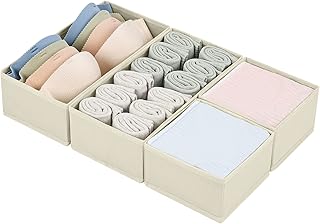
DIMJ Drawer Organizers Clothes, Dresser Organizer Bins for Baby Clothes,Underwear and Sock, Fabric Closet Organization and Storage Boxs, Drawer Dividers for Nursery, Clothing, Tie – 4 Pack, Beige
Best For:
Buyers who want a small, attractive set for a single dresser, closet shelf, or nursery area.
For smaller projects or to supplement an existing system, the DIMJ 4-pack drawer organizer bins bring focused utility to a single dresser or closet shelf. These slightly larger fabric bins are suitable for folded baby clothes, ties, or accessory storage. They maintain the fabric aesthetic—soft, neutral, and breathable—while offering more defined compartments than a simple basket.
Practical benefits include easier sorting of medium-sized items, compatibility with cube shelving, and the ability to pull out and carry a bin to a laundry area or changing table. The 4-pack size is budget-friendly and less likely to overwhelm your space; you can mix and match sizes from the same brand to build a tailored system.
Real-life usage: Use one bin for belts and ties in your closet, another for seasonal scarves, a third for baby swaddles, and a fourth for spare pillowcases. The bins work particularly well as interim storage near a laundry basket—empty them directly into a bin, then tuck it into a shelf.
Why it’s valuable: Compared with single plastic tubs or mismatched containers, a coordinated 4-pack creates a cleaner look and improves daily routines. They’re more attractive than clear plastic for visible shelving and softer on delicate fabrics.
Buying considerations: If you plan to store heavier items, add a reinforcement board to the bottom. Check the bin’s finished dimensions against shelf depth—many buyers are surprised when the usable space is slightly less due to the bin’s side thickness.
Who should buy: Individuals wanting a simple, targeted organizer for one area or a complementary set for an existing modular system. Who may not need it: Households already fully equipped with larger multi-piece systems or those who require fully rigid storage solutions.
Pros: ["Good for medium-sized folded items","Portable between rooms","Attractive neutral color"]
Cons: ["Not intended for very heavy items","May need bottom reinforcement for long-term shape"]
Check the latest price on Amazon.
Pros
- Good for medium-sized folded items
- Portable between rooms
- Attractive neutral color
Cons
- Not intended for very heavy items
- May need bottom reinforcement for long-term shape
Check the latest price on Amazon.
Drawer Organizer Box, Foldable Storage Bin with Clear Window, Clothing Storage for Bedroom Closet Socks and underwear Dividers, White

Best For:
Shoppers who want the convenience of visible storage without the noise and weight of plastic bins.
This foldable drawer organizer box blends the benefits of fabric storage with the convenience of a clear window for quick visual identification. The white fabric keeps things looking fresh and clean, while the transparent front window lets you spot contents without unstacking boxes—an advantageous feature for shoe boxes, seasonal accessories, or specially organized sock drawers.
Benefits include tidy shelf displays, faster retrieval of stored items, and a balance between discreet storage and visual access. Because it’s foldable, you can collapse it when not in use—perfect for small apartments where storage is a at a premium. The box often features a reinforced bottom and stitched seams to help it retain shape longer than cheaper fabric alternatives.
Real-life usage: Stack multiple boxes in a linen closet to separate bed sizes and pillowcases, or keep a row of windowed boxes in a large dresser for easily organized socks and underwear. The window makes it simpler to rotate seasonal items—just glance and grab.
Why it’s valuable: Compared with opaque fabric bins, the windowed design minimizes the need for labeling, and compared with clear plastic bins, the fabric construction is lighter and less noisy while still offering quick content recognition.
Buying considerations: The white fabric may show stains more readily than darker colors—choose placement accordingly. Check the clarity and durability of the window material; cheaper windows can fog or crease. Also verify finished dimensions against shelf depth and drawer height.
Who should buy: People who want visible but tidy storage—those who prefer not to open every bin to find items. Who may not need it: Buyers who prioritize completely opaque storage for aesthetic uniformity or those storing items that require airtight protection.
Pros: ["Clear window for quick identification","Foldable and space-saving when not used","Reinforced bottom helps retain shape"]
Cons: ["White fabric can show stains","Window material may fog over time"]
Check the latest price on Amazon.
Pros
- Clear window for quick identification
- Foldable and space-saving when not used
- Reinforced bottom helps retain shape
Cons
- White fabric can show stains
- Window material may fog over time
Check the latest price on Amazon.
Final Verdict
Bringing sustainable organizers into a bedroom doesn’t mean sacrificing convenience or style. Between space-saving hangers, collapsible fabric bins, and drawer dividers, you can create a layered system that addresses both visible clutter and the behind-the-scenes piles that slow down daily routines. The AMKUFO hangers are a practical first step if hanging space is your limiting factor; fabric bins like Homsorout and DIMJ provide soft, breathable storage that’s kinder to clothes and easy to reconfigure; and windowed or reinforced drawer boxes add quick identification without loud plastic.
When choosing, measure carefully, prioritize breathable materials for clothes, and think modularly—buy a set that lets you tackle a closet or dresser in stages rather than purchasing one-off pieces that don’t integrate. If you want a single recommendation: start with one hanger set to reclaim rod space and pair it with a set of fabric drawer organizers to bring order to the most chaotic areas.
If in doubt, opt for neutral colors and reinforced bottoms for longer life. These organizers rely on thoughtful placement and repeated use rather than novelty—invest a little time in measuring and arranging, and the payoff is daily calm.
Check the latest price on Amazon.
Conclusion
These Sustainable organizers creators use for tidy bedroom setups picks are trending now and offer great value and variety. Check the links above for latest prices and reviews.
As an Amazon Associate, I earn from qualifying purchases.
Tags:
sustainable organizers, closet organizers, fabric storage bins, drawer dividers, space-saving hangers, bedroom organization, collapsible storage
