Reusable Family Routine Picks: Chore Charts & More
As an Amazon Associate, I earn from qualifying purchases. This article may contain affiliate links, which means we may receive a commission at no extra cost to you.
Keeping a household running smoothly often comes down to small, repeatable habits. Reusable tools that support routines—whether for preschoolers learning to dress themselves, busy teens juggling schoolwork, or families trying to reduce single-use clutter—are quietly powerful. In this guide I’ve gathered a mix of tactile, magnetic, and sustainably made items that fit into real family life: wooden routine boards for little hands, magnetic dry-erase charts on the fridge, colorful sliding trackers for multiple kids, and even a practical bamboo cutting board that doubles as a reusable meal prep surface.
As an Amazon Associate, I earn from qualifying purchases. This article may contain affiliate links, which means we may receive a commission at no extra cost to you. I approached these selections by studying product specs, common customer feedback, and practical use cases—focusing on durability, reusability, and fit for everyday family routines. The goal is not to hype every new gadget but to highlight options that genuinely help reduce stress, stay organized, and cut down on disposable alternatives.
Below you’ll find an in-depth look at five reusable products that families are using to build habits and simplify daily life. Each section includes realistic scenarios, features to watch for, and buyer considerations so you can decide which tool belongs in your home.
Buying Guide
When choosing reusable routine tools for family life, a few practical priorities make a big difference: durability, ease of use, visibility, and maintenance. Start by thinking about where the product will live. Refrigerator-friendly magnetic charts or large dry-erase boards work best for central family communication, while smaller wooden or sliding charts are ideal for bedroom doors, playrooms, or travel use.
Material matters. Wooden boards (especially FSC-certified bamboo) feel sturdy and screen-free, giving preschoolers a tactile experience that encourages hands-on participation. Bamboo or hardwood also resists staining and can be lightly sanded or oiled—unlike thin plastics that warp over time. Dry-erase and magnetic boards are flexible, but marker quality and magnet strength vary: look for included low-odor markers, erasers, and strong magnets designed for appliance surfaces.
Think about customization. Families often need different layouts: morning/bedtime columns, chores by child, or a single checklist for shared tasks. Reusable stickers, sliders, and dry-erase grids let you adjust schedules without wasting paper. Multi-lingual sticker sets are useful in bilingual homes. For neurodiverse children or those who benefit from visual structure, predictable, reusable layouts (sliders or moveable magnets) can be especially effective.
Maintenance and longevity are common buyer concerns. Avoid boards that trap marker ink or stickers that leave stubborn residue—readily replaceable sticker sheets and wipe-clean finishes are preferable. For wooden products, plan for occasional oiling and avoid the dishwasher unless the manufacturer explicitly allows it.
Compare to app-based alternatives: apps are flexible but not always accessible to young children and can add screen time. Tangible charts build independence and are often better for preschoolers and kids who respond to hands-on cues. Cost is another consideration: reusable products can have a higher upfront cost than single-use paper charts but pay off by lasting through multiple children and seasons.
Finally, consider household size and mobility. If you travel frequently or use RVs, compact sliding charts and magnetic pads are convenient. For a fixed family hub, a large refrigerator tracker with space for multiple kids and weekend/weekday distinctions tends to be the most practical.
Melissa & Doug My Daily Routines Chart, Wooden Daytime and Nighttime Habit Tracker with Multi-Lingual Stickers, Hands-On, Screen-Free Preschool Toys for Girls & Boys Ages 3+ – FSC Certified

Best For:
Preschool-aged children and parents wanting a tactile, screen-free visual routine; bilingual families and early childhood classrooms.
The Melissa & Doug My Daily Routines Chart is a thoughtfully designed wooden routine board aimed at preschoolers who respond best to tactile, screen-free reminders. Crafted from FSC-certified wood, it presents two main columns—daytime and nighttime—paired with a full sheet of multi-lingual, reusable stickers that let parents and caregivers create a predictable visual sequence (brush teeth, get dressed, story time, lights out). The board’s design favors simplicity and durability: it’s sturdy enough for repeated handling by little hands, and the sticker tiles are sized for easy placement and removal without tiny fingers getting frustrated.
This product is especially useful for families transitioning toddlers into more independent self-care tasks. Unlike app-based chore systems, the wooden board gives a child a physical reward loop: moving a sticker or visually checking off a task creates a satisfying, concrete sense of accomplishment. Compared with flimsy paper charts, the wooden surface holds up better over months of use and travels well in a stroller or car for consistent routines on weekends and vacations.
Practical observations from customer feedback and product specs suggest three useful points: first, the sticker set is multilingual, which is a real plus in bilingual homes or classrooms; second, the screen-free interface helps with reducing digital dependence at bedtime; third, while the stickers are reusable, they will show wear if peeled on high-friction surfaces—store them flat between uses for longevity. If you’re looking for a tactile, low-tech tool to teach sequences to preschoolers and foster independence (without screens), this board is a strong pick. It pairs nicely with bedtime story rituals and morning dressing routines and makes a calm visual anchor in a child’s room.
Who should buy: parents of preschoolers, early childhood educators, bilingual households looking for a hands-on routine tool. Who may not need it: families who prefer digital reminders or households with older kids who require more advanced tracking features. Check the latest price on Amazon.
Pros
- FSC-certified wooden construction feels sturdy and lasting
- Multilingual reusable stickers for flexible use
- Screen-free, tactile learning that encourages independence
Cons
- Stickers can wear with heavy use and may need careful storage
- Less flexible than large dry-erase family boards for multiple kids
Check the latest price on Amazon.
Upgraded Slider Dry Erase Chore Chart for Kids, Whiteboard Magnetic Chore Chart for 2 Kids, Reusable Morning/Bedtime Routine Chart for Kid Toddlers Teens Adult, Visual Schedule for Kid with Autism

Best For:
Families with multiple children, caregivers of neurodiverse kids, and anyone wanting a central refrigerator routine tracker.
This upgraded slider dry erase chore chart combines a magnetic whiteboard surface with moveable sliders to create a reusable, low-tech visual schedule that works well for a wide age range—toddlers to teens, and even adults who prefer a physical checklist. The chart typically supports two kids with separate columns, so siblings can track their own tasks side by side. Sliders make it easy to indicate completed tasks without relying on markers alone, which helps reduce smudging and keeps the chart looking tidy.
Families who benefit most are those who want a central hub on the refrigerator or a metal door. The magnetic backing sticks where you need it, and included low-odor markers and an eraser are standard with most sets. For households with neurodiverse children, the predictable, moveable elements are particularly effective: sliding a token or marker creates a reliable visual cue that feels both satisfying and calming. Compared with flat dry-erase boards, sliders offer a tactile interaction that kids can manage without help.
From practical reviews and spec details, several buying considerations emerge: check magnet strength—thinner or cheaper magnets won’t hold on older appliance surfaces. The included markers are handy but often basic; upgrading to higher-quality low-odor markers improves erasing over time. Slider durability varies between models—if your household will use this daily, look for reinforced slider tracks to prevent jamming and replaceable parts. Also consider layout customization: some families need space for chores, rewards, and notes—measure the chart size against your fridge or intended surface so names and tasks don’t get cramped.
Who should buy: households with multiple kids, families wanting a central refrigerator routine hub, and caregivers seeking predictable visual structure for children who thrive on tactile cues. Who may not need it: small households without a metal surface or those who prefer single-user digital apps. Check the latest price on Amazon.
Pros
- Magnetic backing sticks to fridges for a visible family hub
- Slider mechanism reduces smudging and adds tactile feedback
- Reusable dry-erase surface allows frequent schedule changes
Cons
- Magnet strength and slider durability can vary by unit
- Markers included are often low-end; consider upgrading
Check the latest price on Amazon.
Magnetic Chore Chart for Kids Multiple Kids – Large Dry Erase Family Responsibility Tracker for Refrigerator – Includes 6 Markers & Extra Note Pad – Routine Tracker for Toddlers & Adults
Best For:
Large families and busy households that need a visible, shared weekly schedule on the refrigerator.
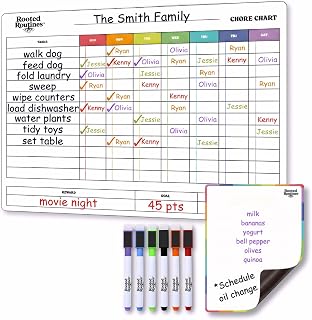
Large magnetic chore charts are a go-to for busy families, and this particular model focuses on capacity and visibility: a roomy dry-erase grid that accommodates multiple kids, daily and weekly tasks, and space for notes or rewards. It typically arrives with a set of markers (usually six colors) and a small note pad so parents can write reminders or keep shopping lists nearby. The large format makes it easy to stand back and see the whole week at a glance—a real advantage when coordinating carpools, extracurriculars, and work schedules.
This chart shines in households that need a central, shared planning surface. Compared with individual bedside charts, a family-sized refrigerator tracker reduces redundant lists and keeps everyone aligned on responsibilities. The dry-erase surface is convenient for frequent changes; kids can mark off completed tasks and parents can update chores without creating paper waste. For families transitioning kids into more responsibility, assigning tasks by name and tracking progress publicly often boosts accountability.
Practical considerations include magnet strength on older or textured fridges and marker performance over time—low-odor markers are better for indoor use but some cheaper ink will ghost if left too long. The included note pad is handy but will be used up; plan to replace it with a thicker pad if you rely on grocery lists or chore notes daily. Compared to digital calendars, this board is faster to update in the moment and visible even to younger children who can’t access phones.
Who should buy: large families, shared households, and anyone who benefits from a visible weekly overview. Who may not need it: single-person homes or families that prefer private, app-based scheduling. Check the latest price on Amazon.
Pros
- Large grid offers a full-week overview for multiple kids
- Comes with multiple markers and a note pad for convenience
- Reduces paper waste and centralizes family communication
Cons
- Markers may ghost if left too long; regular erasing required
- May be oversized for small apartments or compact fridges
Check the latest price on Amazon.
Bamboo Cutting Board 16x10x1 inch with Juice Groove – Bamboo Cutting Board, Charcuterie Board, Butcher Block, Non Plastic Wooden Chopping Board

Best For:
Home cooks and eco-conscious families looking for a durable, non-plastic cutting and serving board.
A durable bamboo cutting board is a practical, reusable item that fits into sustainable family routines by replacing disposable plastic boards or single-use cutting mats. At 16x10x1 inches this board is large enough for weekday meal prep—chopping vegetables, slicing fruit, and assembling family-style dinners—yet compact enough to store vertically. The integrated juice groove helps contain liquids when carving meats or slicing juicy fruit, which reduces countertop mess and makes cleanup easier.
Bamboo is an eco-friendlier choice compared with many plastics: it’s fast-growing, renewable, and naturally harder than some softwoods, resisting deep knife marks when properly maintained. For families with cooking children, a sturdy board gives a safe, consistent surface for practice. It also doubles as a presentable charcuterie board for casual weekend snacks, so it pulls double duty in everyday life and entertaining.
Maintenance is straightforward but important: hand wash with mild soap, dry immediately, and oil periodically with food-safe mineral oil to prevent drying and cracking. This board is generally not dishwasher-safe—heat and soaking will damage bamboo. Compared to plastic boards, bamboo is less likely to warp and has a warmer surface that’s gentle on knife edges. However, it’s heavier than thin plastic options and requires occasional oiling—small trade-offs for longevity and aesthetics.
Who should buy: eco-conscious families, home cooks who want a durable non-plastic board, and households that value a multifunctional prep-and-serve surface. Who may not need it: those wanting dishwasher-safe convenience or ultra-lightweight travel boards. Check the latest price on Amazon.
Pros
- Sustainable bamboo construction that’s gentle on knives
- Juice groove helps contain mess during meal prep
- Multipurpose: prep work and presentable for serving
Cons
- Not dishwasher-safe; needs periodic oiling
- Heavier than thin plastic boards and requires more storage care
Check the latest price on Amazon.
4 Pieces Chore Chart for Kids Multiple Kids – Sliding Routine Chart: Reusable to Do List, RV Checklist, Planning Board, Visual Schedule, and Reminder (bluepinkgreenyellow)

Best For:
Traveling families, RV owners, and households wanting compact, color-coded individual routine trackers.
This set of four sliding routine charts is a versatile, compact solution for families juggling multiple schedules, travelers using RVs, and parents who want color-coded organization. Each board typically comes in a bright color—blue, pink, green, and yellow—so you can assign a hue to each child or activity. The sliding tiles or tabs let you create reusable to-do lists and check-offs without markers or stickers, which keeps the system clean and easy for young hands.
Because they’re compact and designed for portability, these charts are especially useful for weekend trips, grandparents’ houses, or classrooms that rotate activities. Compared with a large fridge chart, they’re not as visible from across the kitchen, but they excel in personal spaces such as bedrooms, backpacks, or RV kitchens where space is tight. The reusable plastic sliders are lightweight and ideal for families who want minimal setup and quick changes.
Practical buyer observations include durability of the sliding mechanism—some families report occasional jamming if particles get into the track—so consider keeping them away from sandy hands after outdoor play. The color coding is a real help for assigning responsibilities at a glance, and the boards are inexpensive enough to replace if lost. If you want a no-marker, low-mess system that travels with you, these sliding charts often outperform paper sheets that get soggy or crumpled.
Who should buy: families who travel, households with multiple small children who need individual trackers, and RV owners looking for compact routine tools. Who may not need it: families who want a single central hub or those seeking a premium wooden aesthetic. Check the latest price on Amazon.
Pros
- Portable, color-coded set ideal for travel and individual use
- No markers or sticky residue—clean and low-mess
- Affordable and easy to distribute among multiple kids
Cons
- Sliding tracks can occasionally jam or degrade with rough use
- Less visible as a household-wide hub compared to fridge charts
Check the latest price on Amazon.
Final Verdict
Reusable routine tools are small investments that pay off in reduced stress, clearer expectations, and less single-use waste. For preschoolers and hands-on learners, the Melissa & Doug wooden routine board gives a tactile, screen-free way to build independence. Families who want a central refrigerator hub will appreciate the magnetic large chore chart and the upgraded slider dry erase chart for tidy, visible coordination. Those who travel or need individualized trackers will find the four-piece sliding charts practical, and a quality bamboo cutting board is a versatile, sustainable kitchen tool that supports reusable meal prep routines.
Choosing the right item depends on the household’s needs: pick tactile wooden boards for early learners, magnetic dry-erase systems for big-picture family planning, sliding portable charts for travel and individual ownership, and bamboo boards if you want a durable, non-plastic kitchen surface. Consider magnet strength, sticker longevity, marker quality, and maintenance—especially for wooden and bamboo items that require occasional oiling. If you prefer app-based reminders, these physical systems may feel redundant, but for many families the visibility and hands-on interaction are what help routines stick.
If you’re building or refreshing a routine toolkit, these five options cover a broad range of real-life family scenarios. They reduce waste compared with disposable alternatives, fit into different parts of the home (fridge, bedroom, RV, kitchen), and are adaptable as children grow. Check the latest price on Amazon.
Conclusion
These Reusable products trending in realistic family routines picks are trending now and offer great value and variety. Check the links above for latest prices and reviews.
As an Amazon Associate, I earn from qualifying purchases.
Tags:
reusable chore charts, family routine tools, magnetic chore chart, wooden routine board, bamboo cutting board, sliding routine chart, kids visual schedule
