Parenting Nighttime Routines: Trusted Books & Guides
As an Amazon Associate, I earn from qualifying purchases. This article may contain affiliate links, which means we may receive a commission at no extra cost to you.
As an Amazon Associate, I earn from qualifying purchases. This article may contain affiliate links, which means we may receive a commission at no extra cost to you.
Nighttime with little ones can feel like its own job: soothing, scheduling, troubleshooting and repeating. Over the years, authors, pediatric sleep consultants, and parenting creators have distilled those chaotic hours into approachable systems—books and guides that parents reach for when they want research-informed structure, realistic tactics for meltdowns, or simple ways to make bedtime more cooperative. Whether you’re a first-time parent exhausted by the smallest noise, a caregiver trying to move a toddler to an earlier bedtime, or a parent researching different sleep-training philosophies, having a few reliable references on your shelf can change how you approach evening routines.
This long-form guide walks through five well-regarded titles that creators and parenting educators commonly recommend. For each pick I summarize what it offers, who it’s best for, realistic use cases, and practical pros and cons to help you choose the right guide for your family. These aren’t miracle cures; they’re tools you can adapt to your home. Below you’ll find both step-by-step approaches and playful, child-friendly tools to make the work of bedtime simpler and less fraught.
Buying Guide
How to choose a nighttime parenting resource
1) Know your parenting priorities. Are you looking for a structured schedule, a gentle attachment-friendly approach, or tactical strategies for resistance and meltdowns? Books fall along this spectrum, and picking a title that matches your philosophy will make it easier to use.
2) Match advice to your child’s age. Newborn sleep differs from toddler and preschooler sleep. Look for resources that clearly separate guidance by age range and give realistic timelines for change.
3) Look for practical, actionable steps. The most useful books mix explanation with scripts, routines, and small experiments you can try for a week. Avoid titles that are purely theoretical: you want checklists, sample schedules, or nightly scripts.
4) Consider tone and temperament. Some books are clinical and data-driven; others are conversational and empathetic. If you’re sleep-deprived, a calm, empathetic voice can be easier to follow than a strict instructional tone.
5) Think about your household logistics. Do you co-sleep, bottle-feed, or breastfeed? Are there multiple caregivers or shift work? Choose guides that include variations for different family situations so you don’t have to retrofit advice.
6) Use complementary tools. Advice books pair well with kid-friendly tools like sticker charts, white-noise machines, or lullaby playlists. If a book suggests reinforcement strategies, think about how you’ll supply those (stickers, extra story time, or morning rewards).
7) Read reviews with context. Look for parents who describe similar family structures and temperaments. A tactic that worked for a single-parent household may read differently for a two-parent home or a family with multiple kids.
8) Plan to experiment in small steps. Even well-researched plans benefit from tweaking. Try a two-week trial with consistent application, track what changes, and be willing to adapt if a child’s temperament or medical needs require a different approach.
With those buying considerations in mind, the five titles below cover a useful range: step-by-step sleep teaching, a schedule-first method, pediatric-backed habits, a playful routine builder for young children, and tactical parenting guidance for resistance. Each has distinct strengths depending on your goals and the ages you’re working with.
Nighttime Parenting: How to Get Your Baby and Child to Sleep

Best For:
Parents seeking a balanced, adaptable bedtime roadmap for infants through preschoolers who want structure without rigid doctrine.
What it is: Nighttime Parenting is a practical, step-oriented book aimed at helping caregivers understand and shape nighttime behavior and sleep patterns. It lays out routines, common pitfalls, and age-specific strategies so parents can implement consistent practices without feeling lost in conflicting advice. The tone balances evidence-based suggestions with hands-on scripts for common bedtime scenarios.
Who it’s for: This book works well for parents who want a straightforward roadmap—particularly first-time parents and caregivers managing infants through preschoolers. If you’re looking for realistic solutions rather than polarizing “sleep training” dogma, this is a solid middle path.
Real-life usage scenarios: Use Nighttime Parenting to design an evening ritual that fits your family’s schedule—bath, feeding, book, dim lights, and a calm transition. It’s useful when moving a baby from periodic night feeds to longer stretches, for creating a nap-to-night consolidation plan, or for calming frequent night wakings caused by habit rather than need. Many caregivers find it helpful during sleep regressions when clear steps and a consistent routine reduce anxiety for both parents and children.
Problems it solves: The book clarifies why inconsistent responses can prolong nighttime disruption and gives scripts to replace shout-and-respond chaos with predictable cues that signal sleep. It also addresses common implementation questions: how to handle travel, sickness, growth spurts, and sibling disruptions.
How it compares: Unlike single-method books that push one technique, Nighttime Parenting offers adaptable tactics that borrow the strengths of structured schedules and responsive parenting. It sits between more clinical pediatric guides and rigid sleep-training manuals, making it accessible for families who want flexibility.
Practical observations and buying considerations: Readers report the book’s clear nightly routines and troubleshooting chapters are the most helpful parts—especially sample scripts for easing protests. It’s not a quick fix; expect gradual change over a couple of weeks. If you prefer a highly clinical, research-first manual, pair this with a pediatric-backed title. For very attachment-focused families who won’t use any form of graduated separation, some suggestions may feel too interventionist.
Check the latest price on Amazon.
Pros
- Practical step-by-step routines and scripts
- Adaptable across ages and family setups
- Helpful troubleshooting for real-life disruptions
Cons
- Not a quick fix—requires consistent application
- May feel interventionist to strictly attachment-focused caregivers
Check the latest price on Amazon.
Babywise Sleep Solutions: Begin as You Mean to Go With (To the Point)

Best For:
Caregivers seeking a schedule-driven, practical plan to build daytime structure and lengthen nighttime sleep stretches.
What it is: Babywise Sleep Solutions distills the Babywise philosophy into a concise, practical guide focused on establishing consistent feeding and sleep rhythms. It emphasizes the role of predictable daytime structure to encourage better nighttime sleep and includes sample schedules and short-term plans to try.
Who it’s for: This is best for parents who prefer a schedule-first approach—caregivers comfortable introducing structure early, including many formula-feeding or mixed-feeding families. It’s especially helpful for those who respond well to clear sample timetables and want a straightforward plan to reduce random night wakings.
Real-life usage scenarios: New parents using Babywise often implement the day’s rhythm—feed, wake time, play, nap—so nights gradually lengthen. The guide is practical if you’re returning to work and need a predictable daytime routine, or if you want to align two caregivers around a consistent plan. It also helps families attempting to transition a baby from cluster feeds to consolidated sleep stretches.
Problems it solves: The Babywise guide addresses the common problem of inconsistent daytime patterns that inadvertently create fragmented nights. By giving parents a clear schedule to test, it reduces guesswork about when to feed, play, or nap.
How it compares: Compared with more permissive or attachment-focused books, Babywise is firmer about structure. Compared to pediatric-heavy tomes that focus on the science of sleep, Babywise is more of a practical implementation manual—short, direct, and oriented around schedules.
Practical observations and buying considerations: Many parents find a schedule reassuring; however, families who are committed to on-demand breastfeeding or who have medical feeding issues should consult a pediatrician before strictly following any timed feeding plan. The guide’s brevity is a strength for busy parents who want immediate, usable steps, but expect to adapt timings to your baby’s cues. If you want a deeper dive into the physiology of sleep, pair this book with a more research-focused title.
Check the latest price on Amazon.
Pros
- Concise, easy-to-follow schedules
- Great for establishing predictable routines
- Ideal for families needing a clear plan
Cons
- Less emphasis on attachment-focused approaches
- May need pediatric guidance for feeding-specific concerns
Check the latest price on Amazon.
Healthy Sleep Habits, Happy Child, 5th Edition: A New Step-by-Step Guide for a Good Night’s Sleep

Best For:
Parents seeking a pediatric-informed, comprehensive reference that explains sleep development and age-specific strategies.
What it is: Healthy Sleep Habits, Happy Child is a long-standing, well-regarded resource that blends pediatric insight with practical guidance across ages. This edition updates common recommendations and offers concrete age-by-age advice, covering newborns through school-age children with attention to naps, bedtime schedules, and behavioral strategies.
Who it’s for: Parents looking for a pediatric-informed, comprehensive resource will appreciate this title. It’s helpful for caregivers who want research-aligned explanations of why sleep patterns change with development and want age-specific timelines for improvement.
Real-life usage scenarios: This book is often used as a reference when families face stage-based disruptions such as sleep regressions, transitioning from multiple naps to one, or shifting bedtime as preschool schedules change. Pediatric professionals and sleep consultants frequently recommend it to parents who want to understand the underlying biology alongside actionable steps.
Problems it solves: The book demystifies age-related sleep challenges and reduces parental confusion by explaining normal developmental milestones that affect sleep. It also outlines clear strategies to move from multiple nighttime awakenings to longer consolidated sleep.
How it compares: Compared with shorter, hands-on manuals, this guide is more comprehensive and research-informed. It’s less of a short checklist and more of a reference manual—excellent for parents who want to learn the reasoning behind techniques.
Practical observations and buying considerations: Readers value the depth and the developmental perspective, but note that the thoroughness can feel dense when you want a quick fix. It pairs well with a concise routine book or a sticker-based behavioral tool to translate guidance into nightly practice. If you prefer a breezier, shorter read, consider combining this with one of the more action-oriented titles in this list.
Check the latest price on Amazon.
Pros
- Thorough, research-aligned explanations
- Clear age-by-age guidance
- Good companion for pediatric advice
Cons
- Denser and longer than quick-start guides
- Can feel academic when you want fast, actionable steps
Check the latest price on Amazon.
The Bedtime Book: with Over 50 Reusable Stickers to Help Create a Positive Nighttime Routine

Best For:
Preschool and early elementary children who respond to visual cues and reward-based routines to reduce bedtime stalling.
What it is: The Bedtime Book is a child-friendly, interactive tool that combines a short bedtime story with more than 50 reusable stickers designed to help little ones participate in building a calm nighttime routine. Rather than a technical manual for parents, it’s a behavioral aid that encourages children to take ownership of predictable steps that lead to sleep.
Who it’s for: This book is excellent for preschoolers and early elementary kids who respond well to visual cues, positive reinforcement, and interactive routines. It’s ideal for families who want to reduce nightly battles by making routine-building a playful, collaborative activity.
Real-life usage scenarios: Parents use this book by creating a sticker routine—after teeth brushing, sticker on the chart; after reading, sticker on the story spot; lights dim, sticker on the bedtime cue. It’s particularly useful when establishing new habits such as independent storytime, putting toys away before bed, or moving a child into their own room. The tactile nature of stickers can reduce verbal negotiations at the tuck-in stage, turning tasks into a predictable sequence kids enjoy.
Problems it solves: The book addresses the common nighttime stalling and power struggles that arise when children resist transitions. By offering tangible rewards and a visual flow, it turns negotiation into a simple checklist and reduces repeated requests for additional stories or drinks.
How it compares: Compared to parental strategy books, this is a complementary, kid-facing tool—lightweight, charming, and immediately usable. It’s not a replacement for parental guidance, but as a behavioral reinforcement it often accelerates the effectiveness of routines recommended in more detailed guides.
Practical observations and buying considerations: Expect the stickers to be more effective for children who enjoy crafts and visual routines. If your child is highly resistant to change or not motivated by small rewards, you may need to combine it with more adult-led strategies. Also consider the durability of stickers in messy households; some parents keep the book as a portable routine kit for grandparents or babysitters.
Check the latest price on Amazon.
Pros
- Interactive and child-friendly routine builder
- Encourages autonomy and reduces negotiation
- Portable for babysitters and grandparents
Cons
- Less effective for kids not motivated by stickers
- Stickers may wear out with heavy use
Check the latest price on Amazon.
When Bedtime Becomes a Battle: A Calm, Tactical Guide for Moms to Decode Bedtime Resistance, End Stalling, and Handle Nighttime Meltdowns (Maya Bloom Premium Tactical Parenting Guides)
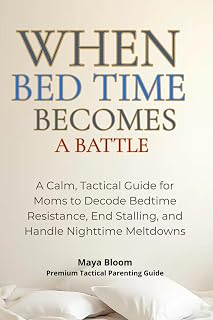
Best For:
Caregivers facing repeated bedtime resistance and meltdowns who want calm, tactical scripts and de-escalation strategies.
What it is: This title is a tactical parenting guide focused squarely on the interpersonal dynamics that make bedtime a battleground. It emphasizes calm, practical scripts, de-escalation techniques, and parent self-management—strategies to decode why a child resists and how to reframe those moments into teachable, manageable ones.
Who it’s for: Parents dealing with persistent bedtime resistance, frequent nightly meltdowns, or evening power struggles will find this guide particularly useful. It’s aimed at caregivers who want immediate, practical language and tactics to defuse fights and set clear expectations without escalating the conflict.
Real-life usage scenarios: Use the guide when nightly routines become a repeating pattern of stalling (requests for more water, endless bathroom trips, demands for extra stories) or when a child’s meltdowns sap parental energy. The book provides scripts to respond calmly, steps to reduce reinforcement of stalling behaviors, and ideas for reorganizing the environment to simplify choices (limited options, clear transitional cues, consistent consequences).
Problems it solves: This book helps break entrenched patterns of negotiation and emotional escalation at bedtime. It also addresses caregiver burnout by offering ways to stay calm and consistent—an important element since children often test limits to see which behaviors work.
How it compares: Unlike developmental or schedule-focused books, this guide is highly tactical and interaction-focused—more like a toolbox for conflict moments. It pairs well with a routine or schedule-based book because it concentrates on the ‘how’ of communication rather than when to do things.
Practical observations and buying considerations: Readers typically appreciate the script-style advice that can be memorized and used in the moment. If your household often involves multiple caregivers, ensure everyone practices the suggested wording so responses are consistent. For families seeking a purely scientific explanation of sleep patterns, this book is lighter on physiology and stronger on day-to-day tactics.
Check the latest price on Amazon.
Pros
- Clear, practical scripts for immediate use
- Focuses on communication and de-escalation
- Helpful for reducing parental burnout
Cons
- Less focus on sleep science or schedules
- Requires consistent use by all caregivers to be fully effective
Check the latest price on Amazon.
Final Verdict
Choosing the right nighttime parenting resource depends on your family’s needs and temperament. If you want a balanced, adaptable roadmap, Nighttime Parenting offers approachable routines and troubleshooting. For families who prefer a schedule-first plan that prioritizes daytime rhythms to improve nights, Babywise Sleep Solutions provides concise, sample timetables. Parents seeking a deeper, pediatric-informed reference should reach for Healthy Sleep Habits, Happy Child for age-by-age guidance that explains the why behind changes. If your challenge is getting a preschooler to cooperate, The Bedtime Book’s sticker system can turn negotiation into a playful checklist. And when bedtime becomes a daily struggle with meltdowns, When Bedtime Becomes a Battle supplies tactical, calming scripts to reduce escalation.
None of these books are magic wands; they work best when paired with consistent application, a willingness to adapt recommendations to your child’s cues, and, when necessary, guidance from a pediatrician. Consider combining a research-backed manual with a kid-facing tool and a tactical guide so you address the biology, the daily routine, and the interpersonal dynamics of bedtime. If you’re not sure where to start, choose the title that most closely matches your current friction point—schedules, science, behavior, or child engagement—and give that approach a deliberate two-week trial.
Whichever path you take, small consistent changes usually beat abrupt, dramatic overhauls. Check the latest price on Amazon.
Conclusion
These Parenting products creators use during nighttime routines picks are trending now and offer great value and variety. Check the links above for latest prices and reviews.
As an Amazon Associate, I earn from qualifying purchases.
Tags:
bedtime routine, baby sleep books, parenting books, sleep training, kids sleep solutions, bedtime stickers, parenting guides
