Pantry Picks Creators Use for Restocking Videos
As an Amazon Associate, I earn from qualifying purchases. This article may contain affiliate links, which means we may receive a commission at no extra cost to you.
As an Amazon Associate, I earn from qualifying purchases. This article may contain affiliate links, which means we may receive a commission at no extra cost to you.
If you watch restocking videos, you might notice a small set of pantry staples and storage pieces that keep showing up—simple, reliable items that look great on camera and make real-life meal prep easier. This guide brings together five products creators commonly use when restocking the pantry: a classic saltine cracker for aesthetic and snack shots, two pantry-method cookbooks for DIY staples and systems creators turn to for recipes, an airtight storage set to keep ingredients camera-ready, and a dry-mix recipe collection that speeds up meal prep. I gathered product details, typical use scenarios, and buying considerations from product pages, customer reports, and creator workflows so you can decide which items belong on your shelf or on camera.
Buying Guide
Why these items appear in restocking videos: creators often choose pantry items that look clean on camera, photograph well, and simplify everyday cooking. When selecting products for your pantry or content, consider three practical categories: visual appeal and packaging, shelf stability and storage, and versatility in recipes.
Visual appeal and packaging: Simple, neutral packaging—like the classic saltine box—reads well on camera and communicates a familiar, comforting pantry. If you plan to film restocks, choose items with uncluttered labels or consider decanting into clear canisters for a cohesive look.
Shelf stability and storage: For creators, longevity matters. Bulk staples and dry mixes that keep well reduce the need to frequently replace items between takes. Airtight containers protect flour, sugar, and cereal from humidity and pests, and they make labeling and organization easier for multi-shot setups.
Versatility in recipes: Cookbook titles focused on pantry staples or dry mixes are popular because they turn basic ingredients into multiple meals. Look for books and mixes that emphasize inexpensive, adaptable recipes—this mirrors the kinds of quick transformations viewers like to see.
Practical buying considerations: If you’re buying to film, think about how items will look in your preferred shooting style (flat-lay vs. shelf close-up). If you’re buying for everyday use, prioritize airtight storage and recipes that match your dietary needs. When comparing alternatives, standard grocery brands may be cheaper, but creators often pick items with recognizably simple designs or proven recipe frameworks to keep content dependable and relatable.
Below are five thoughtfully selected items with detailed descriptions, real-world use cases, pros and cons, and who each pick is best for.
Amazon Saver, Saltine Crackers, 16 Oz

Best For:
Creators and home cooks who want a neutral, camera-friendly pantry staple for snacks, pairings, and simple recipe uses.
Saltine crackers are one of those quietly ubiquitous pantry items that appear in restocking videos for good reason: they’re visually neutral, universally recognized, and incredibly versatile on and off camera. This 16-ounce box of classic saltines serves as a reliable base for snack scenes, soup pairings, and simple recipe demonstrations. Creators often use saltines when they want a non-distracting prop that communicates comfort food—think cozy soup nights, quick snack plates, or a simple bite to demonstrate portion sizes.
Beyond aesthetics, saltines solve practical problems. They act as a quick, shelf-stable crunch addition to recipes without introducing strong flavors, which makes them ideal for showing off the main subject (a stew, dip, or cheese slice). In videos where creators restock a pantry, a neatly boxed saltine package suggests a lived-in but tidy kitchen: the box fits well on open shelves, looks proportionate in flat-lay shots, and stacks neatly with other staple goods.
Real-life usage scenarios include pairing the crackers with canned tomato soup for an easy weeknight bowl, crushing them to use as a crisp topping for casseroles, or including them in snack trays for kid-friendly lunch demonstrations. They are also a kitchen standby for motion shots—rattling boxes, pouring handfuls into a bowl, or using them as a reference for scaling snack sizes. Compared to artisan or heavily branded crackers, these plain saltines keep focus on recipe content rather than packaging gimmicks.
Who should buy this: home cooks who want a reliable, neutral cracker for everyday eating and creators who need an understated prop for pantry videos. Who may not need it: people following specialized diets that avoid wheat or salt, or those aiming for a gourmet or artisanal visual style where premium-branded crackers are preferred.
Practical observations and buying considerations: the 16-ounce size is a good balance between economy and shelf space. If you film frequently, consider decanting some into a clear canister for a cleaner look on camera while keeping the box for authenticity in restock shots.
Find it on Amazon — Check the latest price on Amazon.
Pros
- Neutral appearance that works well on camera
- Versatile: snack, recipe topping, or prop
- Shelf-stable and inexpensive per serving
Cons
- Not suitable for gluten-free diets
- Plain appearance may not suit gourmet styling
If you want a dependable, camera-friendly cracker to keep on hand for snack shots and simple recipes, find the saltine box on Amazon. Check the latest price on Amazon.
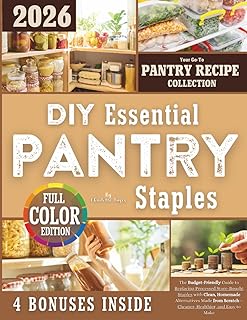
DIY Essential Pantry Staples: The Budget-Friendly Guide to Replacing Processed Store-Bought Staples with Clean, Homemade Alternatives Made from Scratch—Cheaper, Healthier, and Easy to Make
Best For:
Budget-conscious cooks and creators who want reproducible, camera-friendly DIY pantry recipes and lower-processed alternatives.
This DIY pantry staples guide is a recipe-forward book aimed at helping readers replace processed, store-bought items with simple homemade alternatives. For creators who feature pantry restocks and kitchen hacks, this title provides practical recipes that translate well to short-form and long-form content—think making your own spice blends, condiments, crackers, or basic mixes that demonstrate both cost savings and ingredient transparency.
The book’s main benefit is its focus on budget-friendly, approachable methods. Rather than positioning DIY as a niche craft, it frames homemade pantry staples as simple swaps that save money and reduce processed ingredients in weeknight cooking. That makes it ideal for creators who want to produce content that’s both aspirational and practical—viewers can see a process in a clip and replicate it the next day.
Real-life usage examples include creating small-batch pantry staples to showcase in a restocking video (homemade breadcrumbs in a labeled jar, a basic vinaigrette in a dispenser, or a DIY spice mix in a clear shaker). The book also helps teach creators how to batch-produce items that keep well, reducing waste and demonstrating efficient kitchen systems—useful for creators focused on sustainability and budget living.
Compared with mainstream cookbooks that emphasize finished dishes, this title zeroes in on pantry building blocks. That niche focus means it’s less useful if you’re looking for full dinner menus but more valuable if your goal is to transform how you stock ingredients. The writing style is practical and recipe-driven rather than anecdotal, which suits creators who prioritize clear instructions for viewers.
Who should buy this: frugal home cooks, content creators showcasing DIY kitchen projects, and anyone interested in swapping processed staples for cleaner homemade versions. Who may not need it: cooks seeking only finished recipes or those who prefer convenience store-bought items.
Practical observations: recipes are generally straightforward but may require basic equipment (blender, jars, measuring tools). If you plan to film, try batch-making on camera to show time-saving techniques and jar labeling for an aesthetically pleasing final shot.
Find it on Amazon — Check the latest price on Amazon.
Pros
- Focuses on inexpensive, easy-to-make pantry swaps
- Recipe-driven and practical for content creation
- Helps reduce processed ingredients and waste
Cons
- Not a general dinner cookbook—limited full recipes
- Some recipes require basic kitchen equipment
If you want clear, budget-friendly DIY pantry ideas to show in restock videos or to make at home, check this guide on Amazon. Check the latest price on Amazon.
Busy Moms Pantry Staples System & Recipes: Break The Cycle Of Overspending & Poor Food Choices With A Repeatable Pantry Method: Inexpensive Homemade … … 1 system: dinners ready, zero waste—now!)

Best For:
Parents, busy households, and creators who want a repeatable pantry method for meal planning and zero-waste cooking.
This pantry system book is positioned as a practical method for busy households to organize pantry staples, reduce waste, and simplify meal prep. For creators who regularly film restocking segments, the book’s system approach offers repeatable routines and quick recipes that are easy to demonstrate on camera. It highlights low-cost homemade staples and shows how to assemble dinners using a predictable rotation of ingredients—perfect material for content that aims to be both educational and reassuring.
Main benefits include a step-by-step pantry organization framework and recipes designed to minimize decision fatigue. Creators using time-lapse or weekly restock formats will find the system useful because it maps out how to shop, store, and convert basic ingredients into multiple meals. The emphasis on zero waste and batch-prep also resonates with audiences who want realistic, kid-friendly solutions for everyday cooking.
Real-life uses: film a week-in-the-pantry restock using the book’s shopping checklist and transfer staples into labeled containers; demonstrate a 20-minute dinner assembled from pantry building blocks; create a short series on converting leftovers into fresh meals using the system’s templates. Compared to typical recipe books, this title leans heavily on method and habit-building, which makes it more of a practical toolkit than a collection of one-off dishes.
Who should buy this: busy parents, meal-planning enthusiasts, and creators focusing on organized kitchen systems and realistic family cooking. Who may not need it: experimental cooks who prefer freestyle or luxury ingredient-driven recipes.
Practical observations: the book’s strength is in replicable systems rather than culinary innovation—if your audience values efficient routines and doable strategies, this one delivers. When filming, show labeled jars, pre-measured mixes, and quick assembly demos to make the system relatable.
Find it on Amazon — Check the latest price on Amazon.
Pros
- Focuses on organization and repeatable systems
- Designed to reduce waste and ease meal planning
- Well-suited for family-friendly, quick recipes
Cons
- Less emphasis on gourmet or experimental recipes
- May feel formulaic for adventurous cooks
If a methodical pantry system and family-friendly recipes suit your content or household, view this title on Amazon. Check the latest price on Amazon.
CHEFSTORY Airtight Food Storage Containers Set, 14 PCS Kitchen Storage Containers with Lids for Flour, Sugar and Cereal, Plastic Dry Food Canisters for Pantry Organization and Storage

Best For:
Content creators and home cooks who need airtight, uniform storage for dry goods to maintain freshness and camera-ready shelves.
Airtight storage is a common feature of restocking videos because clear, uniform canisters look tidy on camera and keep staples fresh between takes. This 14-piece CHEFSTORY set includes a variety of sizes designed for flour, sugar, cereal, pasta, and smaller items like spices or baking soda. The stackable, modular design helps creators build a cohesive visual shelf and simplifies in-shot labeling and arrangement.
Practical benefits go beyond aesthetics. Airtight seals protect pantry staples from moisture and bugs, which is especially important if you batch-produce mixes or bake frequently. Clear containers make it easy to see levels at a glance—useful during a restock when you want to plan refills or create a grocery list. Many creators decant products (like the saltines mentioned earlier) into matching canisters so their shelves appear consistent across videos.
Real-life scenarios: show a time-lapse of filling canisters during a weekend restock; prep and store a week’s worth of dry mixes in labeled jars for quick content ideas; demonstrate how airtight lids preserve the crunch of crackers and freshness of oats. Compared to storing items in original boxes or bags, this set looks more intentional on camera and reduces visual clutter.
Who should buy this: creators, bakers, and anyone who values organized, visible storage and wants to protect dry goods. Who may not need it: renters with limited shelf space or households that prefer original packaging for recycling or brand recognition.
Practical observations: measure the space available on your shelves before buying—these sets are best when you can dedicate a section of the pantry or open shelving. Also consider the sizes you need; a few large canisters and several small ones often cover most needs.
Find it on Amazon — Check the latest price on Amazon.
Pros
- Clear, uniform look ideal for filming and display
- Airtight seals protect against moisture and pests
- Multiple sizes for flexible storage needs
Cons
- Requires dedicated shelf space for best effect
- Plastic construction may not appeal to those seeking glass
To create tidy, camera-ready pantry shelves and protect dry goods, check the CHEFSTORY container set on Amazon. Check the latest price on Amazon.
Dry Mix Pantry Staples: 48 Recipes with ingredients you already have

Best For:
Home cooks and creators who want ready-to-use dry mixes for quick meals and consistent, camera-friendly pantry organization.
This dry mix recipe collection is aimed at simplifying weeknight cooking by turning staple pantry ingredients into ready-to-use blends. The 48 recipes are designed around items most households already keep—flour, oats, spices, dried milk, and basic grains—so creators can film restocks and immediately show how those items translate into quick dinners, breakfasts, and snack mixes.
The primary appeal lies in convenience and consistency. Dry mixes are easy to portion, store, and label, which makes them ideal for both creators and busy home cooks. On camera, a labeled jar of pancake mix, seasoned breadcrumb blend, or quick soup base communicates preparedness and reduces the friction viewers feel about cooking from scratch. Compared to single-use convenience mixes, homemade dry mixes can be adjusted for salt, spice level, or dietary needs while being demonstrably cheaper in the long run.
Real-life uses include preparing a batch of pancake mix to show how it yields multiple breakfasts, creating a seasoned breadcrumb jar used across recipes, or assembling a “soup starter” blend for fast weeknight meals. Creators often film the mixing process, decant the finished product into clear jars, and then produce a follow-up cooking demo illustrating how one jar can create three different meals.
Who should buy this: people who want to streamline meal prep, creators producing instructional pantry content, and families looking to simplify breakfasts and snacks. Who may not need it: those who prefer fresh-made every time or have very strict dietary restrictions that require commercial specialty mixes.
Practical observations: label jars with dates and suggested uses to help viewers replicate your system. If you film, show measurements and storage tips to increase trust and usability—this book’s format lends itself to quick, repeatable content ideas.
Find it on Amazon — Check the latest price on Amazon.
Pros
- Turns staple ingredients into versatile, storable mixes
- Good for batch prep and reducing mealtime decision fatigue
- Recipes use common pantry items
Cons
- Not ideal for those who prefer entirely fresh ingredients
- Some mixes may need tweaking for dietary restrictions
If you want straightforward dry mix recipes to keep on your shelf for quick meals and content demonstrations, view this collection on Amazon. Check the latest price on Amazon.
Final Verdict
Choosing the right pantry pieces for restocking videos means balancing aesthetics, storage, and real-life usefulness. The saltine crackers offer a neutral, camera-ready snack prop and a practical shelf staple. The two pantry-focused books—one emphasizing DIY budget swaps and the other offering a repeatable pantry system—supply creators and home cooks with recipes and frameworks that translate well to step-by-step content. The CHEFSTORY airtight containers make everything look tidy and protect dry goods between shoots, while the dry mix collection gives you straightforward blends that save time and make for repeatable demonstrations.
If you’re building a pantry for content creation, start with airtight storage and a few visually neutral staples; then add one or both of the books to provide recipe ideas and systems that will fuel future videos. If you’re stocking just for home use, prioritize the storage set and the dry mix collection to save time and reduce waste. For families and busy households, the pantry system book offers a realistic path to simpler dinners.
Overall, these five picks reflect the kinds of items creators use repeatedly because they look good on camera, hold up in everyday cooking, and help tell a story about an organized, approachable kitchen. If you want to recreate those restock videos or simply build a more functional pantry, these selections are a solid place to start. Check the latest price on Amazon.
Conclusion
These Pantry products creators use for restocking videos picks are trending now and offer great value and variety. Check the links above for latest prices and reviews.
As an Amazon Associate, I earn from qualifying purchases.
Tags:
pantry staples, restocking videos, kitchen storage, dry mixes, DIY pantry, airtight containers, meal prep
