Minimal Apartment Declutter: Weekend Essentials
As an Amazon Associate, I earn from qualifying purchases. This article may contain affiliate links, which means we may receive a commission at no extra cost to you.
As an Amazon Associate, I earn from qualifying purchases. This article may contain affiliate links, which means we may receive a commission at no extra cost to you.
Decluttering a small apartment can feel overwhelming — especially when you only have a weekend to make meaningful progress. Creators and minimal-living advocates often rely on approachable systems and tools that let them work in short, focused bursts rather than trying to overhaul everything at once. This guide gathers five practical books and planners that repeatedly show up in creator-recommended routines. Each resource is chosen for realistic, repeatable methods: short checklists, color-guided prompts, and room-by-room plans that match the limited time and space of apartment living.
Below you’ll find detailed breakdowns of each product, realistic use-case scenarios, who benefits most, buying considerations, pros and cons, and a quick call-to-action to check the latest price on Amazon. Whether you’re preparing your space for content shoots, moving to a smaller place, or just want a calmer home without a week-long purge, these picks are built around realistic weekend declutter sessions rather than extreme, one-time makeovers.
Buying Guide
How to choose the right declutter workbook or planner for your apartment
1) Decide how you want to work: Are you motivated by structure or prompts? If you need a highly structured plan with daily and weekly schedules, look for planners with checklists and timelines. If you respond better to creative prompts and color cues, choose a guided journal style.
2) Consider your time windows: For realistic weekend resets, prioritize products that break work into 15–60 minute tasks. Room-by-room checklists that can be completed in short sprints help prevent burnout and keep momentum.
3) Match the level of detail to your tolerance: Some planners are granular with daily schedules and habit tracking. Others are lighter — good for people who want quick wins. If you already track habits, a simpler workbook may be enough.
4) Look for reusable systems vs one-off projects: A planner you’ll actually use after the first weekend should include maintenance schedules, easy routines, or prompts for follow-up weekends. Avoid one-off guides that don’t help you keep the space organized.
5) Portability and format: If you like working with pen and paper during active declutters, choose a physical workbook. If you prefer digital reminders, supplement with a phone timer or habit app. Also check page layout and whether checklists are printable — creators often photocopy sections for repeated weekend resets.
6) Read customer feedback for real-life notes: Look for comments about how the planner performed in a small apartment, whether checklists were realistic for short time blocks, and whether prompts are practical for a single person vs a family.
Use these criteria to match one of the five picks below to your personal rhythm and space constraints.
Home Cleaning Declutter Workbook: COLOR Guided Organization Journal to Help You Start Small, Stay Motivated & Finally Create a Clean, Organized House that Feels Calm & Joyful! (Home Cleaning Books)

Best For:
Apartment renters, busy creatives, and people who need visual cues and short, motivating tasks
This color-guided organization journal is designed for people who prefer a gentle, visual approach to decluttering. Rather than demanding marathon sessions, it breaks declutter work into small, approachable tasks organized by color codes and short prompts. That makes it particularly well suited to a cramped apartment where you want to chip away at mess without feeling overwhelmed. The workbook combines guided pages for planning, reflection prompts to help you understand why items stick around, and practical checklists for quick weekend resets.
What stands out here is the pacing: the layout is intentionally focused on short wins — 10–45 minute activities you can schedule across a weekend. The color guidance acts as a simple decision shortcut (e.g., tackle all green sections one morning, purple for the living area later). Creators who use this method often report it keeps motivation up because the visual progress is immediate and satisfying. It’s less about ruthless minimalism and more about creating calm, functional spaces you’ll maintain.
Compared with generic declutter books that offer broad advice, this workbook is practical for single-person households and renters who need low-commitment systems. Unlike long, theory-heavy reads, it places emphasis on repeated, short sessions and habit-based maintenance. If you’re doing a realistic weekend reset (two to eight hours of focused work), this workbook helps chunk those hours into doable tasks and keeps motivation high between sessions.
Buying considerations: the physical layout and paper quality matter if you plan to write in it heavily. Also check page count and whether pages are perforated or easy to reference on subsequent weekends. If you prefer checklist-heavy planners, this guided journal might feel a touch more reflective than procedural.
Pros
- Color-coded prompts make decisions faster
- Designed for short, repeatable weekend sessions
- Reflective prompts help prevent re-cluttering
Cons
- Less checklist-focused than planners designed for daily schedules
- May feel more reflective than procedural for some buyers
Check the latest price on Amazon.
Ultimate Home Declutter & Organization Planner: Step-by-Step Workbook with Room-by-Room Checklists, Daily and Weekly Cleaning Schedules, Decluttering … Tools for a Clutter-Free, Stress-Free Life

Best For:
People who prefer structured checklists, hosts and creators prepping spaces, and those who like measurable progress
If you want a hands-on, no-nonsense planner that organizes your weekend work into clear, task-driven steps, this Ultimate Home Declutter & Organization Planner is one of the most practical choices. It emphasizes room-by-room checklists, daily and weekly cleaning schedules, and concrete timelines for follow-up maintenance. That structure is ideal when you only have a couple of concentrated weekends to make visible changes across a small apartment.
The planner typically includes printable or easily referenced sheets for bathrooms, kitchens, bedrooms, and living spaces — each with prioritized tasks you can complete in 15–30 minute bursts. For creators who stage small shoots or need an orderly backdrop, the planner lets you triage visible clutter fast (flat surfaces first, then storage areas). It also includes habit-tracking pages so you can set low-effort upkeep routines after the initial reset.
Compared with reflective journals, this planner leans heavily on measurable progress: checklists, timelines, and schedule templates. That makes it better for people who want clear metrics — ‘‘complete these 8 tasks in 2 hours’’ — rather than open-ended prompts. It’s a strong fit for multi-day weekend resets where you want to allocate specific hours per room and track what’s completed.
Practical observations from user feedback often mention the value of the room-by-room format in small apartments, where it’s easy to feel like clutter is everywhere. For those who get distracted by details, following the planner’s top-priority checklist first leaves the apartment looking noticeably calmer after a single concentrated session.
Buying considerations: check if the planner format matches your habit preferences (daily boxes vs weekly spread) and whether pages are easy to remove or duplicate for future weekends.
Pros
- Clear room-by-room checklists
- Daily and weekly schedules for maintenance
- Good for staged spaces and quick visual wins
Cons
- May feel rigid for very reflective declutterers
- Could be heavy on pages if you prefer minimal writing
Check the latest price on Amazon.
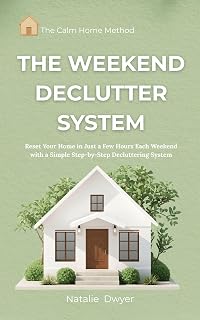
The Weekend Declutter System: Reset Your Home in Just a Few Hours Each Weekend with a Simple Step-by-Step Decluttering System
Best For:
Busy people who need a repeatable weekend system, renters, and creators who prepare scenes quickly
This title is explicitly built around the weekend-reset concept: short, systematic sessions that produce meaningful results in just a few hours. The system breaks down tasks into fast, prioritized steps, and offers checklists and timing recommendations so you can realistically reset a room or two during a weekend. For apartment dwellers who don’t have the bandwidth for week-long overhauls, it’s a pragmatic blueprint for consistent progress.
Highlights include a focus on the visible first (countertops, entry area, media surfaces), decision shortcuts to reduce choice fatigue, and recommended timings that help you stick to your schedule. Many creators and apartment minimalists favor this because it’s a repeatable routine rather than a one-off purge — you do a few hours every weekend and the apartment never spirals out of control.
Compared to very comprehensive, book-length philosophies on minimalism, this system is tactical and action-oriented. It doesn’t require deep lifestyle changes; instead, it provides a sustainable cadence: small weekend wins plus short weekly maintenance. That’s why it’s often recommended for renters, busy professionals, and people who like predictable rituals.
Real-life use cases include preparing a one-bedroom apartment for a weekend guest, resetting the living area for a content shoot, or doing a seasonal clothing sort in an afternoon. The book’s timing suggestions are particularly useful: they nudge you to set a timer and keep the work contained, which reduces overwhelm and keeps you focused.
Buying considerations: if you want more philosophical guidance on why to declutter, combine this with a short read on minimalist mindset. If you already follow a very rigid schedule, the flexible timing advice may feel too casual.
Pros
- Focused on short, actionable weekend sessions
- Decision shortcuts reduce choice fatigue
- Repeatable and sustainable cadence
Cons
- Less depth on long-term minimalism philosophy
- Not a substitute for a full organizational overhaul
Check the latest price on Amazon.
Minimalista: Your Step-by-Step Guide to a Better Home, Wardrobe, and Life

Best For:
People who want a curated wardrobe and sustainable decision frameworks, style-conscious creators, and those seeking lifestyle context for decluttering
Minimalista is a well-crafted guide that blends practical decluttering steps with lifestyle advice on curating a smaller wardrobe and calmer living spaces. While it’s broader than a weekend-only system, many creators use it alongside concentrated weekend routines to inform decision-making and priorities. The book’s step-by-step philosophy helps you set criteria for what to keep and what to release — an especially useful angle when apartment storage is limited and every item needs to earn its place.
Where Minimalista shines is in its thoughtful approach to wardrobe editing and habit formation. Small apartments often struggle with overflowing closets; this book gives specific frameworks for evaluating clothing, accessories, and even sentimental items. Instead of advocating extreme minimalism, it encourages a practical curation that fits your lifestyle and local climate — a useful distinction when you can’t store off-season items easily.
Compared with checklist-driven planners, Minimalista offers more rationale and examples for why certain choices free up future time and mental energy. Creators who stage content or want a consistent visual aesthetic find the wardrobe chapters especially helpful for building capsule wardrobes that are camera-ready with minimal effort.
Real-life use cases include: a 2–3 hour closet edit during a weekend, curating a capsule wardrobe for consistent content creation, or applying the author’s rules to decide which decorative items earn limited shelf space. Buying considerations: this book is best paired with a practical planner if you want to translate mindset into weekly, scheduled actions.
Pros
- Practical wardrobe curation frameworks
- Clear rules to reduce decision fatigue
- Blend of mindset and how-to advice
Cons
- Broader lifestyle focus may feel less tactical for one-off weekend resets
- Works best paired with a checklist planner
Check the latest price on Amazon.
The Joy of Less: A Minimalist Guide to Declutter, Organize, and Simplify

Best For:
Those wanting a sustainable minimalist mindset, small-home owners seeking practical rules, and creators who value aesthetic simplicity
The Joy of Less is a modern classic that balances minimalist philosophy with concrete, room-by-room strategies for downsizing possessions and simplifying routines. While it’s not solely a weekend planner, its clear, principle-based approach makes it easy to extract short projects and integrate them into weekend resets. Many creators reference its pared-down ethos when designing spaces that photograph well and feel uncluttered on camera.
This book stands out because it pairs practical rules (like the 20/20 rule: if you haven’t used something in 20 months, consider whether it adds value) with approachable project ideas that are easy to schedule over a few hours. The tone is encouraging rather than prescriptive, which works well for apartment dwellers who want sustainable reduction without guilt.
Compared with the more checklist-oriented planners, The Joy of Less is rich in mindset coaching and offers household philosophies that make ongoing maintenance feel worthwhile. It’s excellent for people who want a guiding framework to inform how they use the planners and workbooks listed earlier.
Real-life applications include a weekend pantry purge using the book’s decision rules, staging a simple living room for guest arrival, or performing a seasonal declutter guided by the book’s principles. Buying considerations: if you need highly tactical daily schedules, pair this book with a structured planner. If you prefer philosophy with usable rules, this may be sufficient on its own.
Pros
- Strong, principle-based decision rules
- Readable and encouraging tone
- Useful for extracting short, actionable projects
Cons
- Not focused on daily/weekly schedules
- May feel more philosophical than tactical for some buyers
Check the latest price on Amazon.
Final Verdict
Realistic weekend declutter work is less about dramatic purges and more about repeating small, focused wins. For apartment dwellers and creators who need consistently tidy backgrounds, a combination of mindset and practical tools is the sweet spot: use a mindset book (like Minimalista or The Joy of Less) to define your criteria, then pick a structured planner or weekend system (the Ultimate Planner, Weekend Declutter System, or the COLOR-guided workbook) to translate that mindset into repeatable 1–4 hour sessions.
If you’re completely new to decluttering, start with a planner that gives you explicit checklists and timing recommendations so you get visible wins quickly. If you already understand the basics and struggle with decision fatigue, a color-guided or principle-based book will help you make faster choices. For creators who stage apartments frequently, prioritize planners with room-by-room sheets and visible-first checklists.
Regardless of which product you choose, build a simple routine: one focused weekend session per month plus a 15–30 minute weekly reset. That cadence keeps the apartment manageable without turning decluttering into a full-time project.
If multiple products appeal, pairing one mindset book with one tactical planner is often the best long-term investment. Check the latest price on Amazon.
Conclusion
These Minimal apartment products creators use during realistic declutter weekends picks are trending now and offer great value and variety. Check the links above for latest prices and reviews.
As an Amazon Associate, I earn from qualifying purchases.
Tags:
declutter planner, apartment organization, weekend declutter, minimalist guide, home organization, wardrobe curation, creator studio tips
