Best Travel Gadgets for Overnight Airport Waits
As an Amazon Associate, I earn from qualifying purchases. This article may contain affiliate links, which means we may receive a commission at no extra cost to you.
As an Amazon Associate, I earn from qualifying purchases. This article may contain affiliate links, which means we may receive a commission at no extra cost to you. Overnight airport waits are part of travel life for many of us: delayed flights, long layovers, missed connections or intentionally arriving early to save on fares. When you expect to sleep, eat, work or simply rest in a noisy, fluorescent-lit terminal, the right small gear can make the difference between a miserable night and a reasonably comfortable one. This guide collects five thoughtfully chosen travel gadgets — neck pillows, a phone holder, earplugs, a foot hammock and a classic memory foam travel pillow — that travelers repeatedly pick to improve sleep, posture and convenience in airports.
I researched product features, common customer feedback patterns and practical use cases to give realistic recommendations. I do not claim personal hands-on testing; instead I highlight what these items do, who benefits most, and realistic limits to expect. Read on for a buyer-focused look at each item, a practical buying guide with packing and hygiene tips, and quick pros and cons to help you choose what to pack for your next overnight airport stay.
Buying Guide
Overnight airport waits are different from sleeping at home. You’re dealing with limited space, hard surfaces, bright lights, variable temperature and the unpredictability of fellow travelers. Before buying a gadget for these situations, consider these core factors:
– Comfort vs. packability: Inflatable accessories pack smaller but rarely match the long-term comfort of memory foam. For frequent long waits, a compact memory foam pillow or foldable hammock may be worth the extra carry space. If you prioritize ultralight packing, look for inflatable or compressible designs.
– Support and adjustability: A pillow that doubles as chin support, lumbar roll or leg prop adds versatility during a long layover. Bendable or modular neck pillows adapt to different seats and sleeping positions better than fixed U-shaped models.
– Hygiene and materials: Airport floors and shared surfaces are germy. Look for items with removable, washable covers or materials that can be wiped down. Hypoallergenic materials and soft, breathable fabrics matter for people with sensitivities.
– Noise and pressure relief: For sleeping near gates, earplugs that reduce noise while still allowing some ambient awareness can be more practical than bulky noise-cancelling headphones. Specialized earplugs for pressure relief also help if you fly soon after your layover.
– Stability and ease of setup: A phone holder intended for tray tables should be stable on slightly sloped or tilting surfaces. Foot hammocks that attach to the tray table or seatback should be easy to install without tools and work with most seat styles.
– Multi-functionality: Gadgets that serve more than one purpose (neck pillow that converts to lumbar or chin support, phone holder that works on desks, hammocks that double as footrests at home) deliver the best value on short trips.
– Airline and security considerations: Avoid gadgets that look suspiciously like tools or oversized electronics. Keep anything with batteries in your carry-on and be prepared to remove them during screening if required.
Practical packing tips: store soft items in outer pockets of carry-ons so you can reach them during security lines; put earplugs and the phone holder in an easily accessible electronics pouch; use a small stuff sack to compress memory foam; and carry a compact power bank if you plan on streaming while you sleep.
Comparison with standard alternatives: many travelers default to jacket-as-pillow, bundled clothing, or cheap inflatable pillows. Those makeshift solutions sometimes work short-term, but they usually lack neck support, promote stiff posture and are uncomfortable for multiple hours. The right gear reduces pain, improves sleep quality and makes overnight waits less draining.
Keep in mind return policies and warranties; if you’re unsure how a pillow or hammock will fit your sleeping style, pick sellers with flexible returns. Also check size specifications — not all foot hammocks or phone mounts fit every tray table or seat configuration.
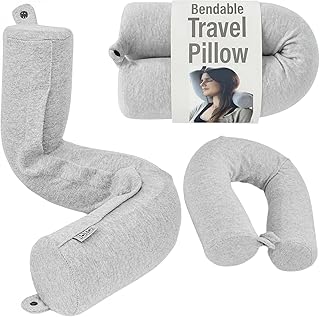
Dot&Dot Twist Memory Foam Travel Pillow for Airplane, Car and Home, Bendable Neck Pillow, Airplane Pillow for Neck Support, Chin, Lumbar and Leg, Adjustable Neck Roll Pillow
Best For:
Travelers who prioritize consistent comfort over minimal pack size, people who change sleeping positions, and anyone prone to neck stiffness after sleeping upright.
Why this pillow: the Dot&Dot Twist positions itself between a standard U-shaped neck pillow and a modular support roll. If you’ve ever tried sleeping upright on an airport bench, you know a fixed shape rarely does the job. The Twist’s primary strength is its bendable memory foam core that lets you sculpt it around your neck, tuck it under your chin to prevent head bobbing, use it behind your lower back for lumbar support, or even prop it under a knee for circulation. That flexibility makes it a strong option for overnight airport waits when seat types and sleeping positions vary.
Comfort and design: this pillow uses memory foam rather than an inflatable bladder, so it maintains shape and pressure relief longer during multi-hour naps. The “twist” concept is useful when you want targeted support — for example, curling it around one side of your neck if you’re a side-leaning sitter, or flattening it as a short lumbar wedge when reading on a bench. Compared with cheap inflatable pillows, memory foam gives better sustained cushioning and reduces the likelihood of waking with a crick in your neck. Compared with some fixed molded neck pillows, the adjustable roll is more forgiving for different body types and seat widths.
Real-life airport uses: arriving at midnight for a long layover, you can fold the Twist into a compact loop and hang it from your carry-on, then reshape it when you find a patch of seating. If you choose to sleep on the floor near a gate with a boarding pass tucked in hand, the pillow doubles as a small bolster behind your head and neck. For short naps in chairs with hard backs, the chin tuck prevents your head from tilting forward — a common cause of broken sleep in airports.
Who should buy: frequent travelers who do not want to rely on inflatable pillows, people who switch sleeping positions often, and anyone who experiences neck stiffness after sleeping upright. It’s also useful for car naps and couch visits at home.
Who may skip it: minimalists who must shave every ounce from their carry-on or travelers who prefer ultra-compact inflatable pillows might find it bulkier than alternatives. If you’re a strict side sleeper who needs full lateral head support, a full-sized memory foam pillow at home remains superior.
Buying considerations and care: memory foam holds its shape, so pack it in an outer pocket or strap it to your bag rather than compressing it tightly for days. Check whether the cover is machine-washable when you buy; removable covers make maintaining hygiene easier after airport use. Customers commonly report better sleep quality and less neck soreness compared to inflatable options. If you’re between choices, the Twist sits squarely as a mid-size, adaptable, comfort-first pillow designed to reduce neck strain during long waits.
Check the latest price on Amazon.
Pros
- Moldable memory foam adapts to multiple sleeping positions
- Versatile use as neck, chin, lumbar or knee support
- More durable and comfortable long-term than inflatable pillows
Cons
- Takes more carry-on space than inflatable options
- May be too warm for heat-sensitive sleepers
Check the latest price on Amazon.
MiiKARE Airplane Travel Essentials Phone Holder, Universal Handsfree Phone Mount for Flying with 360 Degree Rotation, Accessory for Airplane, Travel Must Haves Phone Stand for Desk, Tray Table

Best For:
Frequent streamers, people who work briefly at gates, families needing hands-free entertainment, and anyone tired of propping phones precariously.
Why this gadget: long layovers often mean you’ll want to stream a movie, read articles, or keep a video call running without clutching your phone for hours. The MiiKARE phone holder is designed for hands-free use on tray tables and flat surfaces and advertises a 360-degree rotation so you can switch between portrait and landscape mode easily. For overnight airport waits where benches and tables aren’t designed for comfortable media viewing, a stable little mount can cut down on neck strain and help you stay entertained while keeping both hands free to handle snacks or your boarding documents.
Design and usability: this stand’s universal clamp and rotation mechanism make it adaptable to most phones and small tablets. Unlike propped-up phones that slide on a slick tray table, a dedicated holder prevents accidental falls during dozing. Compared with rigid, single-angle stands, the 360-degree rotation is particularly handy when you want to adjust viewing angles quickly — for example, tilting the screen to reduce glare from overhead lights or pivoting from a wide-angle show to a vertical chat window.
Real-world scenarios: imagine you’re camped at Gate A with eight hours until your morning flight. You can set up the holder on your tray table, plug in a power bank, and watch a movie while leaning back without gripping your device. It’s also useful when you’re sharing a single phone with a travel companion — one person can watch while the other charges a device. If you work on the go, the stand converts improvised airport desks into a reasonably ergonomic setup for typing short emails or joining a quick video meeting.
Who should buy: solo travelers who rely on streaming or video calls during long waits, digital nomads who do short stretches of work at gates, and families who want a hands-free way to entertain children without propping phones on unstable surfaces.
Who may skip it: if you already travel with a tablet on a stand, or if you use noise-cancelling headphones and prefer holding the device, this is less essential. Also, travelers expecting to use larger tablets should confirm compatibility before purchasing.
Buying considerations: confirm the clamp width, phone thickness compatibility, and whether the base grips slippery tray tables well. Look for a model that folds flat into a jacket pocket or organizes neatly in a tech pouch. Compared to makeshift solutions like books or water bottles, a purpose-built phone holder is small, secure and saves repeated fiddling while you try to relax.
Check the latest price on Amazon.
Pros
- 360-degree rotation for flexible viewing angles
- Universal fit for most phones and small tablets
- Frees hands for eating, packing or paperwork
Cons
- May not fit larger tablets
- Stability depends on tray surface and clamp grip
Check the latest price on Amazon.
Alpine FlyFit – Earplugs for Pressure Relief & Preventing Ear Pain While Flying – Airplane Travel Essentials – Comfortable Reusable Hypoallergenic Earplugs with Ultra Soft Filter

Best For:
People sensitive to cabin pressure, travelers who need noise reduction without total isolation, and anyone who wants reusable ear protection for flights and terminals.
Why these earplugs: Alpine FlyFit earplugs are designed specifically for the in-flight environment. Standard foam earplugs mainly block noise; these combine noise reduction with a pressure-regulating filter. The goal is twofold: reduce the loudness of boarding announcements and gate chatter while also easing the ear discomfort many travelers get during climb and descent. For overnight airport waits that include short flights, or for the period of reboarding after a long layover, earplugs that address pressure changes can be especially helpful.
Comfort and design: FlyFit plugs are described as hypoallergenic and reusable, with a soft filter that moderates air pressure changes in the middle ear. Compared with basic foam plugs, they offer a more targeted experience: less of a total deadened feel and more natural sound at lower volumes. For a terminal environment where you still want to hear flight calls, a balanced reduction helps; you can sleep without feeling entirely sealed off.
Real-world usage: at a noisy 24-hour terminal, these plugs smooth out sharp sounds like announcements and rolling carts, making it easier to drift off in a chair. When boarding a short flight after your wait, many travelers report that having pressure-aware earplugs reduces the popping and pain during descent — especially useful for people with sensitive ears or minor congestion. Because they’re reusable, you can carry them in a small case in your pocket and reuse them across several trips.
Who should buy: travelers who regularly experience ear pain during flights, people who need to sleep in noisy spaces but still want to hear essential announcements, and anyone with mild sensitivities to cabin pressure.
Who may skip it: if you already use high-end noise-cancelling headphones and are not sensitive to pressure changes, the incremental benefit may be smaller. Also, travelers who need complete isolation for deep sleep might prefer high-NRR foam plugs or active noise-cancelling solutions.
Buying and hygiene notes: since these are reusable, clean them as recommended by the manufacturer and store them in a carry case between uses. As with any earplug, fit matters — try them before a long wait to confirm comfort. Based on product feedback patterns, customers appreciate the reduced pressure discomfort and improved sleep quality compared with simple foam plugs.
Check the latest price on Amazon.
Pros
- Designed for pressure relief during ascent and descent
- Reusable and hypoallergenic with a soft filter
- Reduces noise while allowing essential sounds through
Cons
- May not provide as much total sound blocking as foam plugs
- Fit can vary—one size may not suit all ear canals
Check the latest price on Amazon.
BASIC CONCEPTS Airplane Foot Hammock for Plane Travel Essentials – Airplane Travel Essentials, Long Flight Foot Rest – Plane Gadgets

Best For:
Economy passengers with limited legroom, travelers prone to leg swelling, pregnant travelers, and anyone who wants to reduce lower-leg fatigue during long waits.
Why consider a foot hammock: cramped economy legroom is the rule on many flights and during long terminal waits. A foot hammock lifts and supports your feet away from a hard floor or bench, reduces leg swelling and helps you find a more comfortable recline angle without needing extra seat space. Unlike inflatable footrests that require air and can be awkward to store, a fabric hammock is lightweight, folds small and installs quickly between seats or anchored to a tray table.
Design and practicality: the BASIC CONCEPTS hammock is intended to clip or loop around the tray table or seat structure to suspend your feet in a slightly elevated position. The simple strap design means setup takes seconds, and the soft fabric is gentler on feet than hard foot ledges. Compared with lying your feet on a carry-on or stacking shoes and bags, a hammock distributes pressure more evenly and reduces lower-leg fatigue after hours of sitting.
Real-world scenarios: picture waiting overnight in a hard plastic bench area; attaching the hammock to the nearest stable surface turns a cramped sitting posture into a near-lounge position for a few hours. On long-haul flights or in bus terminals, use the hammock to change your leg angle during sleep or rest to prevent numbness and reduce restless shifting. It’s particularly helpful for pregnant travelers, those with mild circulation concerns, and taller people whose feet dangle on standard economy seats.
Who should buy: travelers worried about swelling or circulation, people who sleep in public terminals, and anyone who finds economy seating painfully tight for long waits.
Who may skip it: if you have ample legroom, or you plan to stand and walk frequently during your wait, a hammock may be unnecessary. Business and first-class passengers typically won’t need one.
Buying tips and caveats: verify that the hammock’s attachment method works with the seating or table style you expect to use; some tray configurations or curved seats reduce anchor options. Be mindful of hygiene—keep the hammock in a small pouch and consider using a sock or thin sheet if you’re particularly hygiene-conscious. Customers often highlight immediate relief from stiff legs and better ability to sleep on otherwise stiff seats.
Check the latest price on Amazon.
Pros
- Elevates feet to reduce swelling and improve comfort
- Lightweight and packs small compared with inflatable alternatives
- Quick to set up and versatile for different seats
Cons
- May not fit all tray table or seat configurations
- Less stable than larger inflatable footrests
Check the latest price on Amazon.
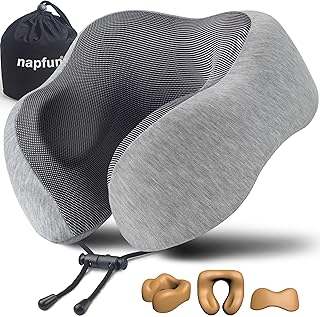
napfun Neck Pillow for Traveling, Upgraded Travel Neck Pillow for Airplane 100% Pure Memory Foam Travel Pillow for Flight Headrest Sleep, Portable Plane Accessories, Light Grey
Best For:
Travelers who prefer a classic U-shaped memory foam pillow, people who nap frequently in terminals, and those who want reliable neck support across flights and car rides.
Why this classic pillow works: the napfun neck pillow embraces a traditional U-shaped memory foam design but positions itself as an upgraded, portable option with 100% pure memory foam for consistent support. For overnight airport waits, a pillowy collar that cradles your neck can prevent head droop and the shoulder strain that comes from holding your head upright for hours. Compared with inflatable collars, a full memory foam pillow typically offers better pressure distribution and is more comfortable for multi-hour use.
Comfort and features: the pure memory foam construction helps the pillow conform to the contours of your neck and shoulders, offering an even surface for resting your head. The light grey finish is low-profile and less likely to show light dirt in transit. Travelers who use the napfun pillow report that it’s simple to slip over a backpack strap, fast to deploy and more supportive than thin inflatable options. If the pillow includes a removable cover, that’s a practical advantage for cleaning after extended airport use; if the cover is fixed, consider a thin travel towel to protect the foam from direct contact with public seating surfaces.
Real-life airport uses: when camping out near a departure gate overnight, the napfun pillow keeps your head aligned while you nap in a straight-backed chair. It also works well on sleeper buses, trains and in cars between flights. For those who take multiple short naps rather than one long sleep, the memory foam helps you fall asleep quicker and wake with less stiffness than makeshift clothing-pillows.
Who should buy: travelers who want classic U-shaped support, passengers who find inflatable pillows uncomfortable, and people looking for reliable neck support across many modes of transport.
Who may skip it: those who want compact inflatable options or travelers who need specialized chin support (some modular pillows provide better front-of-neck stability). Very space-limited packers might prefer compressible or inflatable variants.
Buying and care tips: check whether the cover is removable and machine-washable, and pack it on the outside of your carry-on for quick access. Memory foam lasts well but can hold odors if packed damp; let it air out after heavy use. Reviews typically note better sleep consistency compared with cheap inflatables and improved neck comfort during multiple naps in public settings.
Check the latest price on Amazon.
Pros
- 100% pure memory foam for consistent neck support
- Portable and simple to use across transport modes
- More comfortable for multi-hour naps than inflatable collars
Cons
- Bulkier than inflatable alternatives
- May retain odor if not aired properly after use
Check the latest price on Amazon.
Final Verdict
Overnight airport waits are never ideal, but the right compact gear can turn hours of discomfort into manageable rest. The Dot&Dot Twist and napfun memory foam pillows prioritize long-term neck support over packability and suit travelers who will nap repeatedly or need reliable posture protection. The MiiKARE phone holder frees your hands and stabilizes entertainment or work on unstable tray tables. Alpine FlyFit earplugs address both noise and pressure changes, a common double problem for people moving between terminals and short flights. The BASIC CONCEPTS foot hammock is an underrated gadget that improves circulation and comfort for economy passengers with limited legroom. Choose based on your priorities: if you want compactness above all, favor inflatable solutions (not covered here); if sleep quality and neck health are crucial, invest in memory foam. For mixed needs—streaming, working and sleeping—pair a phone holder with earplugs and a lightweight hammock for a small carry-on footprint with a big comfort payoff. Whatever you pick, pack thoughtfully, follow hygiene recommendations and verify compatibility with your usual seating. Safe travels, and may your next overnight wait be far less exhausting than the last.
Conclusion
These Travel gadgets people use during overnight airport waits picks are trending now and offer great value and variety. Check the links above for latest prices and reviews.
As an Amazon Associate, I earn from qualifying purchases.
Tags:
airport travel gadgets, overnight layover essentials, travel pillow memory foam, airport earplugs for flying, phone holder for airplane, airplane foot hammock, travel accessories
