Top Travel Accessories for Long Flights
As an Amazon Associate, I earn from qualifying purchases. This article may contain affiliate links, which means we may receive a commission at no extra cost to you.
Long flights can turn a simple trip into a grueling endurance test—tight seats, cramped legs, broken sleep cycles and noisy cabins. Over the last few years, travelers have leaned on a small set of practical, carry-on friendly accessories to stay comfortable, rest well and arrive less wrecked. This guide highlights five travel items people keep buying before long flights: full sleep systems, memory-foam neck pillows, foot hammocks, compact phone holders and oversized hooded travel pillows. I’ve researched product descriptions, customer feedback and typical in-flight problems to bring realistic guidance on what works, what doesn’t, and who should pack each item.
Affiliate disclosure: As an Amazon Associate, I earn from qualifying purchases. This article may contain affiliate links, which means we may receive a commission at no extra cost to you.
Buying Guide
How to choose the right accessory for a long flight
Before you click "add to cart," pause and think about three things: your pain points, your seat type, and your carry-on constraints.
1) Identify the problem you want to solve. Are you desperate for uninterrupted sleep, or just want to stop your head from flopping while you nap? Do your feet go numb or swell on flights? Is privacy and blocking light your main issue? Pick one primary problem—accessories help best when they address a single, nagging pain point.
2) Seat and cabin considerations. If you usually get an aisle seat, items that secure to the seatback (foot hammocks, tray-mounted phone holders) behave differently compared with window seats. Bulkier items like large hooded pillows are best if you can store them in carry-on or wear them on the plane. If you have a middle seat, prioritize compact, non-invasive solutions that won’t make neighbors uncomfortable.
3) Materials, hygiene and maintenance. Memory foam contours well but can trap heat—look for breathable covers or removable, washable fabric. Nylon and polyester accessories are lightweight and quick-drying, but check for seams and stitching if you prize durability. If you have allergies or sensitive skin, pick items labeled hypoallergenic or with skin-friendly covers.
4) Portability and pack size. Many travelers want a full sleep system but also need it to fit in carry-on space. Compression bags, detachable blankets and modular designs are helpful. If you’re a frequent flyer, invest a slightly more expensive, durable item; occasional fliers should choose lighter, less costly options.
5) Realistic expectations and alternatives. No accessory replaces a lie-flat seat, but the right combination—neck support plus foot elevation plus a phone stand—can transform a 10–12 hour flight into something far more manageable. Compare product claims against standard alternatives: inflatables are cheaper and collapsible but feel less supportive than memory foam; integrated systems cost more but can eliminate the need to carry multiple separate items.
Use these guide points when reading each product section below. Each listing includes who it’s best for, realistic in-flight scenarios and practical pros and cons to help you decide.
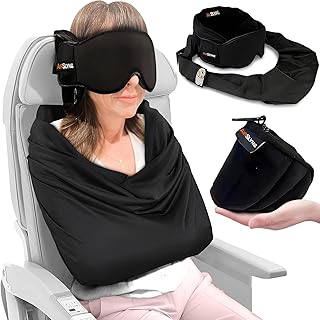
3-in-1 Airplane Sleep Support System – Integrated Plane Sleeping Accessories with Memory Foam Long Haul Flight Pillow, Adjustable Travel Eye Mask, and Blanket-Like Body Sling – Fits in Carry On
Best For:
Travelers who want an all-in-one sleep kit: business travelers, red-eye flyers, and parents seeking a compact, multi-use sleep solution.
If you’re tired of juggling a neck pillow in one hand and a thin airline blanket in the other, an integrated 3-in-1 sleep support system promises to streamline sleep on long-haul flights. This product bundles a memory-foam neck pillow, an adjustable sleep mask and a blanket-like body sling into a single carry-on friendly kit. The memory foam pillow gives structured head and cervical support that reduces the classic ‘head bob’ while dozing in an upright seat. The adjustable eye mask doubles as a light blocker and, when tightened correctly, helps keep your head from leaning forward.
The blanket-like body sling is the piece that sets this kit apart from single-item options. Designed to wrap over the shoulders and across the torso, it can create a gentle cocoon effect that reduces drafts and provides a feeling of privacy—useful in crowded cabins where you want to buffer noise and light. The sling also doubles as a lightweight warming layer, bridging the gap between a flimsy airline blanket and a full travel blanket that won’t fit easily in your bag.
Compared with carrying three separate items, the 3-in-1 approach minimizes bulk and decision fatigue at the gate. Against cheaper inflatable pillows, the memory foam provides more stable support and better pressure distribution for longer naps. Compared with standalone hooded pillows, the slim profile of the sling is easier to stow and less likely to crowd your neighbor.
Realistic use cases: a business traveler wanting a more rested arrival at a meeting, a parent who needs a compact sleep kit for a child’s nap on a red-eye, or a frequent flyer who prefers a single, organized pouch for sleep essentials. Practical observations from customer feedback indicate the foam keeps its shape for multiple flights but can feel warm after extended use—opt for air conditioning or a thin cotton cover to improve breathability. The adjustable mask works well to block cabin light but may require small adjustments to avoid pressure on the eyes.
Who should skip it? If you value minimalism and only need a basic headrest, a single lightweight neck pillow or inflatable might be a better fit. Also, if you prefer washable, fully machine-washable items, check the care instructions—memory foam components usually require spot cleaning.
Check the latest price on Amazon.
Pros
- Consolidates neck pillow, eye mask and sling into one kit
- Memory foam offers steady support for longer naps
- Sling provides extra warmth and privacy without bulk
Cons
- Memory foam can feel warm during extended use
- Not fully machine-washable; may need spot cleaning
Check the latest price on Amazon.
LISEN Airplane Travel Essentials for Women Men Phone Holder for Desk MagSafe Travel Size Accessories Flying Long Flight Cruise Must Haves Europe Vacation Essentials Airplane Gadgets Men Father Gifts

Best For:
Frequent device users on flights: digital nomads, parents, and media-focused travelers who want hands-free viewing.
Small accessories often make the biggest difference on a long flight. The LISEN compact phone holder is a travel-sized gadget built to free your hands and stabilize your screen whether you’re watching inflight entertainment on your own device, following a recipe during a cruise, or keeping a parenting app accessible while your child sleeps. This holder embraces modern phone features—MagSafe-friendly designs or standard cradle fits—so you can mount compatible phones without slipping.
The main advantage is simple: it turns any tray table or flat surface into a steady mini-stand that keeps your device at a comfortable viewing angle. This reduces neck strain from looking down for long stretches and keeps your phone secure when turbulence hits. The LISEN holder is small and lightweight enough to slip into a day bag or a jacket pocket, so it doesn’t compete with your main carry-on space.
Compared with using your seatback pocket screen or holding your phone, a dedicated holder offers more ergonomic viewing and reduces the temptation to cradle a device for hours. Against bulkier multi-device stands, this model emphasizes portability and rapid setup, which is ideal for travelers who hop between different seat layouts or use shared spaces like airport lounges.
Real-life uses include binge-watching a downloaded series on a transatlantic flight, following a meditation app to sleep, using video calls during layovers, or propping the phone for touch-free parenting videos while you soothe a child. Customers often note it’s particularly handy for people who travel with tablets or larger phones and appreciate a small, sturdy stand that won’t scratch surfaces.
Who should consider it? Anyone who relies on a phone or tablet more than the airline’s entertainment system—digital nomads, parents, and frequent vacationers. Who might not need it? If you always use the seatback screen or prefer a laptop over a tablet/phone, this accessory may be redundant.
Check the latest price on Amazon.
Pros
- Compact and highly portable
- Supports MagSafe-compatible phones and standard devices
- Stabilizes device on tray tables and flat surfaces
Cons
- Small size may be less useful for large tablets
- Not a substitute for a full multi-angle desk stand
Check the latest price on Amazon.
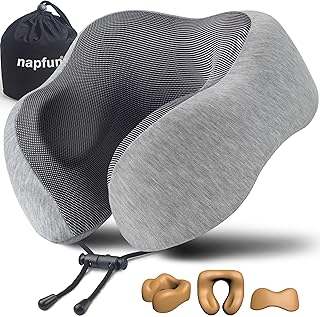
napfun Neck Pillow for Traveling, Upgraded Travel Neck Pillow for Airplane 100% Pure Memory Foam Travel Pillow for Flight Headrest Sleep, Portable Plane Accessories, Light Grey
Best For:
Frequent flyers and sleepers who want firmer neck support and durability over packability.
A classic neck pillow remains one of the most purchased travel accessories for a reason: it’s simple, effective and familiar. The napfun upgraded neck pillow uses 100% pure memory foam to contour around your neck, delivering stable head support that’s a noticeable step up from inflatable alternatives. The memory foam helps maintain head alignment and reduces the strain that causes stiff necks after long flights.
This pillow’s cover is usually soft and skin-friendly, and many users praise how it feels right out of the bag—no awkward inflation steps and no noisy PVC material. Memory foam’s dense structure absorbs the small jostles of a cabin and helps steady your head when you nod off. Compared to inflatable pillows, it’s heavier and can take more space, but the tradeoff is meaningful comfort and durability.
Practical scenarios include sleeping on a red-eye to arrive refreshed for business meetings, soothing a child who sleeps better with neck support, or simply preventing the classic sideways head flop that can wake you with neck pain. Travellers who frequently use trains, buses or cars will also appreciate the pillow’s adaptability across transport modes.
Some customers note the memory foam absorbs heat, so it’s best used in consistently air-conditioned environments or paired with a thin, breathable cover. If you’re a minimalist traveler who prioritizes ultralight packing, an inflatable pillow still offers the best compressibility. But for many who prioritize sleep quality, memory foam remains the preferred option.
Who should buy this? Regular flyers, sleepers who need firm neck support, and people prone to waking with neck pain. Who should skip? Ultralight backpackers and people who need the absolute minimum pack volume.
Check the latest price on Amazon.
Pros
- 100% memory foam for stable support
- Soft, skin-friendly cover
- Better longevity and comfort than inflatable options
Cons
- Takes more space in luggage than inflatables
- Can feel warm during prolonged use
Check the latest price on Amazon.
BASIC CONCEPTS Airplane Foot Hammock for Plane Travel Essentials – Airplane Travel Essentials, Long Flight Foot Rest – Plane Gadgets

Best For:
Passengers who want to reduce lower back strain and improve circulation during long flights: economy travelers and those prone to leg swelling.
Elevating your feet on a long flight isn’t just about comfort—it’s a health move. A foot hammock gives you a way to change posture, reduce lower back strain and encourage circulation during long hours seated. The BASIC CONCEPTS foot hammock is designed to suspend from the tray table or seatback hooks, creating a low-cost, packable footrest that can make a constrained economy seat feel more livable.
Unlike fixed footrests you might find on some premium seats, the hammock adapts to your leg length and offers an angled support that reduces pressure under the knees. This can relieve tension in your hips and lower back, and customers frequently report less leg swelling on long flights when they alternate between using a foot hammock and keeping feet on the floor. It’s also an easy way to prop a laptop bag or small carry item to clear floor space.
Compared to inflatable footrests, a hammock is quieter and less obtrusive; compared with built-in airline footrests, it’s portable and inexpensive. The hammock’s simple construction means fewer moving parts, and it packs flat into a pocket or light pouch. Practical tips include securing the hammock properly to avoid slippage, using it in pairs (one across the front and one closer to the seat) for taller travelers, and alternating positions regularly to avoid cramping.
Who should buy this? Travelers with lower back sensitivity, anyone who frequently experiences swollen legs on long-haul flights, and budget flyers who want more comfort without upgrading seats. Who might skip it? Travelers who prioritize ultra-minimal carry or those with mobility restrictions that make hooking the hammock into place difficult.
Check the latest price on Amazon.
Pros
- Improves circulation and reduces lower back pressure
- Simple, lightweight and packable
- More comfortable than keeping feet on a hard floor for hours
Cons
- Requires secure attachment; may slip if not installed properly
- Not ideal for travelers who dislike altering seat fixtures
Check the latest price on Amazon.
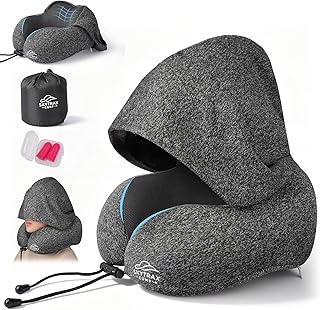
Travel Pillow with Extra Large Hood for Airplane Long Flights Privacy and Comfort Memory Foam with Skin-Friendly Cover for Road Trip Head&Neck Support for Plane Office Cars Sleeping & Rest (Grey)
Best For:
Travelers seeking privacy and sensory reduction in addition to neck support—red-eye flyers and light-sensitive sleepers.
If privacy and blocking light are as important to you as neck support, a travel pillow with an extra large hood delivers both. This particular design layers memory foam neck support with a generously sized hood that creates a cocoon-like space around your head. That hood helps muffle ambient noise and reduces peripheral light—useful for red-eyes, daytime naps over unfamiliar time zones, or quick rest between events.
The skin-friendly cover makes extended contact comfortable and reduces irritation for travelers with sensitive skin. Memory foam provides the head and neck alignment most sleepers prefer, while the hood adds a sense of privacy that can make sleeping upright feel less exposed. This pillow is bulkier than a standard horseshoe pillow but offers a level of sensory isolation closer to wearing headphones and an eye mask together.
Use cases include business travelers who need to arrive looking composed after a long flight, parents who appreciate a cozy barrier for a napping child, and solo vacationers who want an extra layer of quiet and warmth. Compared with inflatable hooded alternatives, the memory foam version avoids sudden deflation and provides consistent structural support. Against simple neck pillows, this design’s standout feature is the hood: it offers privacy without needing extra items like hats or large scarves.
Considerations: it’s bulkier to carry and may not fit well in tight overhead bins alongside other structured luggage. If you’re an ultralight packer or rely strictly on seatback entertainment rather than sleeping, a smaller neck pillow might be a smarter choice. Also, because of the hood’s coverage, be considerate of fellow passengers when reclining—ensure your hood won’t accidentally brush neighboring faces.
Who should buy this? Sleepers who value privacy and sensory reduction on long flights, and anyone who wants better head alignment plus light blocking in one piece. Who should skip? Minimalists and travelers who need every inch of carry-on space.
Check the latest price on Amazon.
Pros
- Large hood provides privacy and light blocking
- Memory foam neck support for stable alignment
- Skin-friendly cover for extended comfort
Cons
- Bulkier than standard neck pillows
- May be impractical for very limited carry-on space
Check the latest price on Amazon.
Final Verdict
Choosing the right travel accessories for long flights depends largely on your main pain points. If sleep quality is your top priority, the 3-in-1 sleep system or the hooded memory foam pillow provide the most comprehensive in-flight rest. If you want a compact, device-focused convenience, the LISEN phone holder is a small but impactful pick. For lower-body comfort and circulation, the BASIC CONCEPTS foot hammock makes a real difference without a major investment. And for consistent neck support that outperforms inflatables, the napfun memory foam pillow remains a reliable classic.
Combine two or three complementary items—for example, a neck pillow plus a foot hammock and a small phone stand—and you’ll address head, lower body and entertainment ergonomics to make a long flight significantly more bearable. Keep materials, pack size and care instructions in mind when selecting; memory foam feels amazing but demands more packing space and careful cleaning, while compact gadgets sacrifice some comfort for portability.
Above all, realistic expectations help: none of these accessories transforms economy seating into business class, but the right kit can help you sleep better, arrive less stiff and keep your energy reserves intact. If you fly frequently, invest in higher-quality, washable covers and more durable designs; occasional flyers can still achieve meaningful gains with budget-friendly options.
As an Amazon Associate, I earn from qualifying purchases. This article may contain affiliate links, which means we may receive a commission at no extra cost to you.
Check the latest price on Amazon.
Conclusion
These Travel accessories people keep buying before long flights picks are trending now and offer great value and variety. Check the links above for latest prices and reviews.
As an Amazon Associate, I earn from qualifying purchases.
Tags:
travel accessories, airplane pillow, neck pillow, foot hammock, travel gadgets, long flight essentials, airplane sleep support
