Minimal Cozy Decor Picks for Apartment Tours
As an Amazon Associate, I earn from qualifying purchases. This article may contain affiliate links, which means we may receive a commission at no extra cost to you.
If you follow minimalist home decor creators on Instagram or YouTube, you’ve likely noticed a handful of repeat props that make small apartments feel warm, intentional, and lived-in without looking cluttered. This guide highlights five accessible items—decorative books, thoughtful design guides, and a small sculpture—that consistently appear in cozy apartment tours. Whether you’re styling a narrow bookshelf, a tiny entryway table, or a coffee table vignette, these pieces act like visual punctuation marks: small, simple, and effective.
Affiliate disclosure: As an Amazon Associate, I earn from qualifying purchases. This article may contain affiliate links, which means we may receive a commission at no extra cost to you.
I selected these items for their ability to elevate minimalist spaces: neutral tones, compact scale, and flexible styling. None of the recommendations require major renovation or a large budget, and each serves a practical role beyond just looking pretty. Read on for what each item does, who it’s for, real-life ways to use it, and a few buying considerations drawn from common customer observations.
Buying Guide
How I chose these pieces: I focused on compact, neutral, and multifunctional items that creators repeatedly use in small-space tours. Key criteria included scale (small enough for apartment shelves and tables), color palette (muted neutrals that layer well), texture (natural or matte finishes for visual warmth), and versatility (styling flexibility across rooms).
What to look for when buying decor for a cozy, minimalist apartment:
– Scale and proportion: In small spaces, items that are too tall or too bulky dominate the scene. Aim for low stacks, short sculptures, and slim books to keep sightlines open.
– Material and finish: Matte or slightly textured finishes photograph better and look more lived-in than glossy surfaces. Wood tones, sandstone resin, and uncoated paper covers are safe bets.
– Multipurpose pieces: Decorative books can double as trays, risers, or cable concealment; design books are reference material and coffee table conversation starters; small sculptures anchor a vignette without overwhelming it.
– Color harmony: Stick to a palette of 2–3 neutrals (warm white, soft beige, or muted taupe) and one accent color. This keeps the space calm and photographer-friendly.
– Durability and maintenance: Removable dust, lightweight construction, and easy-to-clean finishes are practical. Resin sculptures and faux wood stacks are low-maintenance compared to delicate ceramics.
Buying considerations: Measure your shelf and table depths before ordering. If you like rotating decor for seasonal updates, pick items that are affordable enough to swap out. If you plan to photograph tours, matte and textured items reduce glare and look more sophisticated on camera.
Below are five curated picks with realistic use cases and pros/cons to help you decide which belong in your apartment tour lineup.
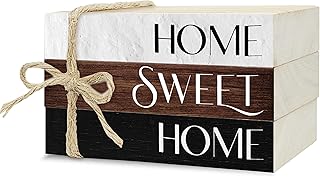
Ycyfckdr Mini Decorative Books for Home Decor, Rustic Wood Stack for Table, Home Sweet Decor Books for Living Room Shelf, Farmhouse Stacked Book Gift (L10)
Best For:
Renters, content creators, and anyone who wants a simple, low-maintenance prop to anchor vignettes without adding real books or bulk.
Small, intentional props are a staple in cozy, minimalist apartment tours because they provide scale and storytelling without adding visual clutter. The Ycyfckdr mini decorative books arrive as a rustic wood stack finished to mimic weathered, farmhouse-style volumes. These faux books are lightweight and sized for tabletops, entryway consoles, or narrow bookshelves. Their subtle grain and muted tones make them easy to layer with other materials—think a small ceramic vase, a stack of linen napkins, or a brass candle holder.
What this product brings to a space is texture and a grounding horizontal line. Unlike real books, these faux piles are consistently shaped and won’t tip over, making them ideal for styling vignettes that need a steady base. They work particularly well when you want the ‘look’ of a curated library without the bulk or need to store reading material. Creators often use pieces like this to raise smaller objects (like a plant or a sculptural paperweight) to eye level in photographs and videos.
Real-life use cases: Keep a pair on your coffee table to lift a low tray or to host a small candle and matchbox. Tuck one at the end of a shelf to create a layered effect with taller objects. Use the stack on a bedside table to support a small lamp or a charging pad—its flat, stable top is practical for devices.
Compared with real books or foam prop books, the Ycyfckdr stack offers consistent color and shape that’s easy to coordinate. It’s more durable and lighter than actual wooden blocks, and less fragile than plaster or ceramic alternatives. However, because it’s faux, it doesn’t offer the tactile variety of real book spines and may look repetitive if overused in the same room.
Who should buy: Minimalists who want a low-effort styling lift, creators and renters who need non-permanent decor, or anyone staging a small living space for photos. Who may skip it: Readers who prefer real books on display or those seeking heirloom-quality pieces.
Check the latest price on Amazon.
Pros
- Lightweight and easy to move
- Neutral, weathered finish that layers well
- Provides a steady base for smaller decor items
Cons
- Not actual books—lacks tactile authenticity
- Can look repetitive if used excessively
Check the latest price on Amazon.
Cozy Minimalist Home: More Style, Less Stuff

Best For:
New renters, minimalist-curious homeowners, and content creators looking for approachable styling ideas and practical checklists.
Books about living simply and decorating with intention are more than coffee-table decor; they’re practical guides that can change how you approach a space. ‘Cozy Minimalist Home: More Style, Less Stuff’ reads like an approachable roadmap for people wanting the warmth of a lived-in home without the overwhelm of clutter. The author’s tone is conversational and photo-forward, offering room-by-room advice that feels doable for apartment dwellers.
This book is useful for someone who values both aesthetics and function. It offers checklists, organizational tips, and styling strategies that prioritize tactile materials—wool throws, natural woods, and ceramic objects—so your space looks intentional and comfortable. Where many minimalist design guides can feel cold or austere, this book emphasizes layered textures, soft lighting, and a human scale, making it easier to translate into a compact apartment.
Real-life scenarios: Use it as a planning tool before a move to create a one-shelf, one-tray, or one-basket approach. Flip through for inspiration before rearranging a living room or to choose a consistent color palette for a studio. Creators often keep books like this visible in shoots to signal design intent and to provide practical tips viewers can apply immediately.
Compared to general interior-design tomes, this title focuses specifically on minimalist warmth and real-life livability—less theory, more practical steps. It won’t replace in-depth architectural or technical references, but for someone aiming to make a small space feel cozy without becoming cluttered, it’s a concise, image-rich resource.
Who should buy: New apartment dwellers, people downsizing, and anyone seeking approachable styling advice that balances minimalism with comfort. Who may not need it: Professional designers looking for technical specifications or readers seeking a strict ‘less is more’ manifesto.
Check the latest price on Amazon.
Pros
- Practical, photo-forward advice
- Focuses on warmth and livability
- Readable format with actionable tips
Cons
- Not a technical design manual
- May repeat common minimalist advice for seasoned readers
Check the latest price on Amazon.
House Rules: How to Decorate for Every Home, Style, and Budget | Cozy Minimalist Guide to Interior Design and Home Organization | Beautiful Wedding Shower or Housewarming Gift

Best For:
Buyers who want a structured, budget-aware approach to decorating, including recent movers and hobbyist interior stylists.
‘House Rules’ is written as a practical handbook for decorating across different budgets and styles, making it an attractive buy for someone who wants direction without being boxed into a single aesthetic. Chapters break down principles—scale, balance, texture, and budget-friendly swaps—so you can pick tactical rules and apply them in a compact apartment.
This book is especially valuable for people who want a checklist mentality when styling: what to buy first (good lighting, layering textiles, anchor pieces), where to save and where to splurge, and how to arrange items for visual balance. The tone is encouraging rather than prescriptive, with images that show how modest changes—like switching a lampshade or adding a sculptural object—can shift a room’s feel dramatically.
Real-life use cases: Keep this on your reference shelf while staging a small living room or a studio; consult it when you’re budgeting for a nested set of purchases; use its rules to create a repeatable formula for content creation so each shot feels cohesive. Because it addresses a range of budgets, the book’s suggestions are practical for renters and homeowners alike.
Compared to trendier style bibles, ‘House Rules’ leans into timeless principles that translate well to the neutral, layered approach favored by cozy minimalists. It’s not an exhaustive trend report, but it gives reliable guidelines that reduce decision fatigue—handy when you’re styling for a quick apartment tour.
Who should buy: People who want clear, repeatable decorating rules and budget guidance. Who may not need it: Those seeking avant-garde or highly specific trend forecasting.
Check the latest price on Amazon.
Pros
- Actionable decorating rules
- Helpful for budgeting and prioritizing purchases
- Photographs that demonstrate practical changes
Cons
- Less trend-focused for readers wanting current fads
- Not a deep-dive into style subcultures
Check the latest price on Amazon.
Sandstone Resin Thinker Style Abstract Sculpture Statue Collectible Figurines Home Office Bookshelf Desktop Decor(Small Sandstone,Left)

Best For:
People who want an affordable, low-maintenance sculptural accent to anchor small vignettes and shelves.
Small sculptural pieces are the unsung heroes of cozy apartment styling: they add visual interest and a sense of curated personality without demanding a lot of space. This sandstone resin ‘Thinker’ style abstract sculpture is intentionally small and matte-finished, which makes it ideal for tight shelves, narrow mantle spaces, or coffee tables. Its textured sandstone look reads as handcrafted and provides a tactile counterpoint to smooth glass or glossy ceramics often found in modern apartments.
Because it’s resin, the piece is lightweight and less fragile than real stone, which is helpful for renters or creators who move props between shoots. The sculptural silhouette introduces a thoughtful, contemplative vibe and serves as a subtle focal point in a minimalist vignette. It’s particularly effective when paired with a stack of neutral books (real or faux) and a living green—like a small succulent or trailing pothos—so the composition feels balanced and organic.
Real-life scenarios: Use it on a bedside table to bring a gentle sculptural element without crowding; place it on a narrow bookshelf to break up rows of books; or set it on a console table with a lamp and a small dish for keys. Because of its compact footprint, multiple pieces in different poses can create a cohesive collection without overwhelming a shelf.
Compared with ceramic or metal sculptures, sandstone resin tends to feel warmer and photographs with less glare. It’s not an heirloom stone, but it’s a practical, affordable way to introduce sculptural form into a small space.
Who should buy: Renters, content creators, and anyone who wants sculptural interest without weight or fragility. Who may skip it: Collectors seeking authentic stone or high-end art pieces.
Check the latest price on Amazon.
Pros
- Matte, textured finish reduces glare
- Lightweight and durable resin construction
- Small scale fits tiny shelves and tables
Cons
- Not real stone—less authenticity for collectors
- Detail level can be limited at this price point
Check the latest price on Amazon.
The Art of Home: A Designer Guide to Creating an Elevated Yet Approachable Home

Best For:
Homeowners and committed renters who want designer-level guidance on creating cohesive, layered interiors.
If you’re looking for a more in-depth perspective on how designers think about layering, scale, and the balance between elegant and approachable, ‘The Art of Home’ is a thoughtful resource. It explains principles of composition—how pieces relate to one another, how color temperature affects mood, and how to mix finishes without creating visual chaos. For small apartments, these lessons translate to smarter furniture choices, better lighting strategies, and a keener eye for accessories that actually add value to your daily life.
This title is rich with imagery and step-by-step guidance that’s useful when you’re building a cohesive look rather than simply collecting pretty objects. It encourages readers to think about core anchor pieces—sofas, rugs, and lighting—while also showing how curated accents (books, small sculptures, and textiles) finish a room. Designers often recommend keeping a mix of high- and low-cost items; this book explains why that balance matters and how to achieve it without feeling scattered.
Real-life uses: Reference it when deciding on a rug size for an open-plan studio or when choosing a lamp proportionate to a tiny side table. It’s especially helpful if you plan to invest in a few quality anchor pieces and want guidance on how to style them seasonally with affordable accents.
Compared to lighter, trend-focused guides, ‘The Art of Home’ leans into design thinking and compositional rules. It’s more instructive for someone who wants to apply professional logic to a small space rather than just replicate a look.
Who should buy: Buyers ready to invest in a cohesive home plan, aspiring home stylists, and anyone who appreciates a designer’s framework for mixing pieces. Who may not need it: Readers seeking quick, one-page tips or a purely minimalist manifesto.
Check the latest price on Amazon.
Pros
- In-depth design principles and visuals
- Explains how to mix high- and low-cost items effectively
- Useful for planning long-term purchases
Cons
- More detailed than a quick-tip guide
- May be dense for readers wanting instant fixes
Check the latest price on Amazon.
Final Verdict
These five pieces cover the essentials that make cozy apartment tours feel intentional: stable, neutral prop books for layering; practical, approachable design guides for planning and execution; and a small sculptural accent that adds form and texture. Together they address scale, warmth, and usability—three things creators consistently optimize for when styling small spaces.
If you’re starting from scratch, consider beginning with one design guide to form a plan (either ‘Cozy Minimalist Home’ or ‘House Rules’), add a sculptural accent for personality, and finish with one or two low-profile props—like the rustic faux book stack—to elevate surfaces without clutter. For those ready to invest in a long-term approach, ‘The Art of Home’ provides deeper strategy and composition advice that pays off as you build a cohesive home.
Whether you’re staging a short apartment tour online or simply making your own small space feel more intentional, these picks are low-risk, renter-friendly, and easy to style. Check the latest price on Amazon.
Conclusion
These Minimal home decor creators use during cozy apartment tours picks are trending now and offer great value and variety. Check the links above for latest prices and reviews.
As an Amazon Associate, I earn from qualifying purchases.
Tags:
minimal home decor, cozy apartment decor, farmhouse decor, decor books, decorative sculptures, minimalist styling, apartment tour essentials
