Sustainable Closet & Drawer Organizers for Tidy Bedrooms
As an Amazon Associate, I earn from qualifying purchases. This article may contain affiliate links, which means we may receive a commission at no extra cost to you.
As an Amazon Associate, I earn from qualifying purchases. This article may contain affiliate links, which means we may receive a commission at no extra cost to you.
A clutter-free bedroom starts with the right organizers—pieces that respect your space, your routine, and the planet. Creators and minimalists increasingly favor sustainable, multi-use organizers that reduce waste, maximize vertical space, and make daily dressing quicker and less stressful. In this guide you’ll find five thoughtfully chosen storage solutions—hangers, drawer dividers, fabric bins, clear plastic containers, and beechwood space-savers—each selected for durability, practical design, and eco-conscious value. Whether you rent a tiny studio, share a dorm room, or redesign a master closet, these options help you build a tidy system that lasts.
Below you’ll get an in-depth buying guide, realistic use cases, and detailed product write-ups so you can pick the pieces that fit your lifestyle without guessing.
Buying Guide
Why pick sustainable organizers? The short answer: longevity and reduced waste. Cheap, flimsy storage often ends up in landfill after a season—but thoughtful organizers with durable materials and repairable designs pay off. When shopping, consider three practical dimensions: material and build, modular compatibility, and visibility/access.
Material and build: Look for natural woods, sturdy fabrics with reinforced seams, or thick BPA-free plastic for clear bins. Natural materials like beechwood or tightly woven cotton blends often age gracefully and are easier to recycle or repurpose. Avoid single-use cardboard organizers unless you plan to replace them often.
Modular compatibility: A good organizer works with others. Drawer dividers that stack or expand, bins that collapse for off-season storage, and hanger systems that can be combined will keep your setup adaptable when needs change. Measure your drawers, shelf depths, and hanging space before buying—standard dimensions vary widely between manufacturers.
Visibility and access: Clear containers make finding things effortless; fabric bins with front handles are great for shelves where you need a softer look. For items you reach for daily—socks, undergarments, or frequently worn tees—use shallow, partitioned drawers or open-front bins. Reserve deeper, less visible bins for off-season clothing.
Sustainability trade-offs to consider: natural materials often cost more but last longer; recycled plastics reduce waste but can still degrade over time. Collapsible designs lower shipping footprint and storage waste but sometimes sacrifice structure. Think about your routine: if you prefer quick visual cues, clear bins beat closed fabric boxes; if you value aesthetics, fabric and wood finish the look.
Comparisons to standard alternatives: wire shelving is cheap and ventilated but catches small items; cheap plastic boxes are lightweight but crack easily; cardboard bins are affordable but short-lived. The products in this guide balance durability, eco-conscious choices, and real-world usability—use them to mix-and-match storage tailored to your bedroom.
Measure twice, plan your zones (daily, weekly, seasonal), and prioritize pieces that solve your biggest pain point—visibility, space, or frequent laundry turnover.
AMKUFO 6 Pack-Closet-Organizers-and-Storage, Magic-Hangers-Space-Saving-for-Clothes, Closer-Organizer-for-Closet-Organization, Space-Saver-Hanger-Organizer-for-Multipurpose, Dorm-Room-Essentials

Best For:
Students, apartment or dorm dwellers, capsule wardrobe owners, and anyone needing to multiply hanging space without installing new fixtures.
If you share a small closet or are trying to double your hanging capacity without a full closet overhaul, multi-tiered space-saving hangers are one of the simplest sustainable swaps you can make. The AMKUFO 6-pack magic hangers are designed to hang vertically and multiply available rod space, letting you cascade shirts, blouses, or lightweight jackets in a single column. Instead of buying an extra rod or bulky shelving, these hangers use gravity and a slim profile to compress several pieces into the footprint of one.
These hangers perform best with lighter garments—t-shirts, blouses, thin knitwear, and scarves—so they’re ideal for dorm residents, apartment dwellers, and anyone looking to streamline seasonal wardrobes. They typically include swivel hooks and a slim, durable body that prevents slippage, helping garments retain their shape. Compared with standard plastic hangers that scatter across a rod, the vertical system keeps outfits grouped, which speeds up outfit selection and reduces the impulse to overbuy.
Real-life uses: In a small walk-in, use one hanger per outfit to pre-plan looks for the week. In a shared closet, allocate columns for different family members to keep garments separated. In a dorm, three-to-four columns can replace an entire external hanging rack. The product also reduces wrinkling because pieces hang freely instead of being folded into overstuffed drawers.
Why it’s valuable: This pack is a low-cost, low-effort upgrade that reduces closet overcrowding and delays the need for larger storage investments. It’s also a sustainable choice compared to adding plastic shelving or buying duplicate wardrobe pieces—you’re simply reorganizing what you already own.
Who should buy it: Anyone with limited hanging space who prefers a minimalist setup, students, capsule wardrobe enthusiasts, and renters who can’t install permanent fixtures. Who might skip it: If you only have heavy coats, structured suits, or delicate fabrics that need individual hanging and wide-shoulder support, standard shaped hangers are still better.
Practical observations and buying considerations: Measure sleeve lengths and hanger-to-floor clearance before stacking many items. Mix and match with standard hangers for heavier items. Maintain balance across the rod to avoid sagging.
Pros: Drastically increases hanging capacity; compact and travel-friendly; good for organizing outfits by day or season.
Cons: Best for lighter garments; too many items stacked can cause creasing; not ideal for heavy coats.
Check the latest price on Amazon.
Pros
- Maximizes vertical hanging space
- Lightweight and easy to install
- Keeps outfits grouped and visible
Cons
- Not suitable for heavy coats or structured garments
- Stacking many items can cause creases
Check the latest price on Amazon.
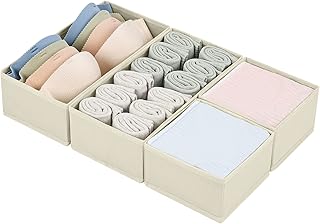
DIMJ Drawer Organizers Clothes, Dresser Organizer Bins for Baby Clothes,Underwear and Sock, Fabric Closet Organization and Storage Boxs, Drawer Dividers for Nursery, Clothing, Tie – 4 Pack, Beige
Best For:
Parents organizing nursery dressers, people with irregular drawer sizes, and anyone who prefers soft, breathable storage for undergarments.
Drawer clutter is one of the quickest ways a bedroom becomes chaotic—socks disappear, small accessories spill, and drawers become catch-alls. Fabric drawer organizers like the DIMJ 4-pack are designed to bring order to those small-item zones, with shallow compartments sized for underwear, baby clothes, ties, and other everyday essentials. The soft fabric avoids sharp edges and allows drawers to close smoothly while helping items retain a tidy fold.
These organizers typically use breathable fabric with reinforced seams, and their neutral beige tone fits discreetly into nursery dressers or adult wardrobes. Compared to rigid plastic dividers, fabric bins are gentler on delicate textiles and can be squeezed into slightly irregular drawer depths—this flexibility matters in older furniture where dimensions aren’t standardized.
Real-life usage: In a parent’s nursery, dedicate one bin to socks, another to onesies, another to bibs and burp cloths, making each changing moment faster. For an adult dresser, sort underwear, bras, and workout socks into separate compartments for easy morning access. They’re also useful for travel: collapse an organizer to stash a few items inside a suitcase, then pop it back into a drawer on arrival.
Why it’s valuable: Small, inexpensive organizers like these reduce daily decision fatigue. Instead of rifling through a drawer, you can pull out the right compartment and go. They also mean fewer items end up missing because everything has a designated spot.
Who should buy it: Busy parents, people who prefer folded and visible storage, and anyone with irregular drawer sizes who wants a soft, flexible divider. Who might skip it: If you prefer open layout organizers or require very rigid compartments for heavy items, a sturdier plastic modular system may be better.
Practical observations and buying considerations: Check your drawer depth and measure width to plan how many compartments you’ll need. Fabric organizers can flatten when empty—use tissue or small folded items to keep the shape if you like a tidier look.
Pros: Soft and drawer-friendly; flexible sizing for non-standard drawers; great for small garments and baby essentials.
Cons: Less rigid than plastic alternatives; may flatten when empty and need reshaping.
Check the latest price on Amazon.
Pros
- Soft fabric protects delicate items
- Flexible sizing fits imperfect drawers
- Collapsible for travel and off-season storage
Cons
- Not as rigid as plastic dividers
- May lose shape when empty
Check the latest price on Amazon.
Homsorout Fabric Storage Bins for Organizing – 6 Pack Large Trapezoid Collapsible Storage Bins with Front Handle, Closet Organizers and Storage for Bedroom, Home Shelves, Small Spaces, Beige

Best For:
Owners of open shelving, renters, small-space dwellers who want stylish but functional storage for sweaters, linens, and accessories.
Fabric storage bins remain a favorite for creators and small-space dwellers because they combine a warm aesthetic with real function. The Homsorout 6-pack trapezoid bins are built for shelf and cube storage—sturdy enough to hold sweaters, linens, or overflow shoes while collapsing flat for seasonal storage. With a front handle, they’re easy to pull out from deep shelving, and their neutral beige helps keep a calm visual palette in your bedroom.
Compared to rigid plastic bins, these fabric options are quieter to handle, softer against garments, and better at blending with decor. Compared with cheap felt bins, a reinforced base and stitched seams usually translate to better long-term shape retention. These bins are particularly beneficial when you want a cohesive look across open shelving—closed drawers can hide clutter, but fabric bins make the shelves look intentional.
Real-life uses: Use one bin per category on a closet shelf—sweaters, scarves, workout gear, and seasonal accessories. In a shared closet, assign a bin per person for smaller items. In studio apartments, keep one bin for laundry day to separate worn-but-not-dirty clothes from clean ones. The trapezoid shape helps them tuck into slightly angled or awkward shelf spaces better than perfect cubes.
Why it’s valuable: They offer a blend of style and utility—more attractive than clear plastic when items are stored on open shelves, but just as functional for frequent access. Their collapsible design reduces storage needs when they’re not in use, which is itself a sustainable benefit.
Who should buy it: People who prefer a softer, decor-friendly storage solution, renters using open shelving, and anyone wanting to hide visual clutter without sacrificing accessibility. Who might skip it: If you need completely airtight or waterproof storage (for long-term archival or damp spaces), hard plastic bins are a better fit.
Practical observations and buying considerations: Confirm shelf depths and measure the bin base to ensure a snug fit. Expect fabric to show dust over time—light vacuuming or spot cleaning keeps them fresh.
Pros: Attractive and soft aesthetic; collapsible for off-season storage; easy-to-pull front handles.
Cons: Not waterproof or airtight; fabric can attract dust.
Check the latest price on Amazon.
Pros
- Collapsible and space-saving
- Front handle for easy access
- Neutral look fits many decors
Cons
- Not suitable for waterproof storage
- May attract dust over time
Check the latest price on Amazon.
ClearSpace Clear Plastic Storage Bins – Pantry Organizers & Storage Containers, Cabinet Organizer – Home Organization Must Haves for Kitchen, Laundry Room, Office, Closet, Garage & Freezer

Best For:
Seasonal wardrobe managers, hobbyists, and anyone who needs quick visual access to stored items across closet, pantry, or garage.
Clear bins are the most utilitarian item in an organizer’s toolkit because they solve the core problem: visibility. The ClearSpace plastic storage bins are designed for multi-room use—closets, laundry rooms, and even freezer-ready storage in some cases—where seeing contents quickly reduces time spent searching. Unlike opaque bins, clear containers let you assess inventory at a glance, which is especially useful for off-season clothing, craft supplies, and bedding.
Durability matters: look for thicker, BPA-free plastic with squared edges and reinforced corners. These features prevent cracking and keep lids (if included) fitting well over time. Compared with fabric bins, clear plastic prevents moisture infiltration and makes it easy to stack multiple boxes without compressing contents. Compared with cheap, thin bins, a sturdier clear box is often worth the investment for long-term use.
Real-life uses: Use clear bins for seasonal shoe rotation—label the front with a simple tag and stack them under a bed or on closet shelves. Keep a clear box for accessories so you can instantly spot belts, bags, or scarves. In shared households, clear bins cut down on duplicate purchases because everyone can see what’s already stored.
Why it’s valuable: It removes the guesswork from storage. For people who cycle clothing seasonally, transparent storage reduces overbuying and keeps textiles in better condition by enabling dry, ventilated stacking.
Who should buy it: Anyone who prioritizes visibility—craft hobbyists, seasonal wardrobe organizers, and people storing items in basements, garages, or attics where moisture protection helps. Who might skip it: If you want a warmer, decor-first look for open shelving, fabric bins offer a softer appearance.
Practical observations and buying considerations: Measure your shelf height and width before stacking. Clear plastic shows dust and fingerprints; a quick wipe keeps them looking new. If storing long-term textiles, add silica packs to control moisture.
Pros: Excellent visibility; stackable and moisture-resistant; versatile across rooms.
Cons: Can show dust and fingerprints; less decorative on open shelving.
Check the latest price on Amazon.
Pros
- Clear visibility of contents
- Stackable and sturdy
- Moisture-resistant compared to fabric bins
Cons
- Shows dust and fingerprints
- Less stylish for open shelving displays
Check the latest price on Amazon.
MORALVE Space Saving Hangers for Closet – 4 Pack European Beechwood 6-Tier Shirt Organizer with 360° Swivel Hook – Collapsible Clothes Hanger for Closet Organization (Hangers Not Included)

Best For:
Owners of open closets, lovers of natural materials, and anyone replacing disposable plastic hangers with a durable, stylish alternative.
For those who want a more upscale and sustainable alternative to plastic multi-tier hangers, beechwood space-saving hangers like MORALVE’s 6-tier design combine natural material with clever engineering. European beechwood is a durable, renewable hardwood that stands up to regular use and looks better on open racks than molded plastic. A 360° swivel hook adds practical flexibility for arranging garments around a closet and choosing the easiest angle to slide items on and off.
Compared with thin metal or plastic space-savers, beechwood gives better weight distribution and helps structured shirts and light jackets maintain their silhouette. The collapsible feature folds flat for travel or for stowing when not needed—this helps reduce shipping volume and storage footprint. These hangers are especially appealing if you keep a curated wardrobe and value the tactile and aesthetic quality of wood.
Real-life uses: Use one beechwood hanger per outfit to create ready-to-wear sets for the week, or hang a series of coordinating shirts to plan capsule wardrobes. In an entry closet, group seasonal outer layers for quick rotation. They also make a refined addition to open closets where hangers are visible, elevating the overall look of your storage.
Why it’s valuable: It blends durability with style, reducing the need to replace flimsy plastic hangers frequently. The natural wood is less likely to bend or warp over time, making this an investment in a tidier and longer-lasting closet system.
Who should buy it: People who appreciate higher-quality materials, owners of open or visible closets, and those looking to transition away from disposable plastic. Who might skip it: If you’re on a tight budget or need ultra-lightweight options for travel-only use, metal or plastic variants may be cheaper and lighter.
Practical observations and buying considerations: Beechwood hangers are heavier than plastic; ensure your closet rod is securely mounted. They work best when used alongside padded or shaped hangers for delicate garments that need shoulder support.
Pros: Durable natural wood; attractive on open racks; collapsible for storage.
Cons: Heavier than plastic; higher upfront cost than basic hangers.
Check the latest price on Amazon.
Pros
- High-quality beechwood construction
- 360° swivel hook for ease of use
- Collapsible design saves space when not in use
Cons
- Heavier than plastic options
- Higher upfront cost than basic hangers
Check the latest price on Amazon.
Final Verdict
A tidy bedroom doesn’t require a full renovation—sometimes the right organizers do the heavy lifting. The five products profiled here cover the core zones of a bedroom: hanging space, drawer organization, shelf storage, transparent stacking, and upgraded hangers. Use vertical hanging solutions and beechwood multi-tier hangers to expand capacity without drilling new rods. Choose fabric drawer organizers and collapsible fabric bins for a softer aesthetic on open shelving and in dressers. Add clear plastic bins where visibility and moisture resistance are priorities.
Mixing and matching is the sensible approach: pair clear bins for long-term storage with fabric bins on visible shelves, and consolidate daily outfits on vertical hangers or wooden multi-tier organizers. Keep measurement and routine in mind—measure drawers and shelves before buying, and pick organizers that solve your biggest daily friction point, whether that’s missing socks, overstuffed rods, or seasonal wardrobe rotation.
If you want an eco-conscious balance between durability and style, favor natural materials like beechwood and well-constructed fabric over single-use plastics. For sheer visibility and moisture protection, select clear, sturdy bins. All five items outlined here were chosen because they prioritize longevity, practical design, and real-world utility—qualities creators and organizers value when building a tidy, sustainable bedroom system.
Check the latest price on Amazon.
Conclusion
These Sustainable organizers creators use for tidy bedroom setups picks are trending now and offer great value and variety. Check the links above for latest prices and reviews.
As an Amazon Associate, I earn from qualifying purchases.
Tags:
sustainable storage, closet organizers, drawer dividers, fabric storage bins, space saving hangers, clear storage bins, bedroom organization
