Best Home Productivity Tools for Women
As an Amazon Associate, I earn from qualifying purchases. This article may contain affiliate links, which means we may receive a commission at no extra cost to you.
As an Amazon Associate, I earn from qualifying purchases. This article may contain affiliate links, which means we may receive a commission at no extra cost to you.
Staying productive at home often comes down to routines, small systems, and the right tools. For many women balancing work, family, house tasks, and personal goals, a simple piece of paper or a dedicated planner can transform overwhelm into clarity. In this guide I’ve gathered five popular planners and cleaning organizers designed to make daily tasks manageable, reduce decision fatigue, and help you keep momentum on long-term goals. I did not test these products personally; instead, I synthesized feature sets, typical customer experiences, and practical considerations so you can make an informed choice.
Below you’ll find an easy-to-scan buying guide, full-length product write-ups that explain who each item is best for, realistic use cases, and balanced pros and cons. Whether you want something minimal to capture daily tasks or a structured cleaning system geared toward neurodiverse adults, there’s a solution here to reduce friction and get more done without burning out.
Buying Guide
Why choose a dedicated planner or cleaning system? The right paper planner or checklist functions as an external brain: it captures commitments, reduces rethinking, and sets priorities so you spend energy doing, not deciding. When choosing a planner for home productivity, consider format (daily vs weekly), level of structure (blank space vs guided prompts), and durability (pad vs bound notebook vs laminated sleeve).
Daily vs weekly: Daily planners are great if you juggle many time-sensitive tasks or want to pair task lists with time-blocking. Weekly planners give perspective for family schedules and recurring chores. If you have an unpredictable day-to-day routine, a weekly notepad with dedicated sections for priorities can keep essentials visible without overwhelming you.
Guided prompts vs blank lists: Guided planners that ask for priorities, top three tasks, or time estimates help cut through decision paralysis. Minimal lists let you adapt faster but require more willpower to structure your day. Neurodiverse adults or those with ADHD often benefit from clear checklists, repeatable routines, and visual cueing; look for planners with habit trackers or cleaning checklists.
Physical format and reusability: Notepads and undated sheets are inexpensive and easy to start. Ring binders or removable pages are better for maintaining records and tweaking systems. Dry-erase sleeves and laminated checklists are ideal for repetitive chores and can reduce paper waste.
Paper quality and size: If you write a lot, choose thicker paper to prevent bleed-through. Size matters too — desk planners (8.5"×11") offer space for meal plans and appointments, while smaller pads are good for a kitchen counter or brief daily lists.
Other buying considerations: portability, aesthetics (colors and layout can increase usage), number of pages (52 weeks is a common count), and whether the product is undated (more flexible) or dated (prompts commitment). Compare alternatives like digital apps if you prefer cloud sync — but many people find that physically crossing off a task provides a uniquely motivating feeling that apps don’t replicate.
Use these guidelines as you read the product breakdowns below to match features to how you actually work.
Taja To Do List Notepad – To Do List Notebook for Work with 52 Sheets, 9.8" x 6.5", Undated Daily Planner Perfect for Daily Tasks and Goal Setting, Notepad Suitable for Office, Home & School – Greenery Sway

Best For:
Women who want a compact, low-friction daily checklist—ideal for busy professionals, parents, students, and anyone who benefits from simple micro-planning.
If you want a straightforward daily capture system, the Taja To Do List Notepad offers a clean, undated layout that’s built for habit-forming and short-term focus. The 9.8" x 6.5" size sits comfortably on a nightstand, kitchen counter, or beside a laptop. With 52 undated sheets, it functions like a year’s worth of weekly resets if you use a new sheet each week, or nearly two months of daily checklists if you prefer a single-page day-at-a-time approach.
Main benefits: The pad is undated, so skipping days doesn’t feel wasteful. The printed layout emphasizes top priorities, a to-do column, and space for small notes—this nudges you to pick 2–3 must-do tasks each day, which is an effective strategy to avoid overloading your schedule. The compact dimensions make it portable, and the simple design keeps your attention on executing tasks rather than messing with layouts.
Real-life usage: For a work-from-home professional managing meetings, email triage, and household errands, this pad becomes the daily command center. Use the top priorities section before your morning coffee to decide what must get done. For stay-at-home moms, the pad is a quick way to balance meal prep, kid activities, and self-care items. Students or people running a side hustle will appreciate the ability to tear off each sheet as a record of completed days.
Why it’s valuable: Compared with large planners that demand time to fill out, this notepad encourages micro-planning. It’s particularly helpful if you struggle with perfectionism—an undated sheet reduces the pressure to fill every space. The paper weight is sufficient for standard pens and pencils, reducing bleed-through common in thinner pads.
Who should buy: Best for busy women who need a compact, low-friction daily list—professionals, students, parents, or anyone who wants a simple, repeatable checklist. It suits people who prefer tactile planning and like tearing away completed days.
Who might skip it: If you need a weekly spread to visualize appointments or prefer digital syncing and reminders, a larger weekly planner or app might be a better fit. Also, if you prefer reusable systems, a laminated checklist or dry-erase solution would reduce paper use.
Practical observations & buying considerations: Check that the sheet layout matches your workflow—if you time-block, the pad’s freeform columns may feel limiting. The aesthetic color (Greenery Sway) is pleasant, which helps with daily use; many users report that attractive design increases consistency.
Pros: Helps prioritize with a simple daily layout; undated sheets reduce pressure; portable size for everyday carry.
Cons: Single-use paper (not reusable); limited space if you need detailed scheduling.
Check the latest price on Amazon.
Pros
- Undated layout reduces pressure and waste
- Compact, portable size fits desks and counters
- Clear priority section to focus on top tasks
Cons
- Single-use paper rather than reusable
- Limited room for detailed schedules or time-blocking
Check the latest price on Amazon.
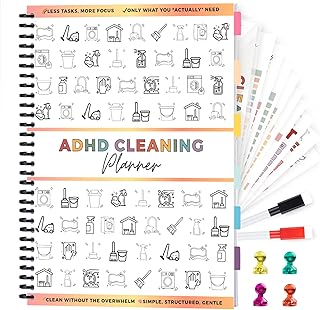
ADHD Cleaning Planner, Dry-Erase Sleeve + Paper Pages, Removable Ring Binder, Daily,Weekly,Monthly Plans, Cleaning Schedule and Checklist, ADHD Planner for Adults Women
Best For:
Women with ADHD or anyone who benefits from structured, repeatable cleaning checklists and a reusable system for household tasks.
This ADHD Cleaning Planner is designed specifically for adults looking for structure around household tasks. It combines paper planning pages with a reusable dry-erase sleeve and a removable ring binder format—an approach that balances permanence with repeatability. The planner includes daily, weekly, and monthly cleaning schedules, checklists, and spaces for notes or rewards, which is particularly helpful for people who benefit from externalized routines and visible progress tracking.
Main benefits: The hybrid design is the standout feature. Use the paper pages to plan and archive your routines, and slide frequently used checklists into the dry-erase sleeve for daily reuse. The binder rings let you reorder pages, add inserts, or remove completed sections—useful if your cleaning needs evolve across seasons. The structured templates break cleaning and organizing into bite-sized tasks, reducing the activation energy that often blocks starting a chore.
Real-life usage: For someone with ADHD or executive function challenges, the planner acts like a scaffold. Start each morning by checking a 15–30 minute “hot spot” task, then mark it off on the dry-erase sleeve. Weekly rotating chores (oven, fridge, baseboards) can live on the monthly spread. For busy households, assign color-coded tasks to family members, post the sleeve on the fridge, and rotate responsibilities without losing track.
Why it’s valuable: Compared to generic notebooks, this planner intentionally sequences chores and recognizes that consistent momentum comes from small, repeatable wins. The dry-erase sleeve saves time and paper because frequently repeated checklists don’t need reprinting. The binder format is more flexible than glued pads, letting you tailor sections.
Who should buy: Ideal for women who struggle with initiation around cleaning—particularly those with ADHD or anyone who responds well to visual checklists and small, scheduled tasks. Also good for households that want an easy way to delegate with visible tracking.
Who might skip it: If you prefer a minimalist single-page list or exclusively digital systems, the hybrid physical binder may feel unnecessary. Users who dislike maintaining physical binders might find it cumbersome.
Practical observations & buying considerations: Confirm the sleeve size and ring compatibility if you plan to add your own paper or printables. Consider getting low-odor dry-erase markers and a designated eraser to avoid smudging. Durability of the binder and sleeve hinges on material—if you anticipate heavy daily use, look for reinforced rings.
Pros: Hybrid reusable sleeve saves paper; structured daily/weekly/monthly templates support consistent routines; removable binder pages allow customization.
Cons: More components to manage than a simple pad; binder durability varies by build.
Pros
- Reusable dry-erase sleeve reduces paper waste
- Structured templates break chores into manageable tasks
- Removable ring binder allows customization and archiving
Cons
- More components to manage than a single pad
- Binder durability varies; may need gentle handling
Check the latest price on Amazon.
Taja Weekly To Do List Notepad with 52 Undated Sheets(8.5"×11")- Weekly Desk Planner for Women & Man, Work and Home -1 Pack Violet Dream

Best For:
Women juggling family calendars, work deadlines, and weekly household planning—good for parents, freelancers, and small-business owners.
The Taja Weekly To Do List Notepad in Violet Dream is a larger desk-sized planner intended to give you a full week at a glance. At 8.5"×11" with 52 undated sheets, it’s built for weekly rhythm—perfect if you plan groceries, appointments, work sprints, and family activities across seven days.
Main benefits: The week-at-a-glance format helps you balance simultaneous responsibilities. Instead of planning tasks day-by-day, you can allocate priorities across the week, cluster similar tasks for efficiency (batching laundry/run errands), and visualize bandwidth before committing to new activities. The undated format again provides flexibility for start dates and missed weeks.
Real-life usage: For a remote worker who schedules client calls, content deadlines, and homeschooling blocks, this notepad becomes a central planning surface. Use the left side for high-level weekly goals and the right side for daily task columns. Parents can block family activities and meal plans, while small-business owners can assign marketing, inventory, and bookkeeping tasks to specific weekdays.
Why it’s valuable: Compared with daily pads, weekly planners reduce the pressure to micro-manage every day while still keeping an actionable to-do list. The larger page gives room for notes like shopping lists, habit trackers, or meal prep steps. Aesthetically pleasing layouts (Violet Dream color) make the notepad feel less like a chore and more like an intentional planning ritual.
Who should buy: Women who need to manage family schedules and work commitments simultaneously—ideal for parents, freelancers, and side-hustlers who benefit from weekly planning and batching tasks.
Who might skip it: If your days vary wildly and you need minute-by-minute time-blocking, a daily planner or hourly agenda could be more suitable. Also, if you prefer digital calendars that sync across devices, a physical week-at-a-glance may be supplementary rather than primary.
Practical observations & buying considerations: Check if the weekly columns align with how you label days (some people prefer Monday-start vs Sunday-start layouts). The 52-sheet count makes it a good year-long companion if you use one sheet per week. Keep a small clipboard or magnet to post the week’s sheet for family visibility.
Pros: Full-week view for batching and planning; undated for flexibility; large page offers space for notes and meal planning.
Cons: Not ideal for minute-by-minute scheduling; single-use paper.
Pros
- Full week at-a-glance to support batching
- Large 8.5"×11" surface for notes and meal planning
- Undated sheets allow start-anytime flexibility
Cons
- Single-use sheets rather than reusable format
- Less helpful for those who need hourly scheduling
Check the latest price on Amazon.
Weekly To Do List Notepad, Undated Planner with 52 Sheets (8.5”x11”), Desk Weekly Planner for Women & Man, Home School & Work

Best For:
Women who want a simple weekly planning surface without extra features—suitable for parents, teachers, small business owners, and home managers.
This undated weekly desk notepad provides a no-fuss layout for people who want the structure of a weekly plan without excessive bells and whistles. The 8.5"x11" size gives the same practical workspace as other weekly notepads but typically leans toward a straightforward column format that emphasizes tasks and appointments.
Main benefits: Clarity and simplicity. The notepad reduces the temptation to over-plan by focusing on what needs finishing each week. Because it’s undated and lightweight, it’s easy to adopt mid-year and leave behind in favor of a fresh sheet the following week. The notepad is also handy as a family command center—pin a sheet to the fridge or a bulletin board for visibility.
Real-life usage: Use it to coordinate home schooling sessions and lesson plans, schedule workouts and meal prep, or map content and deliverables for creative work. If you host an at-home business or manage remote team tasks, the weekly sheet is a quick way to assign responsibilities and track progress during check-ins.
Why it’s valuable: Compared to ornate planners with habit trackers and goal worksheets, this product focuses on execution. The lack of clutter encourages momentum and frequent resets. It’s a practical choice when you want a tangible plan without committing to a full planner system.
Who should buy: Best for women who prefer a simple, no-frills weekly surface—parents coordinating family life, teachers mapping lessons, and professionals who want a paper backup for a digital calendar.
Who might skip it: If you rely heavily on habit tracking or project planning templates, a guided planner with built-in prompts could be more helpful. Also, if you’re seeking a reusable, long-term record, consider a binder system or digital alternative.
Practical observations & buying considerations: Verify the layout’s start day and whether Sunday or Monday starts suit your planning style. If multiple household members reference the weekly plan, consider laminating the top sheet or photographing it for quick sharing.
Pros: Simple, clear weekly layout; large page size for visibility; undated for flexible use.
Cons: Lacks advanced planning tools like trackers or habit logs; single-use paper.
Pros
- Straightforward weekly layout minimizes over-planning
- Large size is visible for family use
- Undated pages start any week
Cons
- No habit tracking or goal planning templates
- Single-use paper
Check the latest price on Amazon.
ADHD Cleaning Planner for Adults Women, Cleaning Schedule and Checklist Notebook, Cleaning and Organizing Planner, Daily Weekly Monthly Schedule Household Cleaning Checklist Planner

Best For:
Women who want a durable, focused system for household cleaning and organizing—ideal for busy adults managing a home or apartment.
This cleaning and organizing planner targets adults who want a purpose-built notebook for household maintenance. It’s organized with daily, weekly, and monthly sections and emphasizes checklists, rotating chores, and simple progress markers. Unlike generic notebooks, this planner centers around household tasks and offers a predictable rhythm that helps prevent small chores from becoming large projects.
Main benefits: The notebook format provides a durable place to record systems and tweak them over time. If you find that ad-hoc cleaning leads to inconsistent results, having an explicit schedule reduces the brainwork of deciding what to do next. The planner’s rotating chore lists are especially valuable: they spread deep-clean tasks across the month so everything gets attention without one overwhelming weekend.
Real-life usage: For a woman who recently moved into a larger home or who manages a full schedule, the planner provides a straightforward way to maintain momentum. On busy workdays, you can complete a five- or ten-minute “quick clean” checklist from the daily section. On weekends, consult the monthly list for one deep-clean task. If you live with roommates, you can assign checklist sections to different people and keep a visible record of completed responsibilities.
Why it’s valuable: Compared with generic to-do pads, this product narrows the focus to household upkeep, which is often where productivity at home falters. It’s helpful for preventing decision fatigue: when you open the planner, a clear next task is already suggested. The notebook durability means you can look back on what worked and refine your schedule.
Who should buy: Great for women who need a committed system to maintain a household—especially those who prefer a single, bound place for cleaning routines rather than loose sheets. Also useful for apartment dwellers who want to maintain small spaces efficiently.
Who might skip it: If you want a reusable dry-erase checklist or a highly customizable binder, a laminated checklist or ring planner may be preferable. If your main challenge is time management rather than task initiation, a time-focused planner might be a better match.
Practical observations & buying considerations: Look at the paper weight if you like to make heavy notes or use highlighters. Check the planner’s layout to ensure the rotation cadence matches your home’s needs—some households prefer biweekly deep cleans while others rotate monthly.
Pros: Focused cleaning templates reduce decision fatigue; durable notebook keeps a historical record; rotating chores prevent overwhelm.
Cons: Not reusable like laminated options; fixed layout may not match every household’s cadence.
Pros
- Dedicated cleaning focus reduces overwhelm
- Durable notebook format for tracking progress
- Rotating chores spread deep cleaning into manageable chunks
Cons
- Not reusable; single-book format
- Layout may not fit every household routine
Check the latest price on Amazon.
Final Verdict
Finding a productivity tool that sticks is more about fit than features. If your main hurdle is initiation, choose a structured checklist or an ADHD-focused planner with reusable elements—these lower activation energy and create visible wins. If your challenge is coordination across a family or business, a weekly desk notepad gives the overview you need to batch tasks and keep appointments visible. For those who want a no-frills, tactile approach, the undated Taja pads provide a low-cost, attractive way to build a daily or weekly habit.
Consider whether you want single-use paper (easy, low-cost) or reusable systems like dry-erase sleeves (eco-friendlier and iterative). Think about the habits you want to build: do you need time-blocking and hourly scheduling, or would simple priorities and checklists move the needle?
Whatever you choose, commit to a trial period—use a planner consistently for at least 3–4 weeks to see if it changes your routine. Small, consistent wins compound, and the right planner can make the difference between chaos and a smoother, more productive home life.
Check the latest price on Amazon.
Conclusion
These Products helping women stay productive at home picks are trending now and offer great value and variety. Check the links above for latest prices and reviews.
As an Amazon Associate, I earn from qualifying purchases.
Tags:
home productivity, planners for women, ADHD cleaning planner, weekly planner, to do list notepad, home organization, desk planner
