Best Educational Sensory Toys for Autism — Top Picks
As an Amazon Associate, I earn from qualifying purchases. This article may contain affiliate links, which means we may receive a commission at no extra cost to you.
Finding the right sensory toys for a child with autism can feel overwhelming: you want items that calm, teach, and hold interest without adding new distractions. This guide focuses on educational sensory toys that are classroom- and therapy-friendly, durable, and designed to help children develop self-regulation, fine motor skills, and early cognition. Whether you’re building a calm-down corner, looking for travel-friendly coping tools, or searching for tactile learning aids, these picks are carefully selected for practical value and therapeutic potential.
As an Amazon Associate, I earn from qualifying purchases. This article may contain affiliate links, which means we may receive a commission at no extra cost to you.
Below you’ll find a straightforward buying guide followed by detailed product profiles for five highly recommended sensory toys. Each profile explains who the toy is best for, realistic use cases, important features observed in product listings and user feedback, and pros and cons to help you make an informed decision.
Buying Guide
Buying sensory toys for a child on the autism spectrum is about matching sensory needs to safe, long-lasting toys that encourage learning and regulation. Start by identifying the child’s sensory profile: are they sensory-seeking (craving movement, pressure, or tactile input) or sensory-avoidant (sensitive to textures, sounds, or bright colors)? Knowing this will guide whether you choose chewy/squishy items, fidget-style toys, wooden puzzles, or activity boards.
Key features to look for:
– Texture and stimulus variety: Toys with multiple textures (smooth, bumpy, squishy) let kids discover what comforts or focuses them. Look for items that provide tactile feedback without loud noises.
– Durability and safety: Solid construction, non-toxic finishes, and secure small parts are essential. Check age guidelines and whether pieces are magnetic or have choking hazards. For classroom settings, choose rugged materials that withstand repeated use.
– Multi-modal learning: Toys that combine tactile play with counting, matching, or sequencing add educational value. Montessori-style designs and wooden puzzles often offer quieter, more focused play than battery-powered gadgets.
– Portability and ease of cleaning: For travel or therapy sessions, lightweight and washable toys are preferable. Many silicone or soft toys wipe clean; wooden toys usually need spot cleaning and occasional conditioning.
– Quiet operation: In classroom or therapy settings, silent or low-noise toys minimize disruption. Avoid toys that rely on loud sounds unless the child benefits from auditory stimulation.
Compare with standard alternatives: cheap plastic trinkets can break quickly and present safety issues; full sensory gyms offer lots of input but aren’t practical for home or travel. The best middle path is durable, well-reviewed toys that balance sensory feedback with educational structure.
Finally, involve caregivers and therapists when possible. What works in one setting may not in another, so have a few options on hand and rotate toys to maintain engagement.
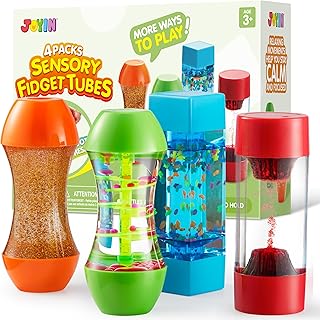
JOYIN 4-Pack Fidget Tubes for Kids, Sensory Tubes, Stress Relief Toy, Speech Therapy, Calming Toys for Children with Autism, Calm Down Corner Classroom Supplies, Back to School Gifts for Toddlers
Best For:
Elementary-aged tactile seekers, classroom calm-down corners, parents and therapists looking for affordable, portable fidgets.
The JOYIN 4-Pack Fidget Tubes offers a simple, flexible option for kids who need discreet sensory input. Each tube is lightweight, softly textured, and designed to be squeezed, twisted, or rolled in the hand. Because there are four tubes in the set, caregivers and teachers can keep one at home, one in a school calm-down corner, another in a backpack for travel, and a spare for therapy sessions. The tubes are advertised as stress-relief tools and are commonly used in speech therapy and occupational therapy settings to help children manage arousal and maintain attention during structured tasks.
Practical benefits: the low-profile design makes these tubes easy to use during seated activities without creating a distraction for others. They offer tactile resistance that helps channel fidgeting into a focused movement, which can be particularly helpful during transitions (lining up for class, waiting in a clinic) or when a child is learning to self-regulate emotions. Because they come as a set, families can swap textures and colors to see what tactile feedback the child prefers.
Real-life usage scenarios: parents report carrying one in a stroller or diaper bag for doctor visits and grocery trips; teachers keep spares in classroom calm-down bins; speech therapists have used them to occupy hands during vocal exercises so the child can focus on breath and articulation. Compared with single, loud, or battery-powered fidgets, these tubes are quiet and unobtrusive.
Who should buy: ideal for tactile-seeking children, elementary-aged kids who need a small object for focused fidgeting, and classrooms that need multiple low-cost calm-down tools. Who may not need it: children who require deep-pressure input (weighted blankets or squeezes) or those who mouth non-edible items; also not suitable for very young children who mouth objects.
Buying considerations based on listings and user feedback: check for choking hazard warnings for small parts, and verify whether the material is labeled BPA- or phthalate-free if chemical sensitivity is a concern. The tubes are not a substitute for therapeutic equipment but serve well as an affordable, portable adjunct to a sensory diet.
Pros
- Set of four for sharing and rotation
- Quiet, low-profile tactile input
- Lightweight and portable
Cons
- Not for deep-pressure needs
- May not be suitable for children who mouth objects or for unsupervised infants
If you’re looking for quiet, pocket-sized tactile tools to try, the JOYIN 4-Pack is a versatile starter set. Check the latest price on Amazon.
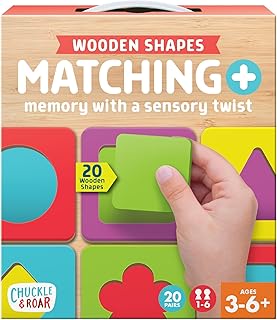
Chuckle & Roar Matching+ Wooden Sensory Shapes Memory Game for Kids Ages 3–6+ – Premium Wood Logic Puzzle & Shape Matching Game with Multiple Play Modes
Best For:
Preschoolers and early elementary kids who benefit from tactile, quiet matching and memory games; classrooms and therapists.
The Chuckle & Roar Matching+ wooden sensory shapes game blends classic memory and matching play with high-quality tactile materials. Solid wood pieces and smooth, rounded edges create a calming physical experience compared with the glossy, plastic counterparts that often dominate preschool shelves. The set supports multiple play modes—simple shape matching for younger children, memory-style face-down matching for slightly older kids, and logic puzzle variations that build sequencing and problem-solving skills.
Main benefits: wood naturally dampens sound, so this set is suited to quiet play in classrooms, therapy rooms, or at home. The tactile weight and finish of wooden pieces can be especially soothing for children who prefer natural textures. Because the game involves visual discrimination, color sorting, and shape recognition, it doubles as an educational tool for early math vocabulary and spatial reasoning.
Real-life usage examples: therapists often use wooden matching games during short sessions to practice turn-taking and attention stamina; parents use it for wind-down activities before bed or as a focused screen-free activity. In group settings, the durable wood stands up to repeated handling better than many plastic options. For kids who are sensory-avoidant, the smooth finish and gentle colors make introductions less intimidating than bright, noisy plastic toys.
Why it’s valuable: it offers structured play without flashing lights or batteries, encouraging sustained attention and fine motor refinement. Compared to typical mass-market plastic games, the higher-quality wood improves longevity and sensory appeal. However, because pieces are small, supervision is needed for younger toddlers and it may be too easy for older children who require more complex challenges.
Who should buy: best for preschoolers and early elementary children who benefit from tactile, quiet learning games—especially in classroom or therapy contexts. Who may not need it: families looking for high-challenge puzzles for older kids, or households with very young children who mouth objects.
Buying considerations: check piece size and age recommendations. Look for non-toxic finishes if chemical sensitivity is a factor.
Pros
- Durable, natural wood construction
- Multiple play modes for skill progression
- Quiet and tactile, ideal for calm environments
Cons
- Small pieces need supervision for toddlers
- May be too simple for older children seeking complex challenges
If you prefer a non-electronic, tactile learning game that stands the test of time, this wooden matching set is a solid choice. Check the latest price on Amazon.
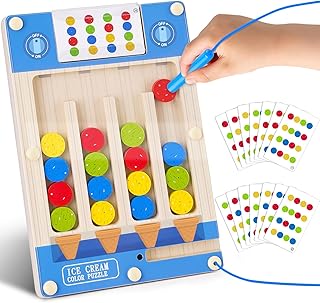
Montessori Wooden Sensory Autism Toys: 4 5 6 Year Old Girl Boy Birthday Gifts | Toys for 4-5-6-7 Year Old Boys Girls, Magnetic Puzzles for Kids Ages 4-7, Preschool Educational Learning Autistic Toy
Best For:
Preschool to early elementary children needing structured tactile practice in counting, shapes, and fine motor skills.
This Montessori-inspired wooden magnetic puzzle set targets early numeracy, shape recognition, and hand-eye coordination—core skills often reinforced in therapeutic and classroom settings for children with autism. The magnetic elements help pieces stay in place during play, which reduces frustration for children who struggle with fine motor precision. The design emphasizes open-ended play: pieces can be used for guided counting exercises, matching by color or shape, or creative pattern-making.
Main benefits: the magnetic backing reduces the drop-and-chase cycle that interrupts learning for kids with limited fine motor control. The Montessori approach—simple, purposeful design with natural materials—encourages focused, repetitive practice, which many children on the autism spectrum find calming and rewarding. Compared to cheap laminated puzzles, the solid craftsmanship and magnetic stability result in a longer-lasting learning tool.
Real-life usage scenarios: parents have integrated these puzzles into early math routines—counting pieces as part of snack-time games or using shape cards for quick matching drills during car rides. Occupational therapists value the controlled resistance magnets provide, allowing therapists to scaffold difficulty while a child develops pincer grasp and problem-solving skills. They’re also good as quiet table activities at school when screen-free engagement is needed.
Who should buy: ideal for preschool through early elementary children (roughly ages 4–7) who are working on basic math concepts, shape recognition, and fine motor coordination. This toy is especially helpful for children who benefit from steady, predictable tactile feedback. Who may not need it: children who outgrow basic puzzles quickly or who need large-print, highly visual materials for visual processing differences.
Buying considerations: ensure magnets are securely embedded and not accessible to children, and follow age recommendations. Wooden finishes vary; if chemical sensitivity is a concern, look for water-based, non-toxic coatings. The set is not a comprehensive curriculum but pairs well with targeted practice and therapist guidance.
Pros
- Magnetic pieces reduce frustration and support fine motor development
- Montessori-style simplicity encourages focused play
- Durable wooden construction
Cons
- Magnets must be securely embedded—check safety details
- May be too basic for older or advanced children
For steady, focused practice that bridges play and early math skills, this Montessori magnetic puzzle set is a practical pick. Check the latest price on Amazon.
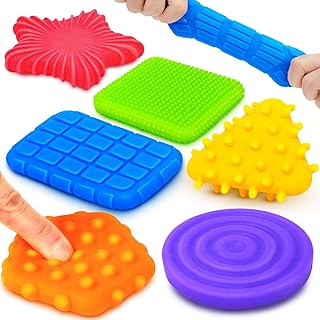
Squishy Sensory Toys for Kids Toddlers: Super Soft & Textured Sensory Fidget Toy for Autistic Children Special Needs | Stress Calming Toys for Kids | Baby Stocking Stuffers Fidget Toy for Autism, ADHD
Best For:
Children who benefit from soft, malleable tactile input—ideal for travel, short-term regulation, and classroom sensory corners.
Squishy sensory toys offer immediate tactile satisfaction through soft, malleable materials and varied textures. This set emphasizes plush, squeezable shapes and bumpy or ridged surfaces that provide different levels of tactile stimulation. For many children with sensory processing challenges, the gentle resistance and yielding feel of squishy toys can be calming during moments of agitation or overstimulation.
Practical benefits: the variety of textures in a single set helps caregivers and therapists experiment to find which sensations are calming versus overstimulating. These toys are especially handy for short-term regulation tasks—think waiting rooms, dentist visits, or times when a child needs a brief, handheld coping item. The soft materials are typically lighter and less abrasive than some textured chewables, making them a good middle-ground option.
Real-life usage examples: parents tuck a few squishies into backpacks for school transitions; therapists use them as rewards that also occupy hands during task-focused activities; educators keep sets in sensory corners for children who need quick self-regulation tools between lessons. For toddlers, supervised squishy play can support the development of hand strength and the pincer grasp, while for older kids it can be an unobtrusive way to manage restlessness during quiet work.
Why this is valuable: compared to rigid plastic toys, squishies provide dynamic tactile feedback and are often perceived as more comforting. That said, durability varies by brand and aggressive squeezing or chewing can reduce their lifespan. They’re best used as part of a broader sensory toolkit rather than a single solution.
Who should buy: suited for toddlers through early elementary children who seek soft, tactile input and for caregivers wanting portable calming tools. Who may not need it: children who mouth non-food-safe materials or those who require deeper proprioceptive input from weighted items.
Buying considerations: check manufacturer cleaning instructions and material safety claims (BPA- and phthalate-free where possible). Replace items that show tears or material breakdown to avoid ingestion hazards.
Pros
- Soft, comforting textures with varied tactile options
- Portable and easy to stash in a bag
- Good for short-term calming and hand-strength activities
Cons
- Durability can vary; may tear with aggressive use
- Not suitable for children who mouth non-food-safe materials
If you want a soft, tactile set to trial in busy or stressful situations, these squishy toys are a comforting option. Check the latest price on Amazon.
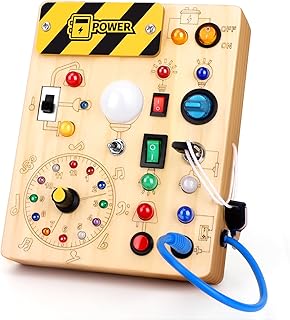
Grarain Busy Board for Toddlers – Montessori Educational Toy for 1-3 Year Old Boys & Girls | Travel-Friendly Sensory Learning Activity | Ideal for Kids with Autism(Clocks Busy Board)
Best For:
Toddlers and preschoolers practicing dressing skills, fine motor milestones, and routine-building—great for travel and therapy use.
Busy boards are a classic Montessori-friendly tool for teaching everyday skills through hands-on practice, and the Grarain Busy Board packages multiple fine motor activities into a single travel-friendly panel. With laces, buckles, switches, and a practice clock face, this board is designed to build independence and sequential task skills. For children who benefit from predictable routines and practiced motor patterns, a busy board provides safe, repetitive practice that maps directly to daily living tasks.
Main benefits: the board’s multi-activity design addresses a range of fine motor and executive function goals—buttoning, zipping, fastening, turning dials, and telling time. For toddlers and preschoolers on the autism spectrum, repeated practice with familiar pieces helps reduce frustration during real-world tasks like dressing and mealtime. The compact size and solid backing make it appropriate for lap play or travel, an advantage over larger activity centers.
Real-life usage scenarios: caregivers use the busy board during independent play while supervising nearby; therapists incorporate specific sections (like lacing or buckles) into targeted sessions; parents use the clock face to introduce morning and evening routines visually. In daycare or classroom settings, a busy board serves as a quiet, hands-on station that keeps multiple children engaged when rotated through activities.
Why it’s valuable: compared with battery-powered toys, a busy board teaches functional skills with minimal distractions. Its variety of tasks increases its longevity because a child can master one skill and move on to another. However, because the board includes many small components, it is not intended for very young children who mouth objects.
Who should buy: perfect for toddlers and preschoolers (roughly ages 1–3) who are developing dressing and self-help skills, and for families wanting a portable tool to support independence. Who may not need it: infants who mouth toys and older children who require higher-level cognitive challenges.
Buying considerations: verify that fastenings are securely attached, edges are smooth, and materials are non-toxic. Regular inspection is recommended to ensure small parts remain safe and intact.
Pros
- Multiple fine-motor activities in one compact board
- Teaches practical dressing and self-help skills
- Travel-friendly and durable for repeated use
Cons
- Contains small parts—not appropriate for children who mouth objects
- May be less engaging for older children who need more complex challenges
For a practical, hands-on way to teach dressing and daily routines, add a busy board to your sensory toolkit. Check the latest price on Amazon.
Final Verdict
Selecting sensory toys for children with autism is about balance: choose items that meet sensory preferences, encourage skill development, and fit the child’s daily routines. The five options here cover a broad range of needs—from the discreet, portable JOYIN fidget tubes and comforting squishy toys to the educational value of wooden matching games and Montessori magnetic puzzles, finishing with the practical life-skill training of a busy board.
If you need a quiet, pocket-sized fidget that you can distribute between home and school, the JOYIN tubes are a cost-effective introduction. For screen-free cognitive work and tactile satisfaction, the wooden Chuckle & Roar matching game and Montessori magnetic puzzles provide structure and longevity. If soft, immediate tactile input is the priority, the squishy set is easy to trial. And for toddlers building dressing and fine motor independence, a busy board is a direct, functional investment.
Remember to match choices to age, oral-motor behavior, and the child’s sensory profile. Rotate toys to prevent boredom, supervise use based on age and mouthing behaviors, and consult therapists for targeted picks when needed. These toys are tools—combined with routine, scaffolding, and support they can help a child become more independent, focused, and confident. Check the latest price on Amazon.
Conclusion
These Best Educational Sensory Toys for Autism picks are trending now and offer great value and variety. Check the links above for latest prices and reviews.
As an Amazon Associate, I earn from qualifying purchases.
Tags:
sensory toys autism, autism learning toys, calming fidgets for kids, Montessori sensory, busy board for toddlers, wooden puzzles preschool, squishy sensory toys
