Best Affordable Acoustic Panels for Study Rooms
As an Amazon Associate, I earn from qualifying purchases. This article may contain affiliate links, which means we may receive a commission at no extra cost to you.
A quiet, controlled study room can make all the difference for concentration, online classes, and recording lectures. If your small study echoes, your voice sounds hollow on calls, or you’re simply distracted by living-room noise, affordable acoustic panels are a practical first step. These panels won’t turn a room into a professional studio overnight, but they significantly reduce mid-to-high frequency reflections and flutter echoes—helping you think, read, and speak more clearly.
As an Amazon Associate, I earn from qualifying purchases. This article may contain affiliate links, which means we may receive a commission at no extra cost to you. Below you’ll find a carefully structured guide and five budget-friendly panel options that suit different study-room sizes and aesthetics. I’ve drawn on product specs, manufacturer details, and widespread customer feedback to highlight who each option is best for and the realistic benefits you can expect.
Buying Guide
Why acoustic panels matter in a study room
Acoustic panels reduce reflections, cut down echoes, and tighten the sound in a room so speech and audio are clearer. For study rooms used for Zoom lessons, concentrated reading, or voice memos, panels help reduce the mental fatigue that comes from background noise and reverberation.
Key factors to consider
– Thickness and density: Thicker, denser panels absorb lower mids along with highs. Most budget foam panels are 0.4" to 2" thick. For study rooms, 0.75"–1.5" is a sensible middle ground—thin enough to be affordable and thick enough to reduce flutter echoes.
– Panel size and coverage: Acoustic treatment is about coverage, not perfection. A handful of panels placed at the first reflection points, behind speakers/webcams, and on the opposite wall usually yields the most noticeable benefit. For small rooms 6–12 panels often provide marked improvement; medium rooms may need larger decorative panels or 6–12 larger tiles.
– Shape and surface: Wedge and pyramid patterns increase surface area and scatter reflections, improving absorption in the mid-high range. Hexagonal and large fabric-wrapped panels offer a more decorative look while addressing the same issues.
– Fire safety and material: Flame-retardant foam is common and preferred in living spaces. Look for products that explicitly list flame resistance if this is a concern.
– Mounting: Self-adhesive backing or peel-and-stick strips are convenient for renters. Velcro, spray adhesive, or command strips give temporary but sturdy results. Remember not to rely on weak adhesives for long-term mounting if you plan to move the panels frequently.
– Aesthetics: Acoustic panels now come in decorative options or large fabric-wrapped tiles that double as wall art. If you want your study to look intentional, choose panels that match your decor or come in shapes like hexagons.
– Budget and pack size: Buying in bulk (12–52 packs) brings down the per-panel cost, but think about usable surface area: several small panels can cover the same area as fewer large panels. For budget buyers, dense wedge foam packs are commonly the most cost-effective.
Practical placement tips
– Start with the first reflection points: Sit in your usual desk position and have a friend move a mirror along the wall; where you can see the speaker in the mirror is a reflection point—place panels there.
– Treat behind and opposite your monitors: Panels directly behind computer monitors or laptops reduce monitor-to-wall reflections during calls.
– Corners and ceiling: Bass traps are a different product class; everyday foam panels help higher frequencies but won’t fix low-frequency boom. For ceiling reflections in a small study, one or two panels above the desk can help.
Common alternatives and how they compare
– Heavy curtains and bookshelves: These absorb and diffuse sound naturally and are cheap. They won’t be as effective as purpose-made acoustic panels across mid-high frequencies, but combined they work very well.
– Fabric-wrapped fiber panels: Better low-mid absorption but usually costlier than foam. If appearance and performance matter equally, they are worth considering.
– Bass traps: Necessary only if you have pronounced low-frequency issues (rumble, distant thumps). Most study rooms don’t need them.
Buying considerations
– Measure your wall area and pick a pack that provides enough square footage.
– If you rent, prioritize removable mounting options.
– Check for flame-retardant claims if building codes or safety are priorities.
– Read recent buyer feedback for durability and adhesive reliability—many complaints on budget panels relate to thin adhesives or compressed packing.
With these basics in mind, the five products below are selected to cover the most common study-room needs: maximum coverage on a budget, decorative and larger tiles for medium rooms, renter-friendly self-adhesive options, and compact packs for targeted treatment.
Focusound 52 Pack Acoustic Foam Panels 1" x 12" x 12" Sound Proof Foam Panles Soundproofing Noise Cancelling Wedge Panels for Home Office Recoding Studio with 300PCS Double-Side Adhesive

Best For:
Budget-conscious students and remote workers needing room-wide coverage and quick treatment of reflection points.
This 52-pack from Focusound offers an aggressive value proposition: a large number of 12" x 12" x 1" wedge foam tiles meant to cover a lot of surface area quickly. The wedge profile adds surface area and improves mid‑to‑high frequency absorption, which is exactly what most study rooms need to reduce echo and make voices clearer during video calls or recorded lectures. The generous pack size is ideal if you want to treat multiple mounting points—behind a monitor, on adjacent walls, or above a desk—without buying several boxes.
Practical observations: buyers often report noticeable reduction in flutter echoes when panels are placed at the first reflection points. The set includes an abundance of double-sided adhesive pads, which is handy for renters; that said, double-sided adhesives vary in strength and some customers prefer command strips or spray adhesive for a longer-lasting install. The 1" thickness is a smart middle ground—thicker than decorative 0.4" tiles but not as deep (or costly) as 2" professional-grade foam. Expect meaningful improvement for speech clarity, though these panels are not intended as full soundproofing.
Compare to standard alternatives: Compared with smaller 12‑pack bundles, this 52‑pack is more economical per tile and faster for treating an entire room. Commercial fabric panels absorb a broader frequency range but at a much higher price; for budget-minded users who prioritize coverage over premium looks, the Focusound pack is a sensible choice.
Who this is best for: Students and remote workers who need broad coverage on a strict budget, renters who want removable options, and anyone treating multiple reflection points at once. It’s particularly useful in small-to-medium study rooms where reducing echo is the primary goal.
Who may not need it: If you’re primarily after bass control or a designer finish that blends into living-room decor, consider thicker fabric-wrapped panels or bass traps instead.
Pros: Highly cost-effective coverage; wedge surface for better mid-high absorption; includes many adhesive pads.
Cons: 1" thickness limits low-mid frequency absorption; adhesive quality can vary; foam finish is basic.
Check the latest price on Amazon.
Pros
- Large 52-piece pack provides wide coverage
- Wedge design increases surface area for mid-high absorption
- Comes with many double-sided adhesive pads for easy mounting
Cons
- 1" thickness limits low-frequency performance
- Adhesive pads may not be long-term reliable for some surfaces
If you want to treat most reflection points in your study without breaking the bank, this Focusound 52-pack is an efficient starting point. Check the latest price on Amazon.
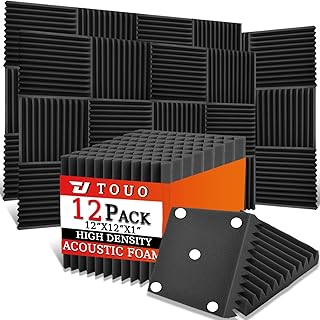
12 Pack Acoustic Panels – Sound Proof Foam Panels for Wall 12"x12"x1", Flame Retardant Wedge Acoustic Foam, High-Density Sound Absorbing Panels for Home Studio(Black, 1" Thick 12 Pack)
Best For:
Dorm rooms, single-person studies, and renters looking for a compact, flame-retardant acoustic treatment.
This 12-pack targets buyers who want a smaller, manageable quantity of wedge foam panels without sacrificing density or flame-retardant claims. The 12" x 12" dimensions and 1" thickness provide a compact solution for those focused on treating the most critical reflection points—behind your computer monitor, on the wall at ear level, or around a small podcasting corner.
Practical observations: Users consistently note clear improvements in speech intelligibility and a reduction in high-frequency glare on conference calls. The wedge profile helps scatter sound and increase the foam’s effective surface area. Importantly for many home setups, these panels list flame-retardant properties—useful if you want to match local safety expectations for home offices.
Compare to standard alternatives: Compared with decorative hexagon or fabric-wrapped tiles, this foam pack is lighter on the budget and easier to install. It won’t provide the slightly richer mid-frequency absorption of denser fiber panels, but as a first-line treatment in a study room the performance-to-price ratio is attractive.
Who this is best for: Single-person study spaces, dorm rooms, and small home offices where targeted treatment is enough. It’s also good for buyers who want flame-retardant foam specifically.
Who may not need it: Users seeking a designer look or those with larger rooms that require more square footage coverage will want to consider larger or more numerous tiles.
Pros: Flame-retardant claim; compact 12" panels ideal for targeted treatment; affordable entry-level option.
Cons: Limited coverage compared with larger multipacks; 1" thickness won’t tackle low frequencies.
Check the latest price on Amazon.
Pros
- Flame-retardant material for added safety
- Compact 12" tiles ideal for targeted placement
- Affordable and easy to install
Cons
- Smaller pack means more purchases needed for full-room coverage
- Limited low-frequency absorption at 1" thickness
For a smaller study or dorm setup where you want treated reflection points and flame-retardant material, this 12-pack is a practical choice. Check the latest price on Amazon.
12 Pack Pyramid Sound Proof Foam Panels for Walls with Updated Self-Adhesive 2"X12"X12" High Density Acoustic Panels Sound Absorbing Fast-Expanding Soundproof Wall Panels for Gaming Studio Decor-Black

Best For:
Students and content creators who want improved voice quality and thicker foam without a large budget.
These 12 pyramid foam panels step up the game by offering 2" thickness and a high-density profile. That extra depth makes a noticeable difference in absorption across a broader frequency range—especially useful for study rooms where the person on video calls wants their voice to sound less boxy and more natural. The pyramid texture spreads reflections and adds a bit more surface area than flat tiles, while the claimed "fast-expanding" foam means they arrive less compressed and closer to their intended shape.
Practical observations: Customers often highlight the improved performance versus 1" tiles when dealing with echo-prone corners or above‑desk ceiling reflections. The manufacturer’s inclusion of updated self-adhesive makes installation straightforward for renters; however, as with many adhesives, performance depends on the wall surface. For painted drywall and wood, these stick well, but textured walls may require command strips or a different mounting method.
Compare to standard alternatives: Compared to DIY solutions like hanging blankets or thick curtains, the 2" pyramid panels provide more consistent acoustic results and are far lighter and neater. Against fabric-wrapped panels, the foam is cheaper but less visually polished—still, for gaming streams, online lessons, or podcasting, the performance boost for voice clarity is compelling.
Who this is best for: Home users who need an upgrade from thin foam—perfect for podcasters, online tutors, and students who record lectures or presentations. It’s also a good choice for people who want a balance of performance and affordability.
Who may not need it: If you only need a subtle reduction in high-frequency reflections and prefer minimal visual impact, a thinner or decorative option may suffice.
Pros: 2" thickness offers better absorption across more frequencies; pyramid shape disperses reflections; self-adhesive for easy mounting.
Cons: Self-adhesive performance varies; foam finish is utilitarian rather than decorative.
Check the latest price on Amazon.
Pros
- Thicker 2" foam improves mid-frequency absorption
- Pyramid texture increases scattering and surface area
- Updated self-adhesive simplifies installation
Cons
- Self-adhesive may not adhere well to all wall textures
- Visual finish is basic compared to fabric-wrapped panels
If you record lectures, podcasts, or host frequent video calls and want a clear upgrade over thin tiles, these 2" pyramid panels are a cost-effective choice. Check the latest price on Amazon.
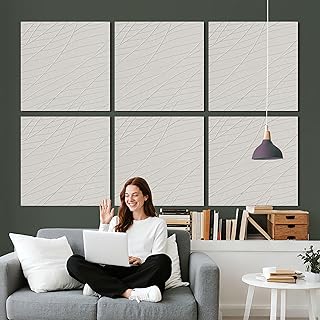
Acoustic Panels Sound Absorbing, 23.6×23.6 Inch 6-Pack, Acoustic Wall Panels for Medium to Large Rooms, Decorative Sound Treatment for Echo Reduction in Home Offices, Bedrooms & Recording Studios
Best For:
Home offices and medium study rooms where appearance and fewer, larger treatments are preferred.
These large 23.6" x 23.6" panels are a different approach: fewer pieces, more surface area per tile, and a cleaner, decorative presentation. Because of their size, each panel covers as much area as several 12" tiles and often looks more intentional on a study or medium-sized home office wall. They’re designed for medium-to-large rooms where a handful of fabric-style panels can significantly reduce echo without tiling the entire space.
Practical observations: Buyers appreciate how quickly these panels change the look and feel of a room—installing 3–6 panels can transform both acoustics and aesthetics. The larger surface area helps treat mid-frequency reflections more efficiently than numerous small tiles, and the panels fit well behind a desk or on the wall opposite monitors. Users often pair these panels with smaller foam tiles for focused treatment in addition to general wall coverage.
Compare to standard alternatives: Versus bulk foam packs, fabric-style large panels require fewer units and less tedious placement. They’re not quite as absorbent per square inch as thick, dense fiber panels, but they strike a strong balance for someone who wants good acoustic results without the “studio” look of wedge foam.
Who this is best for: People with mid-size study rooms or home offices who want tasteful acoustic treatment that doubles as decor—teachers, writers, and remote professionals who prefer a neat, finished look.
Who may not need it: If your priority is treating specific reflection points in a tiny dorm room, a pack of smaller panels may be more sensible and economical.
Pros: Large coverage per panel; decorative, finished appearance; efficient for medium rooms.
Cons: Fewer panels means less flexibility in placement; typically costlier per panel than small foam packs.
Check the latest price on Amazon.
Pros
- Large panels cover more area quickly
- Decorative finish improves room aesthetics
- Effective for general echo reduction in medium rooms
Cons
- Less flexible placement compared to many small tiles
- Higher cost per panel than bulk foam packs
If you want a neat, decorative acoustic solution that treats a room without cluttering it with many small tiles, these large panels are an attractive option. Check the latest price on Amazon.
12 Pack Self-Adhesive Acoustic Panels 12" X 10" X 0.4" – Sound Proof Foam Panels with High Density, Stylish Hexagonal Design, Flame Resistant, Absorb Noise and Eliminate Echoes(Black)

Best For:
Renters, students, and design-conscious buyers who want quick, attractive echo control for small study spaces.
This hexagonal 12-pack takes a design-focused tack: thinner 0.4" high-density tiles that are lightweight, stylish, and aimed at buyers who want noticeable echo control without a heavy studio look. The hex pattern is ideal for creating decorative layouts—grids, honeycomb shapes, or accents behind a desk—making them popular in student bedrooms and modern home offices.
Practical observations: Customers like the visual versatility and the flame-resistant claim for peace of mind in living spaces. At 0.4" thickness these won’t match the absorption of 1"–2" tiles for mid-frequency control, but they do a solid job cutting high-frequency glare and small-room flutter. Because they’re self-adhesive and lightweight, installation is quick—just be mindful that the thin profile can compress in shipment and may need a few days to fully expand.
Compare to standard alternatives: Compared with basic wedge packs, hex tiles are more visually appealing and can be arranged into custom shapes. They’re not the best choice if you’re chasing thicker, more clinical acoustic treatment, but for those who want a balance of style and function, they’re a top pick.
Who this is best for: Students and renters who prioritize aesthetics and fast setup, and anyone treating high-frequency reflections without needing deep absorption.
Who may not need it: If you’re addressing serious room resonance, low‑frequency issues, or recording musical instruments, thicker or denser panels would be more suitable.
Pros: Stylish hex design; self-adhesive and easy to install; flame-resistant material.
Cons: Only 0.4" thick—limited low-mid absorption; may compress in packaging and need time to expand.
Check the latest price on Amazon.
Pros
- Attractive hexagonal design for custom layouts
- Lightweight self-adhesive installation
- Flame-resistant for added safety
Cons
- Thin 0.4" profile limits frequency range of absorption
- May arrive compressed and require time to expand
If visual style and renter-friendly mounting matter, these hex tiles offer an easy, attractive way to tame echo in small studies. Check the latest price on Amazon.
Final Verdict
Choosing the right acoustic panels for a study room comes down to three things: coverage, thickness (and therefore frequency range), and aesthetics. For maximum budget coverage, the Focusound 52-pack gives you the most square footage to treat many reflection points. If flame-retardant material and a compact pack are priorities, the 12-pack wedge panels are a reliable starter set. For a clear step-up in performance, the 2" pyramid panels strike a nice balance between thicker absorption and affordability. If you prefer a cleaner look with fewer pieces, the large 23.6" decorative panels give visual polish and efficient coverage. Finally, the hexagonal self-adhesive tiles are perfect for renters and style-minded students who want simple, attractive control of high-frequency reflections.
Start with a plan: identify reflection points, match the panel type to your room size and aesthetic, and choose a mounting method that works for your walls. Combining a decorative panel or two with a few denser foam tiles often yields the best real-world results—better voice clarity on calls, reduced fatigue during long study sessions, and a noticeably calmer room overall.
If you’re unsure where to begin, the Focusound 52-pack is a practical, low-risk entry to treat most problem areas. For those prioritizing appearance, the large decorative panels or hex tiles will improve both sound and room look. Whatever you choose, treating even a few strategic surfaces will make studying and remote communication easier and more pleasant.
Check the latest price on Amazon.
Conclusion
These Affordable Acoustic Panels for Study Rooms picks are trending now and offer great value and variety. Check the links above for latest prices and reviews.
As an Amazon Associate, I earn from qualifying purchases.
Tags:
acoustic panels, study room soundproofing, budget acoustic foam, echo reduction, home office acoustics, foam acoustic panels, self-adhesive panels
