Best Smart Bulbs for Automating Bedroom Wake-Ups
As an Amazon Associate, I earn from qualifying purchases. This article may contain affiliate links, which means we may receive a commission at no extra cost to you.
As an Amazon Associate, I earn from qualifying purchases. This article may contain affiliate links, which means we may receive a commission at no extra cost to you.
Waking up gently with light instead of a jarring alarm can change your mornings. Smart bulbs let you simulate sunrise, shift color temperature from warm to cool, and coordinate with voice assistants or phone alarms so the bedroom becomes a helpful part of your sleep-wake cycle. This guide looks specifically at smart bulbs that excel in bedroom wake-up routines — bulbs that dim up smoothly, offer tunable white temperatures, and integrate with routines and voice control.
I researched product specs, feature sets, and common user feedback so you can compare practical options: budget multi-packs for whole-room coverage, higher-brightness bulbs for heavy sleepers, Matter-certified picks for future-proofing, and premium bulbs with the richest color accuracy. Below you’ll find a buying guide and five in-depth product recommendations to help you choose the right smart bulb for your morning routine.
Buying Guide
What to prioritize when choosing smart bulbs for wake-up routines
Brightness and lumens: For a bedroom wake-up routine, aim for bulbs that can reach at least 600–1,000 lumens if you want a noticeable brightening effect. Lower-lumen bulbs are OK for very light sleepers who prefer a gentler sunrise.
Tunable white vs full color: Tunable white (often listed as WW/CW or tunable 2200K–6500K) is the most useful feature for wake-up lights: start the routine in a warm, low-Kelvin amber and gradually shift to cool daylight. Full color bulbs add mood lighting, which is nice for evening scenes, but tunable white is the core benefit for circadian-style wake-ups.
Dimming smoothness and scheduling: Check that the bulb/app supports gradual schedules with custom ramp-up durations (e.g., 15–30 minutes). Some bulbs offer hardware-level dimming that looks smoother than others; community feedback often highlights which brands provide seamless transitions.
Integration and ecosystem: Decide if you want a no-hub solution (Wi‑Fi or Bluetooth bulbs) or a hub-based setup (like Zigbee with a bridge). No-hub is simpler; hubs often unlock advanced automation and more reliable local control. Matter certification is a plus for cross-platform automation longevity.
Voice and smart home compatibility: Alexa, Google Assistant, and Apple HomeKit compatibility matters if you want voice-triggered wake routines. Some bulbs work with all three, while others are limited.
Multi-bulb syncing and scenes: For bedrooms with multiple fixtures, look for grouping and scene features so several bulbs can ramp simultaneously. Music sync is fun, but not necessary for wake-ups.
Reliability and updates: Brand reputation and firmware support matter. Cheaper bulbs can be great value but occasionally have app glitches or connectivity hiccups, so read recent reviews for reliability trends.
Who should buy a smart wake-up bulb? If you want gentler mornings, better circadian lighting, or seamless integration with smart alarms and voice assistants, smart bulbs are a simple and cost-effective step. Who may not need one? If you already use a sunrise-alarm clock, prefer natural daylight only, or don’t use smart home routines, a smart bulb might be unnecessary.
Buying considerations checklist: lumens, color temperature range, ramping schedule options, hub vs no-hub, voice compatibility, multi-bulb grouping, and brand support. With that in mind, here are five strong options for bedroom wake-up automation.
Govee LED Smart Light Bulbs, 1000LM Color Changing Light Bulb, Wi-Fi & Bluetooth, Work with Alexa and Google Assistant, Dimmable RGBWW A19 75W Equivalent Smart Bulbs for Bedroom, Living Room, 2 Pack

Best For:
Buyers who want a brighter wake-up bulb and easy Wi‑Fi/Bluetooth setup without a hub; good for heavier sleepers and medium-to-large bedrooms.
If you want a bright, budget-friendly bulb that supports a realistic wake-up routine, this Govee 2-pack is designed for exactly that use. With 1000 lumens per bulb and RGBWW (dedicated warm and cool whites plus full color) control, these bulbs can simulate a gradual sunrise: start at low warm (around 2200K), slowly increase brightness over 15–30 minutes, then shift toward cooler daylight to help you feel alert. The 1000-lumen output means the bulbs are strong enough to influence the overall bedroom lighting — useful for heavier sleepers or larger rooms.
The bulbs connect via Wi‑Fi and Bluetooth and work with Alexa and Google Assistant. That no-hub setup simplifies installation and lets you create schedules directly from the Govee app or trigger a routine from your voice assistant. Users often highlight the app’s scene presets and the ability to group bulbs, so multiple fixtures can ramp in sync. On the downside, some reviews mention occasional app responsiveness issues and that very precise color accuracy won’t match premium brands like Philips Hue. Still, for most wake-up scenarios, the warm-to-cool transitions feel natural.
Practical wake-up scenarios: set a 20-minute sunrise routine on weekdays, combine the bulb’s warm-to-cool shift with a gentle alarm on your phone, and add a weekday schedule that slowly increases brightness while turning on a low-volume playlist. Because these are 75W-equivalent bulbs with high lumens, they also double as reliable reading lights for those late-night books.
How it compares: compared to entry-level 800-lumen bulbs, these deliver more punch and clearer morning stimulation. Compared to premium Hue bulbs, they’re less expensive and easier to set up without a bridge but trade off some color fidelity and ecosystem depth.
Who should buy it: people who want higher brightness and strong sunrise simulation without investing in a hub or premium ecosystem. Who may not need it: minimalists who only need a soft glow or buyers who require the absolute best color accuracy for décor lighting.
Check the latest price on Amazon.
Pros
- Strong 1000 lumens brightness for effective morning stimulation
- Tunable warm-to-cool white plus full colors (RGBWW)
- No-hub Wi‑Fi & Bluetooth setup; Alexa and Google compatibility
Cons
- App can be inconsistent for advanced schedules according to some users
- Color fidelity not as accurate as higher-end alternatives
Ready for brighter, smoother wake-ups? Check the latest price on Amazon.
Govee Smart Light Bulbs, Color Changing Light Bulb, Work with Alexa and Google Assistant, 16 Million Colors RGBWW, WiFi & Bluetooth LED Light Bulbs, Music Sync, A19, 800 Lumens, 4 Pack

Best For:
Buyers looking to outfit an entire bedroom affordably with synchronized wake-up lighting and those wanting music-sync and full-color options.
This 4-pack from Govee is a popular pick for whole-room coverage. At 800 lumens per bulb, they provide ample light for most bedrooms while being slightly softer than 1,000-lumen options — great if you prefer a gentler sunrise. The RGBWW capability gives you tunable white for circadian-style routines and full color for evening ambiance. The package includes music sync features that animate colors to sound, which is a fun add-on for party modes or late-night playlists but not essential for wake-ups.
The bulbs support both Wi‑Fi and Bluetooth control and pair with Alexa and Google Assistant. The Govee app offers schedules, sunrise scenes, and grouping, so you can set a 10–30 minute ramp-up across multiple fixtures. Owners commonly praise the value and flexibility: the 4-pack is cost-effective for synchronizing bedroom lights with a gradual brightening routine, creating a more natural wake-up experience without buying multiple single bulbs over time.
Real-world use cases: install two bulbs in the main ceiling fixture and two in bedside lamps, set a weekday schedule that progresses from 2200K at 10% brightness to 5000K at 100% over 20 minutes, and pair the routine with a soft alarm or gentle playlist. Because these bulbs are slightly dimmer than 1,000-lumen options, they excel at producing a soft, non-jarring wake-up for sensitive sleepers.
How it compares: this pack is a better value for multi-bulb setups than single premium bulbs. The trade-offs are occasional app feature limits and slightly lower maximum brightness compared to higher-lumen models. If you want a coordinated multi-bulb sunrise without breaking the bank, this pack is a pragmatic choice.
Who should buy it: people furnishing an entire bedroom with synchronized wake-up lighting or those who prefer a softer sunrise effect. Who may not need it: someone who only wants a single high-brightness bulb for strong morning stimulation.
Check the latest price on Amazon.
Pros
- Cost-effective 4-pack for multi-bulb setups
- RGBWW tunable white plus 16 million colors
- Music sync and scene features add versatility
Cons
- 800 lumens may be too gentle for heavy sleepers
- App feature set can feel cluttered for new users
Want synchronized, multi-bulb sunrise routines? Check the latest price on Amazon.
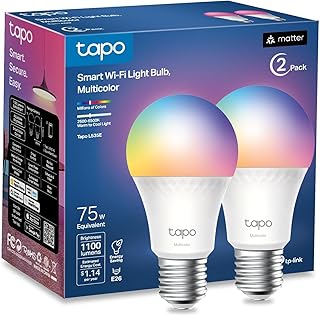
TP-Link Tapo Smart Light Bulbs, 1100 Lumens High Brightness (75W Equivalent), Matter-Certified, 16M Colors WiFi Light Bulb, Dimmable, Works w/Siri, Alexa & Google Home, A19 E26, Tapo L535E(2-Pack)
Best For:
Users who want high-brightness wake-up lights and future-proof Matter compatibility; ideal for larger bedrooms or heavier sleepers.
If future-proofing and high brightness matter to you, TP-Link’s Tapo L535E 2-pack delivers 1100 lumens per bulb and Matter certification for cross-platform interoperability. The higher lumen output makes these bulbs particularly effective as wake-up lights if you need a substantive brightening effect to shake off sleep. Matter certification helps ensure that your bulbs will play nicely with evolving smart home standards, making these a smart long-term pick.
The bulbs offer 16 million colors and smooth dimming along with a wide white temperature range for sunrise-style routines. Tapo’s app includes routine scheduling, and Matter support allows you to integrate these bulbs into broader home automations through Apple Home, Alexa, Google Home, or other Matter-enabled hubs. Reviews emphasize solid connectivity and reliable local control compared with some lower-cost, cloud-reliant models.
Practical morning scenarios: use the bulbs’ high brightness to produce a fast 10–15 minute ramp for deep sleepers, or configure a slower 30-minute warm-to-cool transition for gradual wake-ups. Pairing with a bedside smart plug or speaker under a Matter routine lets you combine light, sound, and even thermostat adjustments for a full-sensory morning routine.
How it compares: compared to many 800-lumen bulbs, Tapo’s 1100 lumens stand out for larger bedrooms or when you want a rapid, effective wake-up. Versus Hue, Tapo offers strong performance and emerging compatibility through Matter at a lower price point; Hue still leads in color precision and ecosystem depth.
Who should buy it: buyers seeking bright, reliable bulbs with an eye to future interoperability and strong morning impact. Who may not need it: buyers who prefer an ultra-soft sunrise or those already invested in a Hue bridge ecosystem.
Check the latest price on Amazon.
Pros
- Very bright at 1100 lumens — effective for heavy sleepers
- Matter-certified for cross-platform compatibility
- Reliable connectivity and smooth dimming
Cons
- Higher brightness may be too intense for light sleepers
- Color accuracy slightly behind top-tier premium brands
Looking for bright, future-proof wake-up lighting? Check the latest price on Amazon.
Philips Hue Essential Smart LED A19 Bulb, White and Color Ambiance, E26 Base, 8.8W, 2200K-6500K, 800 Lumens, Dimmable, Works with Alexa, Google, and Apple Home, 1-Pack

Best For:
Users seeking the most natural-looking sunrise routines, superior color fidelity, and deep smart-home integration (ideal if you plan to build a Hue ecosystem).
Philips Hue is the category standard for smart lighting, and the Hue Essential A19 brings refined color rendering and exceptionally smooth dimming — important for believable sunrise simulations. The tunable white range (2200K–6500K) covers warm amber wake-ups through crisp daylight, and Hue’s scenes and routines are among the most polished. While some Hue bulbs can operate via Bluetooth for basic controls, using a Hue Bridge unlocks advanced routines, local automations, and the full ecosystem of accessories.
Customers often point to Hue’s superior color fidelity and consistent firmware updates as reasons to choose it for a prioritized bedroom setup. If you want sunrise routines that closely mimic natural light transitions and you value tight integration with Apple HomeKit or advanced geofencing and scheduling, Hue tends to deliver a smoother experience than many budget bulbs.
Practical wake-up scenarios: build a multi-bulb bedroom scene that starts with deep amber candle-like light 20 minutes before your alarm, progressively warming and brightening until the bedroom reaches cool daylight. Combine with a Hue-compatible smart button or HomeKit automation to control routines locally without internet dependency.
How it compares: Hue is pricier and often requires a bridge for best features, but it offers unmatched ecosystem depth and color accuracy. If you want the most natural-looking sunrise and the most robust automations, Hue is the go-to choice.
Who should buy it: buyers who want the best color quality, refined dimming, and full smart-home integration; great for tech-savvy users invested in the Hue ecosystem. Who may not need it: budget buyers or those who prefer plug-and-play Wi‑Fi bulbs without a hub.
Check the latest price on Amazon.
Pros
- Excellent color accuracy and smooth dimming for realistic sunrises
- Strong ecosystem and advanced automation when used with Hue Bridge
- Reliable firmware updates and wide smart-home compatibility
Cons
- Higher cost per bulb and best features often require a Hue Bridge
- Overkill for users who only want a basic sunrise effect
Want the most natural sunrise and deepest integrations? Check the latest price on Amazon.
Kasa Smart Light Bulbs, Full Color Changing Dimmable Smart WiFi Bulbs Compatible with Alexa and Google Home, A19, 9W 800 Lumens,2.4Ghz only, No Hub Required, 4 Count (Pack of 1), Multicolor (KL125P4)

Best For:
Beginners and value-focused buyers who want reliable, no-hub multi-bulb wake-up routines with easy setup and voice control compatibility.
Kasa’s KL125P4 4-pack is a solid, user-friendly option for bedroom wake-ups and whole-room automation. Each bulb produces about 800 lumens and is fully color-capable with tunable whites. Kasa (by TP-Link) is known for straightforward setup, reliable Wi‑Fi connectivity, and a clean app experience that handles schedules, scenes, and group controls without needing a separate hub.
For wake-up routines, the Kasa app supports scheduled gradual brightening and a palette of preset scenes. Users often report dependable behavior and minimal dropout when used on a stable 2.4GHz network. These bulbs are particularly appealing if you want dependable performance and a simple setup: they pair quickly, let you group multiple bulbs, and integrate with Alexa and Google for voice-activated morning routines.
Real-world scenarios: install the 4-pack across overhead and bedside fixtures, create a gentle 25-minute warm-to-cool ramp on weekdays, and add a voice shortcut like “Good morning” that triggers the scene and starts soft music from your speaker. The Kasa bulbs balance value and everyday reliability, making them a popular choice among smart-home beginners.
How it compares: compared to budget no-name bulbs, Kasa often wins on app polish and consistent performance. Compared to Philips Hue, Kasa is more affordable and easier to install, though Hue still leads in color nuance and advanced automations.
Who should buy it: users who want an easy, reliable multi-bulb starter pack for dependable wake-up routines. Who may not need it: buyers seeking the highest possible color precision or Matter certification.
Check the latest price on Amazon.
Pros
- User-friendly app and dependable Wi‑Fi performance
- Good value 4-pack for whole-room coverage
- Easy voice control via Alexa and Google
Cons
- Limited to 2.4GHz Wi‑Fi networks (no 5GHz support)
- Not Matter-certified and less color-accurate than premium brands
Looking for an easy, reliable starter pack for wake-up routines? Check the latest price on Amazon.
Final Verdict
Choosing the right smart bulb for bedroom wake-up routines comes down to three things: how bright you want the sunrise effect, whether you prioritize color fidelity or budget, and how much integration you plan to build into your smart home. For strong, wallet-friendly brightness the Govee 1000LM pair gives you punchy, tunable light without a hub. If you want synchronized lighting across multiple fixtures at an affordable price, the Govee 4-pack is a practical choice. The TP-Link Tapo bulbs are ideal for people who need extra brightness and want Matter compatibility for long-term flexibility. Philips Hue remains the top pick for the most natural color transitions and the deepest automation options if you’re willing to invest in the ecosystem. Finally, Kasa offers a steady, beginner-friendly multi-pack with simple setup and reliable performance.
Think about your bedroom size, how quickly you want the light to ramp up, and whether voice or local automations are important. Pair your chosen bulbs with bedside routines, alarms, or smart plugs for a complete wake-up system. Whichever model you choose, a programmed light routine can make mornings gentler and more productive. Check the latest price on Amazon.
Conclusion
These Smart bulbs for automating bedroom wake up routines picks are trending now and offer great value and variety. Check the links above for latest prices and reviews.
As an Amazon Associate, I earn from qualifying purchases.
Tags:
smart bulbs, wake up routine, bedroom lighting, Govee, Philips Hue, TP-Link Tapo, Kasa smart bulbs
